2001: A KINDA REDNECK-LOOKING JOINT IN MELROSE, MONTANA
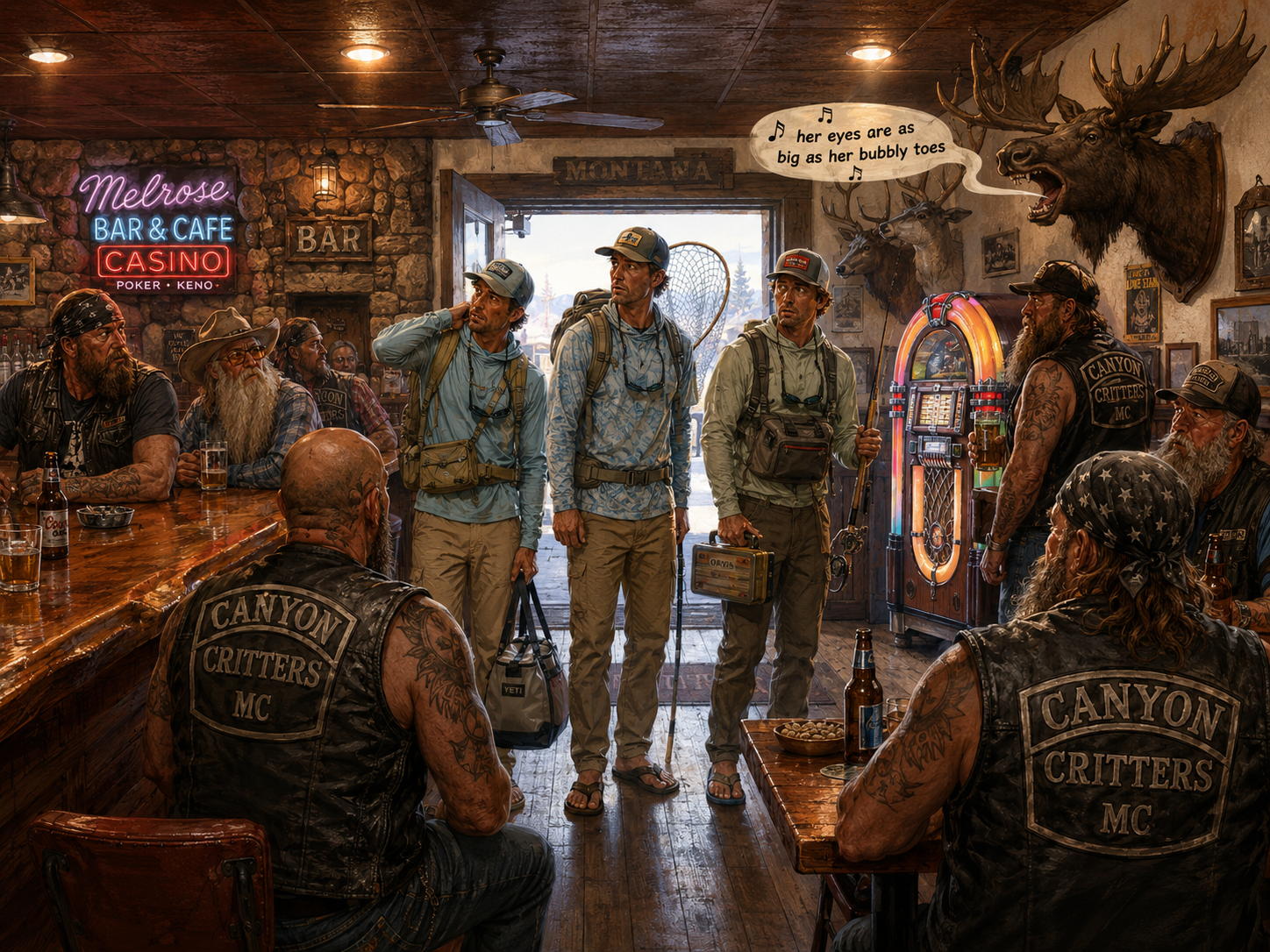
Sometime around 2001, I was drifting the Big Hole River in Montana with two Santa Cruz guys — Metiver and Locatelli (RIP 1960 - 2007). Because Montana is to flyfishermen what the Mentawais are to surfers, we caught mass quantities of brownies and rainbows (and whitefish, yuck) putting in at the Stanchfield's Troutfitters in Wisdom and then many miles down to the Melrose Bridge.
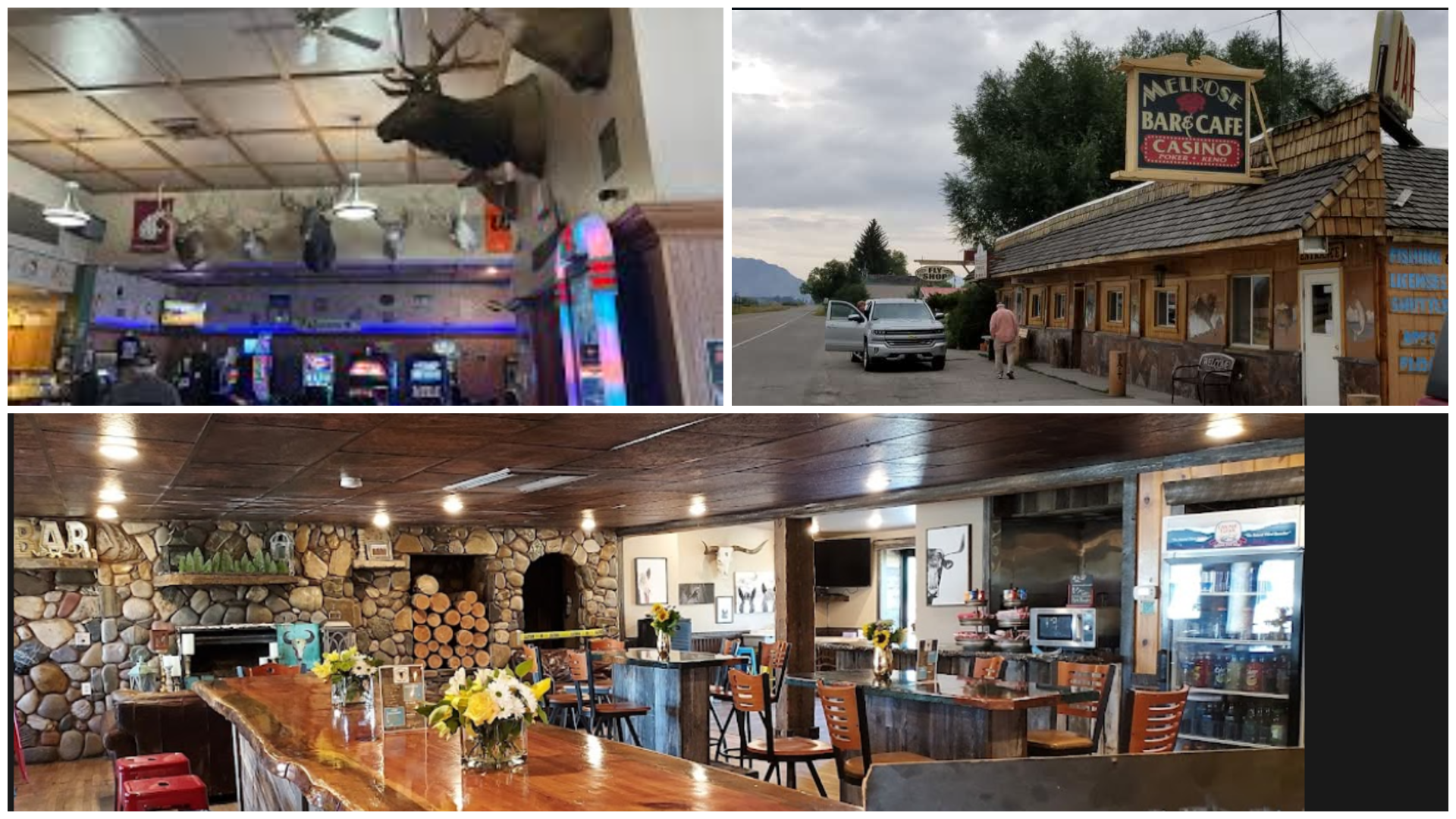
The pickup vehicle came and got us, but we had to gas up at a kind of redneck-looking joint called the Melrose Bar and Gas Station, where you had to walk into the bar to pay for petrol.
When our eyes adjusted from Montana glare to shadow — wearing $10,000,000 of Patagonia top to bottom fly-fishing accoutrement, zero Carhartt, looking California from head to toe — all conversation stopped, and what looked like a ZZ Top/Hells Angels tribute to the Unabomber (RIP 1942-2023) turned and gave us Montana canyon critter stink eye.
Frightening, and yet: What are those nice noises emanating from the jukebox out there in the back of beyond?
Jack Johnson!?!?!?!
“Hey, I kinda know that dude,” I said, Spicoli-like. Unimpressed, the ZZ Top/Hells Angels decided we weren't worth a beating and turned back to their beers.
Right there in the Melrose Bar and Gas is when I began to realize Jack Johnson was becoming a big deal. I knew him from working at SURFER Magazine in the '90s, and I knew he made music for surf movies with the Brothers Malloy.
But... Melrose? Five hundred and forty miles as the frigate bird flies from the nearest ocean?
Shoots.
SPIT UP HIS POI AND SAID “SHOOTS!”
In 1999, if a Hawaiian kāula had read the clouds, thrown the bones and pig guts, tracked the stars, and marched up to the back porch of the Johnson house at Pipeline to prophesy to a 24-year-old Jack Johnson that he would become an internationally famous recording artist, selling tens of millions of records, touring the world, writing film scores, appearing on Letterman and Leno, earning gazillions of dollars, owning half the properties on the North Shore, and giving away choke kala to kokua as many people as possible — he would have smiled, said “Shoots!” spit up some poi and strummed some more chords.
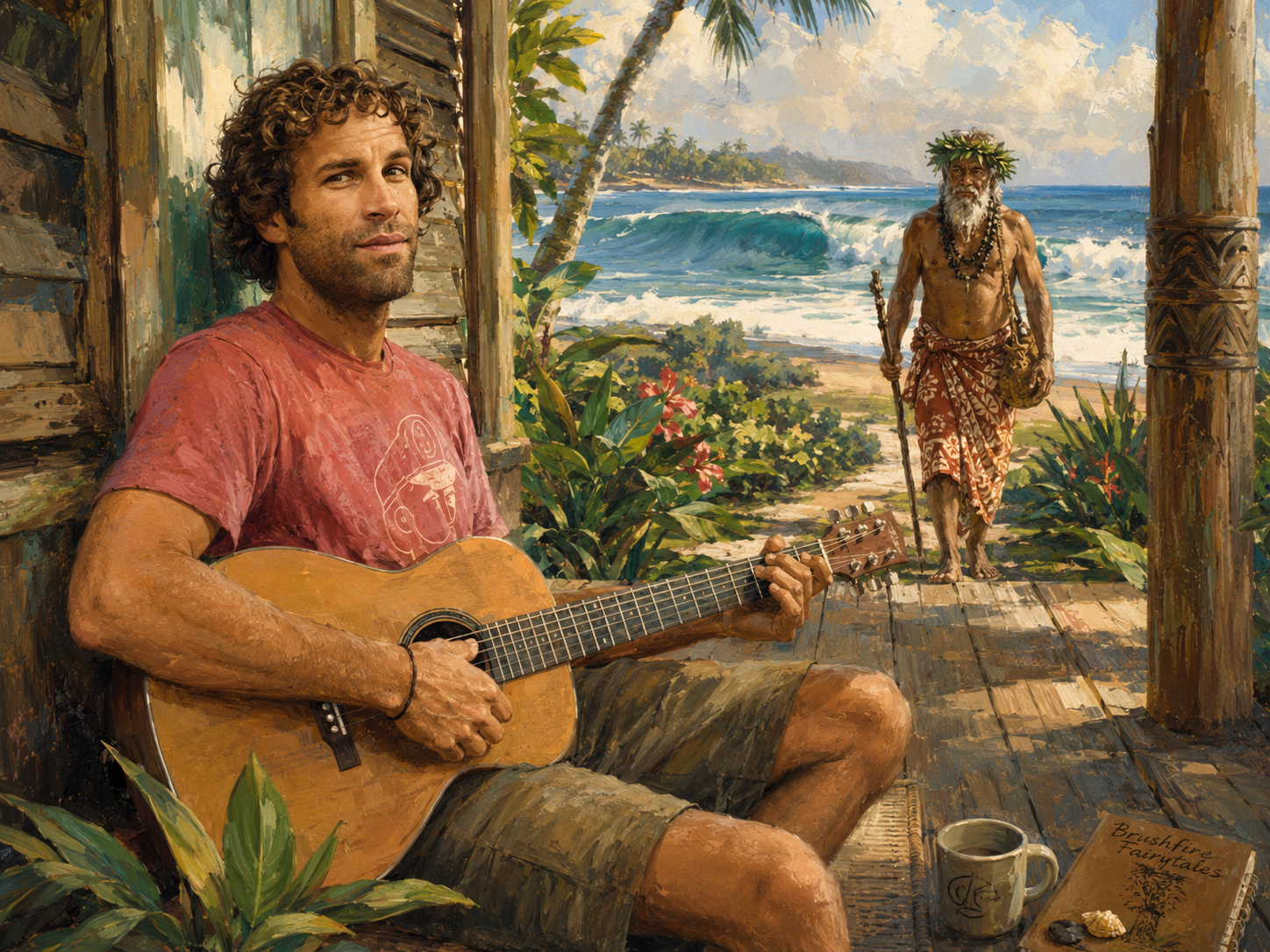
Platinum records weren't in the cards. Jack was a pro surfer in the early '90s, then a student, kegband rocker and filmmaker in the late '90s. Music was a side hustle — something he picked up on the back porch while do do do looking out his backdoor at Backdoor, waiting for the wind to shift and Kelly to paddle out, strumming a guitar to see if what he felt inside could come out in words and chords.
And yet, all of that happened. Maybe not owning half the properties on the North Shore, but all the rest.
And you may ask yourself (as his mom has): How did he get there?
It's easier to tell a good story when there's a good story to tell, and that's what SURFILMUSIC is about: How Jack Johnson transitioned from ocean-loving North Shore grommet to aspiring pro surfer to Pipeline face-planter to UCSB student/musician/filmmaker/loverboy to downtime picker and grinner to internationally famous and beloved performer who has sold over 25 million records, given away more than $30 million through his foundations, and still lights up audiences from 8 to 80 — from way down in Melbourne to down in Monterey.
KNOW JACK
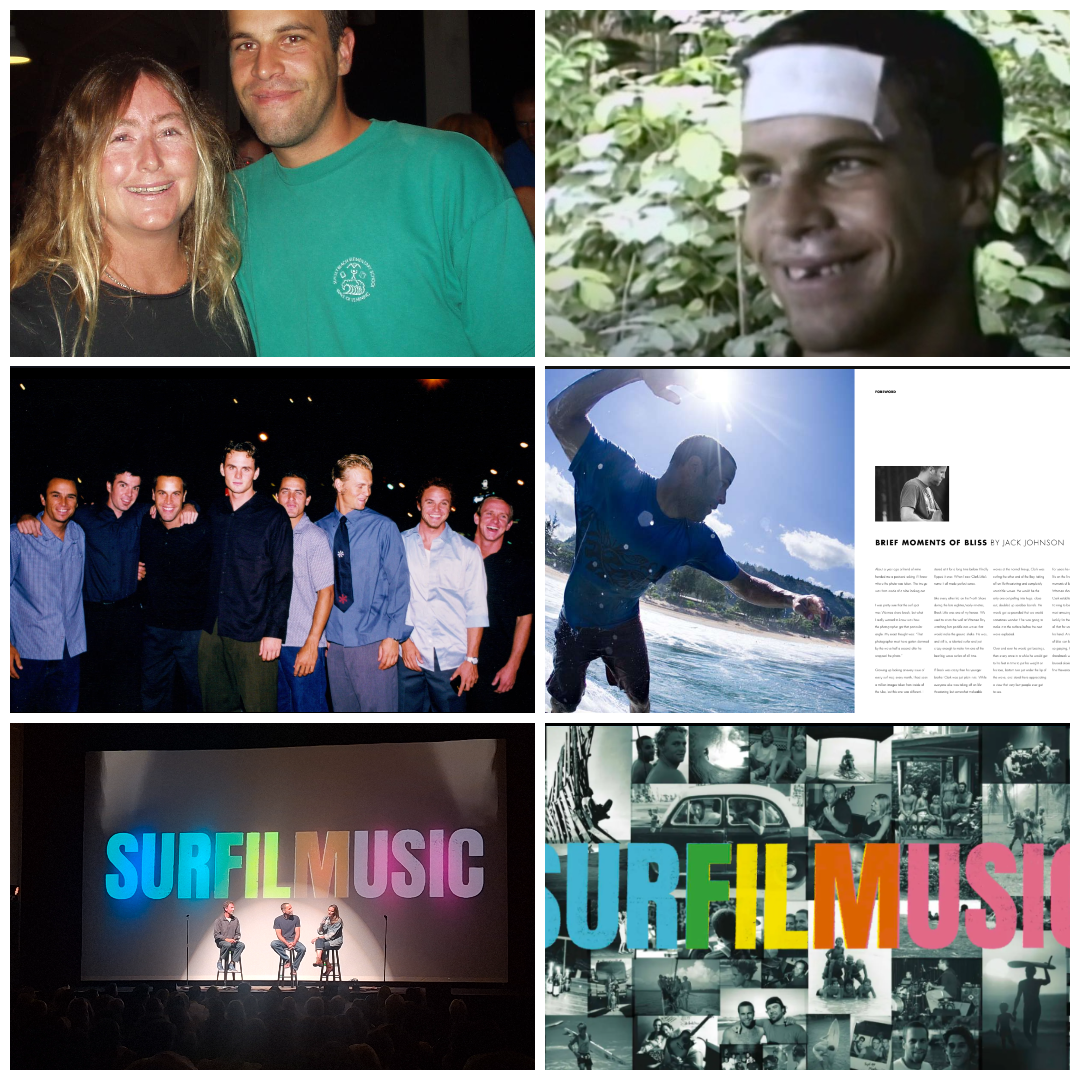
Karen collage, from top left, clockwise: Signs, signs, everywhere signs. With Your Humble Narrator - we were surfers ince, and young. Smiling happy people. Karen at Sano in the 1960s, a famous photo from the cover of Surf Guide Magazine. Karen knows Jack. Karen with her uncle Fred and Gene Van Dyke.
Growing up in Santa Cruz, I knew a freckle-faced strawberry named Karen Gallagher who moved to the North Shore in the 1970s, surfed herself even sillier than she already wuz and ran Sunset Beach Surf Shop with a velvet fist in an iron glove: Sponsoring, driving around and surf-matriarching young North Shore talents including Kalani Robb, Pancho Sullivan, Tamayo Perry — and Jack Johnson.
Through Karen is how I first became aware of Jack and den working at SURFER Magazine from 1989 to 1999, covering the North Shore every winter — Jack was Momentum-generatoon adjacent. Although I was more familiar with the Brothers Malloy, Ventura surfing cowboys and clever lads who dabbled in film and music.
Around 2005, I helped ocean photographer Clark Little put together a book of his North Shore wave photography - The Shorebreak Art of Clark Little. The photography was pretty much a hobby which had - to his surprise and delight - morphed into a big, worldwide ocean art sensation.
We asked Kelly Slater and Jack to write forewords. Kelly Slater, because he's Kelly Frickin' Slater, and Jack Johnson, because he and Clark were similar in starting something simple on the North Shore that blew up beyond their wildest dreams
Jack's foreword was called Brief Moments of Bliss. He has a way with words, and when I asked director Emmett Malloy who came up with this perfect title SURFILMUSIC, he said, “Jack did. The master word-smither.”

SURFILMUSIC is a perfect title - graphically and thematically - right up there with the title Steve Hawk came up with for the first article on Mavericks in SURFER Magazine:
COLD SWEAT.
Clark ordered 10,000 copies of a book that sold for $100 while the $250 Collector's Edition was signed by Jack, Kelly, and Clark. I thought he was lolo, but he sold every one, and now that signed Special Collector's Edition goes for $500 - if you can find one.
Shoots.
Across the Bay in Monterey
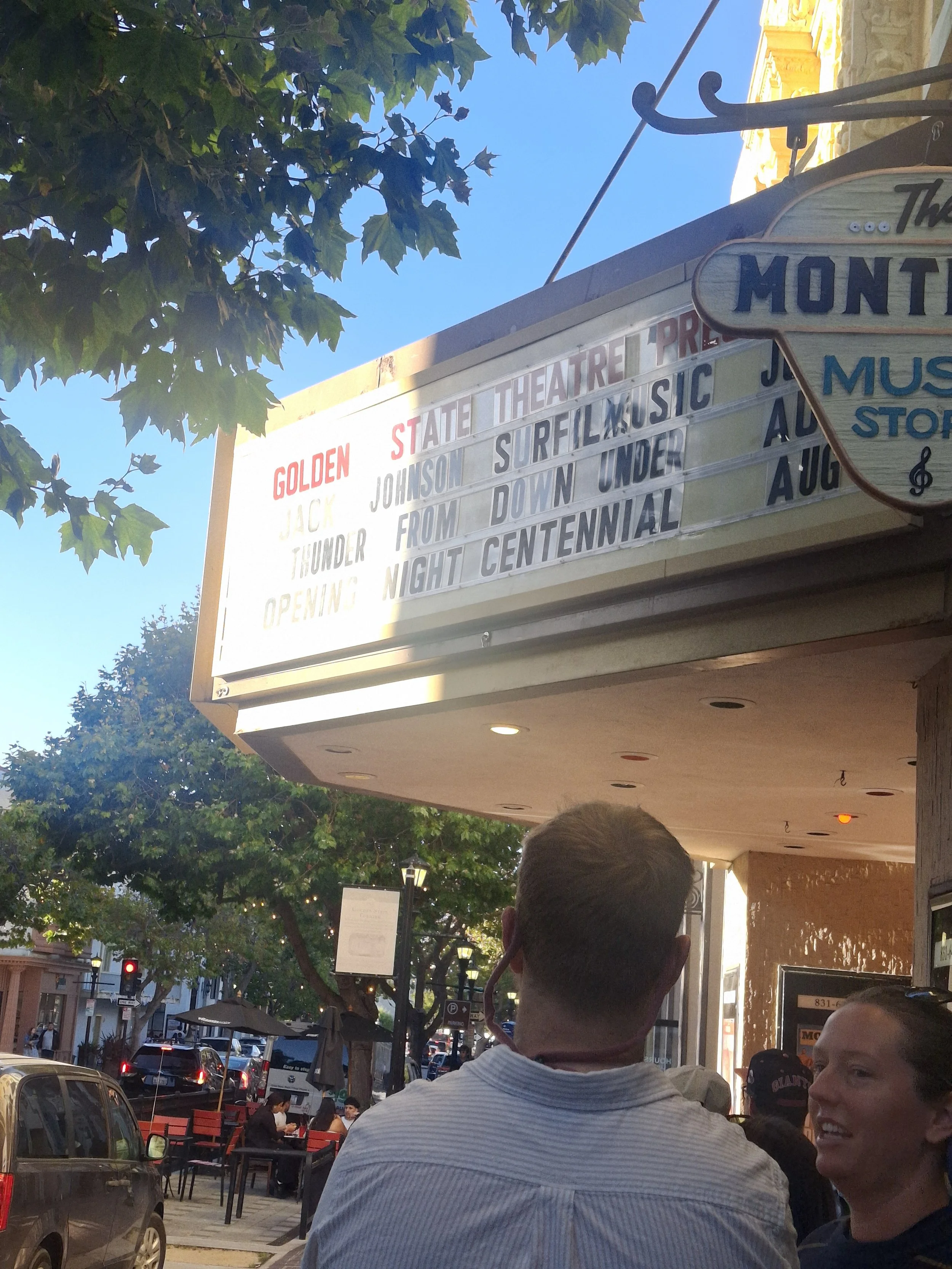
So I kinda knew Jack well enough to boldly and perhaps impolitely ask for VIP tickets to a showing of SURFILMUSIC in Monterey showing on July 25.
And it worked! Director Emmett Malloy — one of 123,891 cousins to the Brothers Malloy — kokuaed us on the list.
I’d been telling all my Santa Cruz friends I was once a big shot with connections and well.. this proved it!
I rode shotgun with Alexander Faller Johnson, a fellow refugee from the Swinging Seventies in Santa Cruz. Long before digital media, surfing images arrived in touring “four-wall” surf movies, and we would line up at the Civic Auditorium to shake the rafters for “Free Ride,” “Five Summer Stories,” “Gone Surfin’” and a dozen other surf movies, shot on film. We would smoke marijuana cigarettes - aka reefers or joints - of that super-fine, A1, stems and seeds laden $15 an ounce Mexican loco weed, and go berserk at the vivid images of surfing around around the world.
Surf was almost always flat the next day, but whatever.
THE SWINGIN’ 70S
Santa Cruz had a spectacular music scene in the 1970s. Great bands on their way up—and plenty already at the top—made it a point to play town.
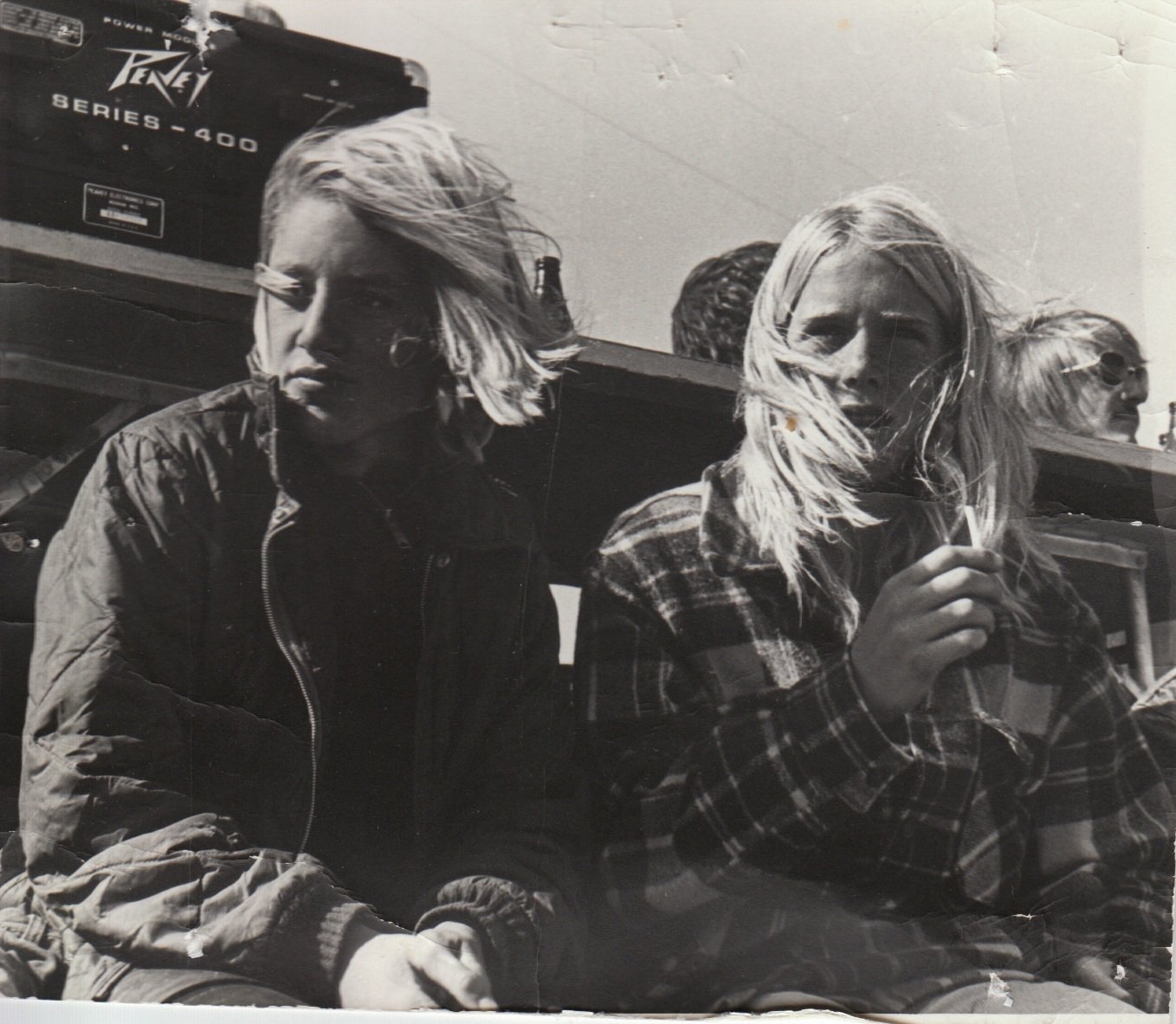
Ben on the left, Alex on the right, during a surf contest at Steamer Lane, some time during the Swinging 70s. Photo: Mom.
Por ejemplo, this was the lineup at the Santa Cruz Civic Auditorium between 1975 and 1979 alone: The Tubes, Bonnie Raitt, Asleep at the Wheel, Jackson Browne—twice, once with Joan Baez and Warren Zevon in tow—Crosby & Nash, the Jerry Garcia Band, the J. Geils Band, José Feliciano, B.B. King, Ike and Tina Turner, Toots and the Maytals, the Marshall Tucker Band, Journey, Jimmy Buffett and the Coral Reefer Band, Charlie Daniels, and Country Joe and the Fish.
And then some: Elvis Costello, the Police, Devo, Tom Petty and the Heartbreakers, Patti Smith, AC/DC, Bob Marley and the Wailers, Blondie—and yes, the Ramones, who liked the place so much they came back three times through 1983.
I’ll swear on a stack of surfboards that I also saw Stanley Clarke and Weather Report at the Civic, although memories from that era are glitchy for some reason.
I asked around for other bands we saw. Alex said: “Do not forget Neil Young, UB40, Tower of Power, Bo Diddley, BB King and many others we can't remember because we were busy destroying brain cells!”
NEIL YOUNG AND DUCKS
In the summer of 1977 Neil Young came to Santa Cruz, rehearsed at Pleasure Point, wrote and played a string of famously loose, unannounced-because-they’d-be-swamped local shows with Ducks.
In Santa Cruz that summer, Young Neil Young’s acoustic My My, Hey Hey (Out of the Blue and the electric Hey Hey, My My (Into the Black), were co-written with Jeff Blackburn, his old Santa Cruz bandmate from Ducks. The most famous line, "it's better to burn out than to fade away," actually came from Blackburn, and it took on a much darker weight in 1994 when Kurt Cobain quoted it in his suicide note, permanently tying the song to a legacy neither Young nor Blackburn ever intended.
Neil Young didn’t fade away - because of that song.
After surfing Pleasure Point all day, we saw Neil Young with Ducks at the Santa Cruz Yacht Club. Fearless, adrenalized and whacked on that super fine A1, $15 dollar a lid stems and seed Mexican loco weed, we were standing about 15 feet away from Neil, bellowing, “Play ‘Homegrown,’ dude!”
The Catalyst is being threatened with urban renewal right now and that’s a tragedy. In the Swingin’ 70s, Neil Young and Crazy Horse played there, along with Santana, Steppenwolf, James Brown, Tom Petty and the Heartbreakers, the New Riders of the Purple Sage, David Grisman, Jack Bruce, Big Joe Turner, Bobby “Blue” Bland, the Doobie Brothers, Martha Reeves and the Vandellas, the Flying Burrito Brothers, Emmylou Harris, Peter Tosh, the Buzzcocks, the Flamin’ Groovies, Greg Kihn, the Rubinoos, Maria Muldaur, Huey Lewis and the News, Pearl Harbor and the Explosions, and the Mystic Knights of the Oingo Boingo.
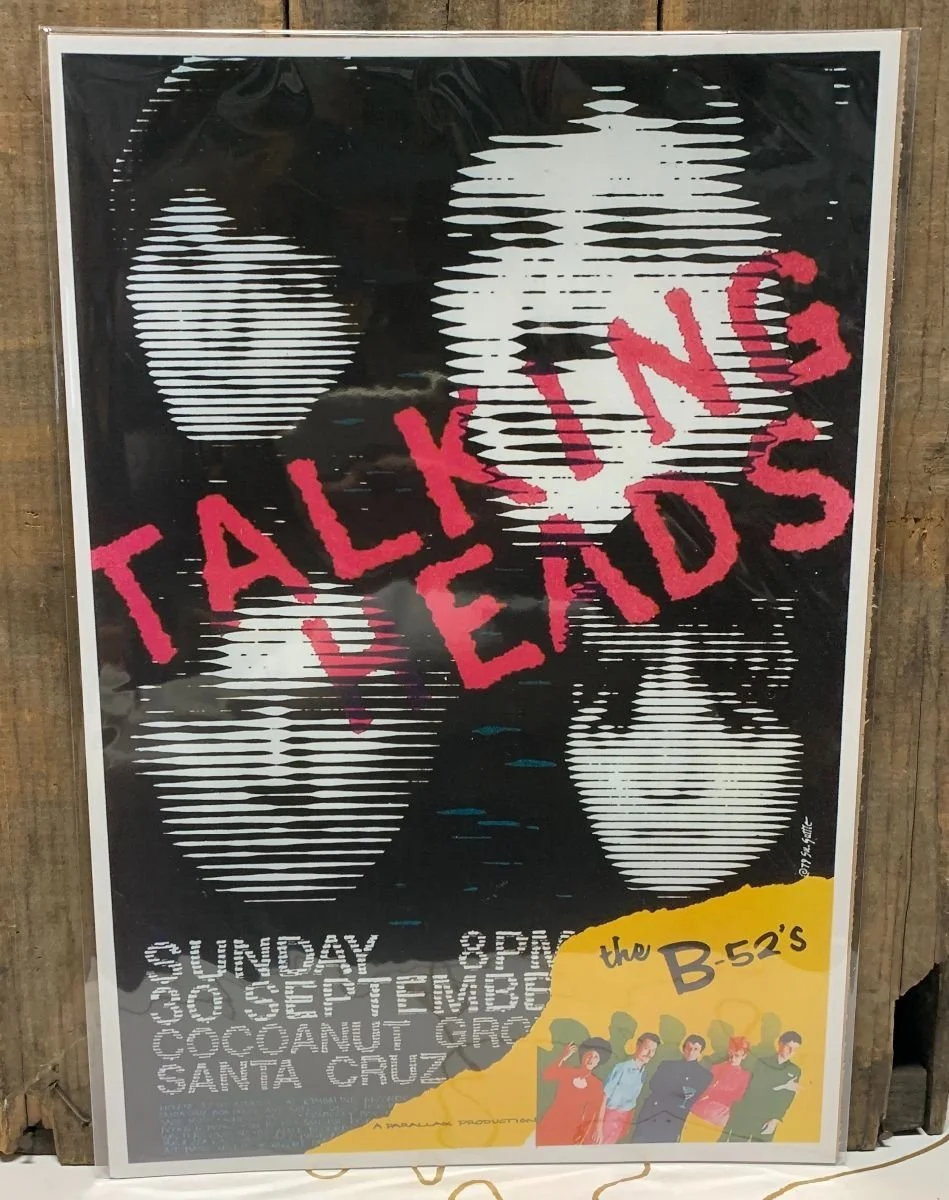
The Talking Heads and the B-52s at the Cocoanut Grove? Forgetaboutit. During the Swingin’ Seventies Santa Cruz was a smaller town with an improbably enormous soundtrack.
Apologies, I’m retro-kvelling and getting whimsical here, but the 70s were the best 30 years of my life, and we got a bit of that live sound and vision energy at SURFILMUSIC across the Bay in Monterey.
WHERE DIRTY HARRY MET EVELYN: THE SARDINE FACTORY
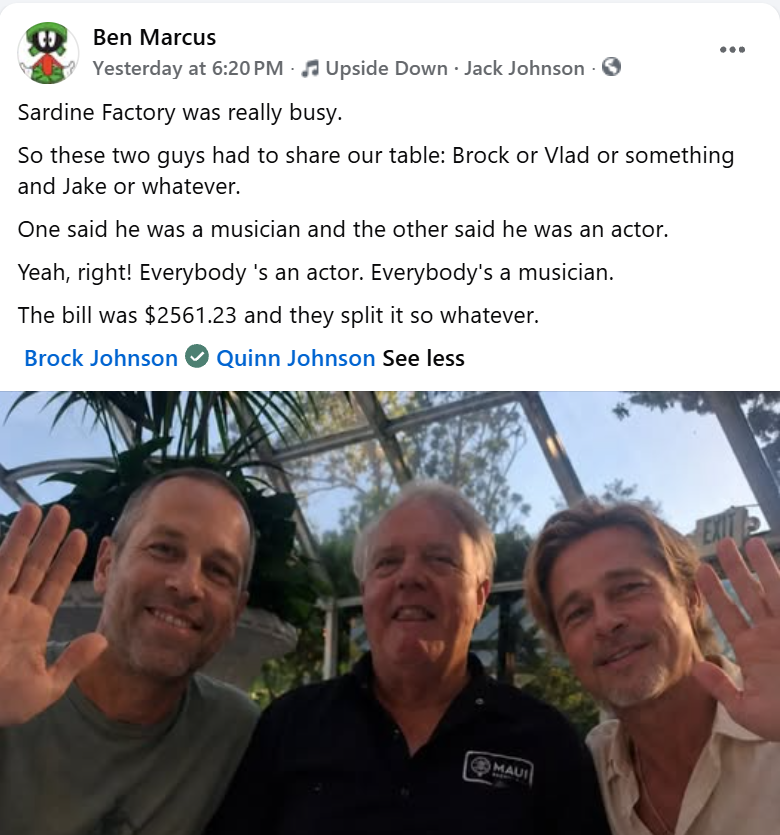
Yeah it’s AI and fake. It fooled half of my friends, so I guess I need less gullible friends?
And speaking of psycho killers, we had recently watched Clint Eastwood’s directorial debut, the most excellent Play Misty For Me. It’s all set in Carmel and Big Sur and the Monterey Peninsula, and Sardine Factory is where Clint first met fatale femme Evelyn.
So we made a 5:30 reservation for the Donner Party - which we always thought was stupidly funny - had an atmospheric dinner in the atrium and then joined a sellout crowd of people from 8 to 80 at the Golden State Theater, a nearly century-old Spanish-Moorish movie palace.
The movie started at 8:00, followed by a Q&A with Emmet, Jack, and Kim, followed by an hour of music with Jack on guitar backed by rocking accordionist/melodicaist Zach Gill.
At one point I had to leave right at the point where Jack kisses the reef at Pipe and comes up broken and dented. When I came back in, there was Emmett Malloy, stalking the aisle, probably gauging audience reaction wirth a hootmetter on his SmartPhone.
He chastised me: “You left at one of the most important points in the movie! How you gonna write a review?”
I enjoyed the film enough that I didn't take proper notes — a king-sized Modelo and Alex elbowing me to put down my dumbphone didn't help. I was so focused on enjoying the movie I forget to remember it. So I once again rudely asked if Emmett could send me a link and a password to the online version so I could frame by frame it.
And he did! The link is www.ForgetAboutIt.com and the password: youwish.
Watching it frame by frame, scene by scene, act by act, I understood why I'd missed so much the first time: SURFILMUSIC is a dense, engaging, vivid, possibly Oscar-worthy three-part harmony about Jack's evolution - SURF to FILM to MUSIC - set largely among people I wrote about during my SURFER years — The Brothers Malloy, Brad Gerlach, Rob Machado, Kelly Slater, Shane Dorian, Tamayo Perry, Taylor Steele and glimpses of Brock Little and Noah Johnson.
So I was engrossed seeing it live live all the way live. Watching it frame by frame, here's how he got there.
ACT ONE SURF (Feat. The Pipeline)

Jack Johnson shrugging off a pretty serious faceplant into the reef at Pipeline.
Act One is about North Shore surfing — specifically the Banzai Pipeline, no longer the most powerful, challenging wave in the world (Teahupoo in Tahiti has Next Level power and danger and usurped that title) but still the most dangerous as Pipe has injured and killed more surfers than any other spot - from kooks to Koa Rothman.
During the Roaring '90s I was comfortable enough in the ocean to swim out and watch and get mixed up in the power and the glory and the beauty of that spectacular wave- diving under waves with Gerry Lopez or Kelly Slater passing overhead - dodging foamballs and skirting cracks in the reef.
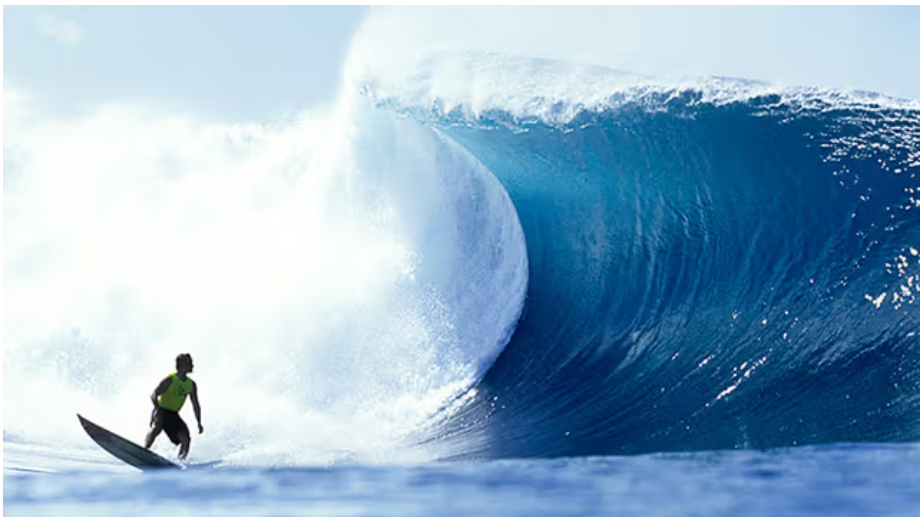
Shawn Briley at the Banzai. Don’t know what he’s doing but let’s hope he does.
Pipe was crowded in the 1990s and I can only imagine what it’s like now. Crowds make people impatient and do things they shouldn’t. Surfers do things to other surfers at Pipe that if done on dry land would get them arrested and thrown in the hoosegow for reckless endangerment.
Seeing what I saw above and below the surface, I got a vividly dangerous appreciation for how shallow and potentially lethal the Banzai Pipeline is.
Like John John Florence a generation later, Jack grew up with Pipe in his backyard, and the film traces him rolling through old movie footage going back to the 1970s, when Jack was a kid getting pushed into easy waves by his dad and brothers. Growing up with Pipeline in your backyard is about as safe as growing up with a T Rex chained up by your fence. SURFILMUSIC shows Jack’s growth and evolution through his teens to become the youngest surfer to reach the finals of the Pipe Masters Trials.
In the 1992 Pipeline Local Trials, 17-year-old Jack competed in a six-man heat against Gerry Lopez, Johnny Boy Gomes, Liam McNamara, Marvin Foster, Tony Moniz, and Larry Rios — like stepping into the Octagon with Mr. Miyagi, Mike Tyson, Conor McGregor, Marvin Hagler, Denzel Washington and Kareem Abdul Jabbar all at once.
According to Kelly Fricking Slater, Jack had the best tube in the heat but got hassled out of catching enough waves and was disqualified — an experience Slater believes quietly turned Jack off competitive surfing.
IT’S NEVER THE ONE YOU THINK IT’S GONNA BE, KID!
Greg Noll was a big wave surfer who survived some famous wipeouts, but he was fond of saying: “It’s never the one you think it’s gonna be, kid!”
A week later Johnson was surfing Pipe when he took what he thought was a standard wipeout and face-planted into the reef. There are photos of Jack smiling with broken teeth, scars on his face and a dent in his forehead, but the look in his eyes suggest he probably wasn’t smiling inside. That near-death accident put Jack on his back porch with a guitar in his hands, working out chords as his body healed and his mind contemplated the future.
That transitional part of the movie and Jack’s life is what I missed in the Mens. And when I walked back in, there was Emmett Malloy prowling the aisles - maybe scouting for slack movie reviewers and he found one: “How you gonna review this movie if you missed the most important part?”
Okay okay, I’m trying. So Act One is Jack as a young surfer on the North Shore, during the Hectic Eighties and into the Roaring 90s, when the surf industry was taking in astonishing amounts of money, and a talented kid could make a good living doing what he loved.
ALL I WANT FOR CHRISTMAS IS MY TWO FRONT TEETH - AND A GUITAR
This review left off with Jack Johnson kissing the reef at the Pipeline hard enough to break teeth and put dents in his head: “I think at that time, being 17 years old, I was really anxious to get back in the water,” Jack said. “But I had to stay out for a while. I started playing a lot of guitar then. It was so hard not to be out there with my friends, so I was just in my bedroom a lot playing music.”
Jack was friends with the Malloys and Kelly Slater - who was also interested in music, because being a surfer and a traveling surfer who is paid to surf leaves a lot of time for extracurricular activities - like golf and music.
In one interview clip, Kelly Slater is grilling a bandaged, toothless Jack: “What do you want for Christmas?” The obvious answer was “My two front teeth,” but Jack said, “A new guitar.”
At the end of that winter North Shore season, Kelly left behind a four-track recorder: “That was the beginning for me,” Jack said. “I don’t think I would have tried writing songs if I didn’t have this thing.” He’d been playing guitar since 14, but now, three years later, he had the time and the focus to work out in words and chords what he was feeling and experiencing.
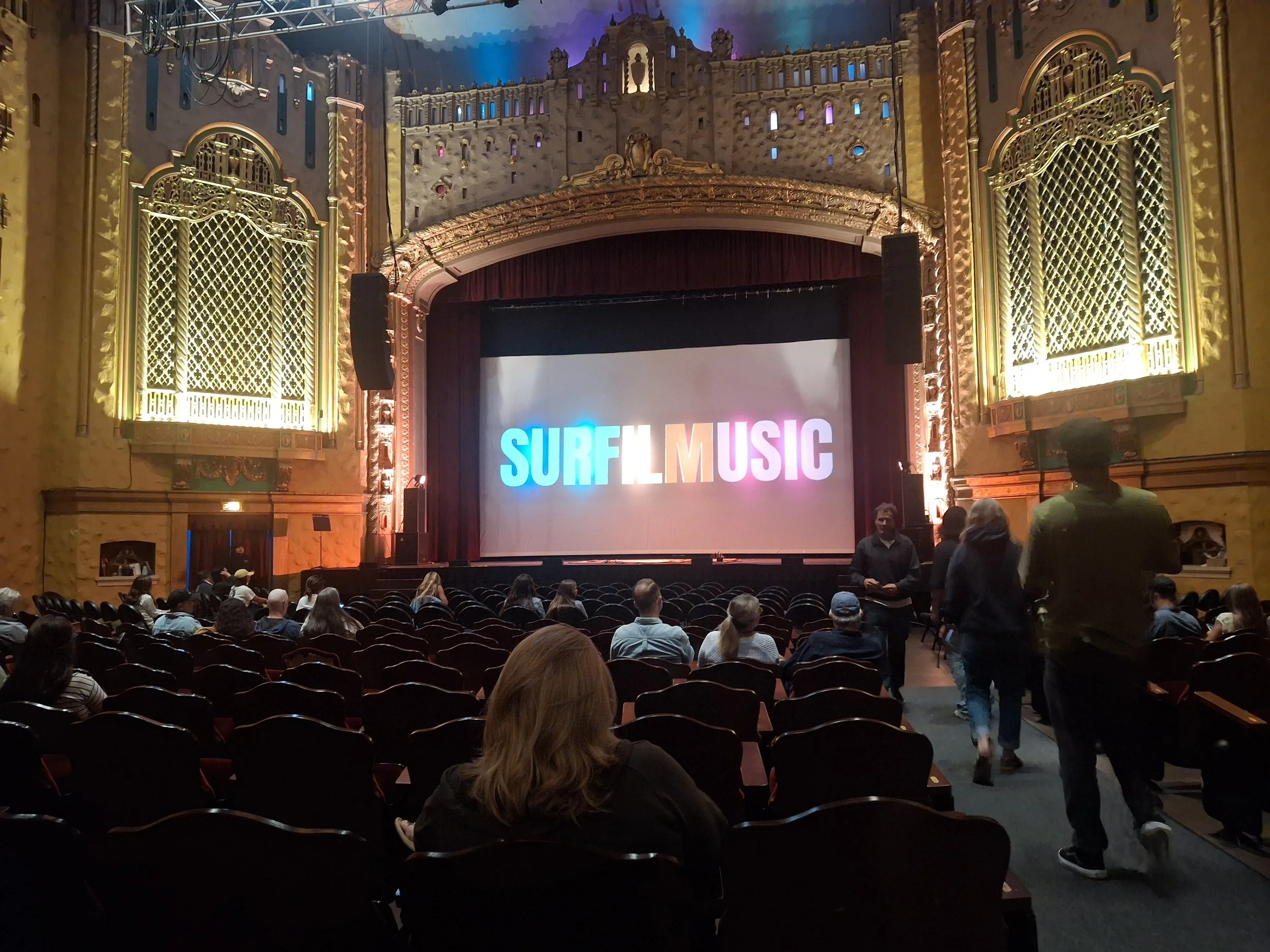
The Golden State Theater. Looks cool, no?
ACT TWO: FILM (Feat. Kim)
“I mean look at his music. It’s all his personal stories.
That’s what’s projected to the world.
The honesty of it all is what has always resonated with people.
It’s about love and healthy relationships and friendships and family.”
— Emmett Malloy

EDUMACATION, HAWAIIAN STYLE
Education is important in the Hawaiian Islands. Punahou, founded in 1841, is generally cited as the oldest independent school west of the Mississippi. That school produced a rock star of a dignified, eloquent, elegant president, and other notable alumni include AOL co-founder Steve Case, eBay founder Pierre Omidyar, U.S. Senator Brian Schatz, golfer Michelle Wie, surfing champion Carissa Moore, and NFL linebacker Manti Te’o.
When Hawaiians meet each other, one of the first questions they ask is: “What high school you go?”
Jack Johnson didn’t go to Punahou, but his brothers both attended USC on the mainland. Jack chose UCSB, and it’s there that he gradually stumbled into his path.
TAR BALLS MEET CUTE
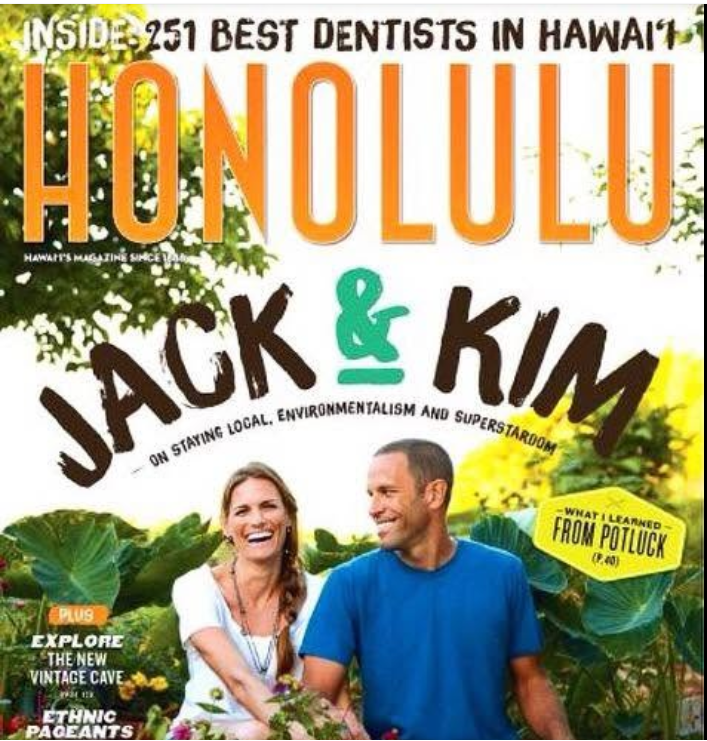
SURFILMUSIC is also a love story, a soulmate story, a wholesome, positive story in an increasingly in-your-face, vulgar, dysfunctional world — part of the appeal of Jack Johnson’s music, and his backstory, is that he’s an island of sincere, healthy wholesomeness and aloha (where aloha means hello, goodbye, and love) in a world that’s increasingly vulgar, phony, and loudly annoying.
(As a Boomer criticizing modern music, I usually say: “We had the Brothers Johnson, now it’s just brothers mumbling about their Johnsons.” I ain’t too keen on modern country, either.)
At UCSB, circa 1993, Jack met the former Miss Kim Baker — a pretty California gal (Sunkissa goldenstatensis), or, if you prefer the Monterey-specific subspecies, (Californicus Blondissimus) with flowers on her bik in her hair, her eyes, and her smile.
Kim: “So when I met Jack, I think it was Day Five of school. We were both incoming freshmen, living in the dorms.”
Jack: “I don’t know why I did it, but I took my lock and locked our bikes together. It was kind of a bad move, but I didn’t know what to do.”
Kim: “And then I look over, and Jack is hiding in the bushes, and he’s like, ‘Wanna go to lunch?’”
In Santa Barbara County, locking your bikes together is as legally binding as a Welsh love spoon, a Fijian whale’s tooth, a German couple sawing a log in half at the reception, or the Scots, who kidnap the bride and groom before the big day, douse them in treacle, flour, rotten eggs, and feathers, and parade them through town tied to the back of a truck — on the theory that if the marriage can survive that, it can survive anything.
BUBBLE TOES GOES GOLD
I listened to all of “Brushfire Fairytales” on a Saturday night sitting in the world’s cleanest, most high-tech laundromat on Seabright Avenue in Santa Cruz, playing Second Chance on Scratchers I shamelessly picked out of a garbage can at the 76 Station on Soquel, and eating cashews two for 48 cents from Bargain Market Grocery Outlet or whatever. (That sounds like a Jack Johnson lyric right there.)
I listened to “Bubble Toes”:
It’s as simple as something that nobody knows /
That her eyes are as big as her bubbly toes /
On the feet of a queen of the hearts of the cards /
And her feet are all covered with tar balls and scars
I wondered if “Bubble Toes” was written about Kim, and indeed it was — the tar balls thing was a dead giveaway for anyone who knows coastal Santa Barbara. That song has racked up over 115 million streams on Spotify alone, and even at a stingy $0.001 a stream, that’s roughly $115,000 in nickel-and-dime royalties for a song Jack wrote as a private joke about his wife’s toes.
Is that meet-cute enough for you? If that’s not 21st-century love, what is?
BETTER TOGETHER
In the movie, Kim says they knew as freshmen they would “be together.” They made it official on July 22, 2000 — bike locks apparently having held up in court. Over the next two decades-plus, Kim has been Jack’s multi-tasking mua: muse, music manager, muumuu-wearing musubi-maker, and mother to their children.
Clearly, they are Better Together.
There’s no combination of words I could put on the back of a postcard /
No song that I could sing, but I can try for your heart /
Our dreams, and they are made out of real things /
Like a shoebox of photographs with sepia-toned lovin’ /
Love is the answer, at least for most of the questions in my heart /
Like, “Why are we here?” and, “Where do we go?”, and, “How come it’s so hard?” /
It’s not always easy and sometimes life can be deceiving /
I’ll tell you one thing, it’s always better when we’re together
Mmm, it’s always better when we’re together /
Yeah, we’ll look at them stars when we’re together /
Well, it’s always better when we’re together /
Yeah, it’s always better when we’re together
The life he loves is making music with his friends. And surfing.
Good lord, and with apologies for using Claude AI: “Better Together has turned into one of Jack Johnson’s biggest sleeper hits — the song has now crossed the billion-stream mark on Spotify, sitting at roughly 1.07 billion plays and still pulling in over 300,000 spins a day. What’s wild is it never even cracked the top 20 on the charts back when it came out, peaking at a modest No. 24 in the UK and barely denting Ireland at No. 72, yet it’s gone on to earn Gold certification in the U.S., double-Platinum in the UK, quadruple-Platinum in Canada and New Zealand, and a staggering sixfold Platinum in Australia. Better Together has essentially become the ‘Stand By Me’ of the 2000s — a song that undersold on release but has become a streaming-era standard for weddings, road trips, and mixtapes, and now edges out even Upside Down and Banana Pancakes for total lifetime streams in his catalog.”
If only we could all connect with someone like that, no?
Do the math. As Spicoli said: “Righteous bucks!”
MAJOR MALFUNCTION: FILM, NOT MATH
With Kim by his side, Jack had his muse but was uncertain about his major. He was studying math and wondering why: “There was a point in college where I was in a math class,” Jack remembers, “and thinking, ‘The best I can do is work really hard to get the exact same answer that everybody else in the room is trying to get.’”
And speaking of math: UCSB is an even more conservative campus than Pepperdine — renowned as a staid, studious, non-party, Prohibitionist college where any form of alcohol is kapu.
Not!
Jack was soon playing keg parties with a band called SOIL, honing his guitar chops and also making movies. College lit up his creativity and set him on the Yellow Brick Road to understand what he loved, what he was good at, and which direction he should go.
To paraphrase Hendrix: “He knew what he wanted but he wasn’t exactly sure how to go about getting it.”
REEL LOUD
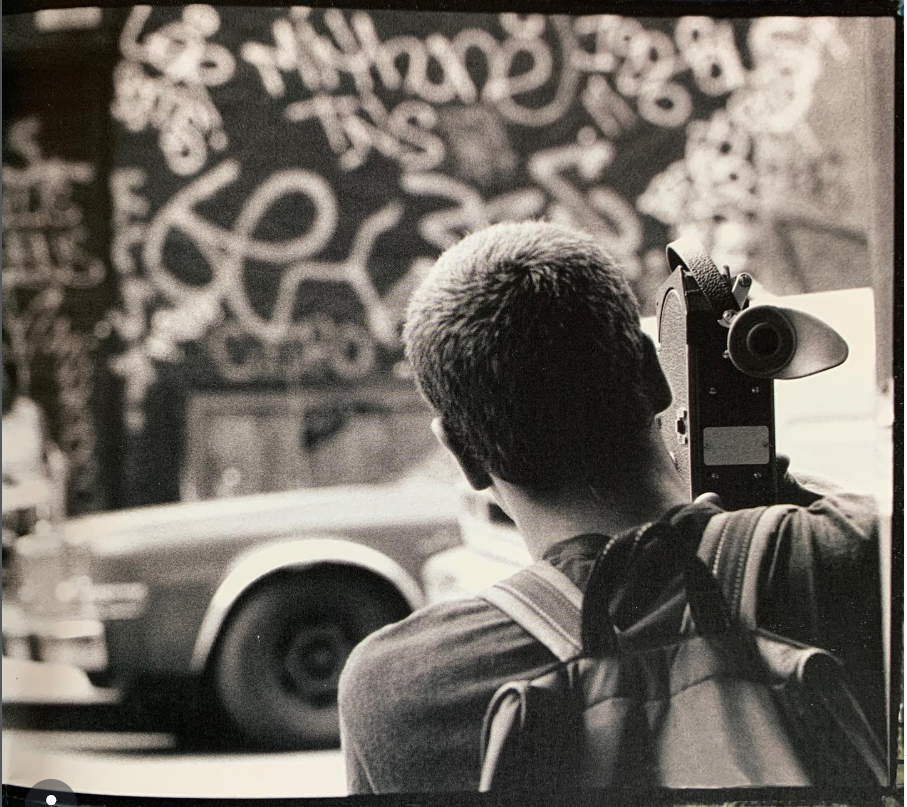
The transition came when Kim introduced Jack to the REEL LOUD film festival on campus: “That night kind of changed my life,” Jack says. “All these kids watching films they had made, live bands on stage playing along: ‘This is the coolest thing I’ve ever seen, and this is what people did all quarter? I’ve been doing math tests.’”
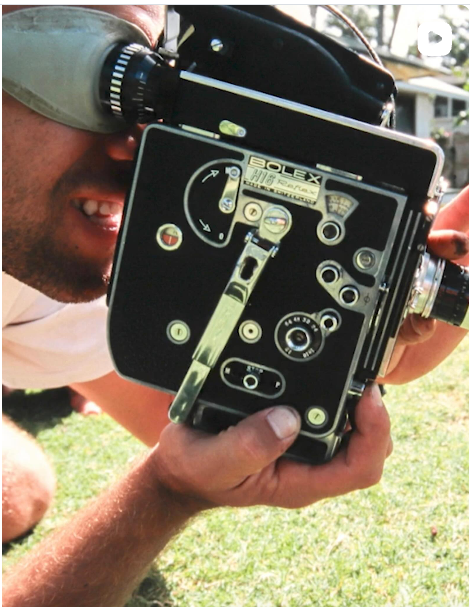
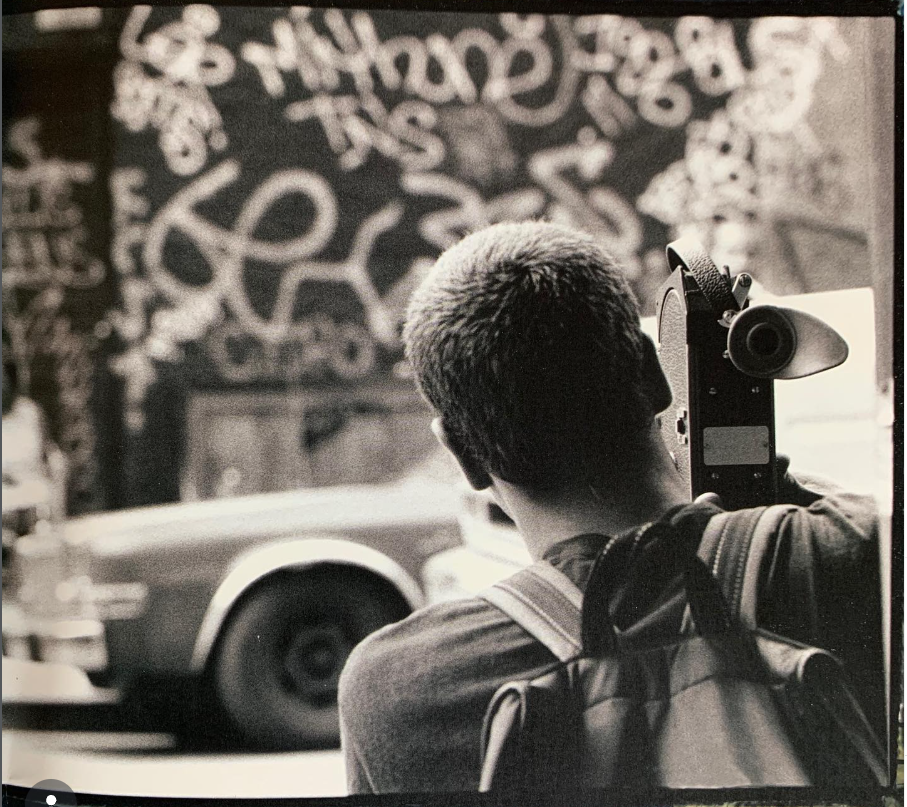
He switched his major to Film the next day, knowing nothing about it. Inspired by a professor named Edward Branigan, Jack picked up a 16mm camera and started shooting. One of his early works from the North Shore, Kelly Slater Goes to Work, films Kelly taking the front door off a house and surfing it — to more or less effect.
This was the same decade Taylor Steele was cranking out fast-cut, fast-music surf movies with the best surfers of the era: “Seaside” (1989), “One Step Beyond” (1991), “Momentum” (1992), “Momentum 2” (1993), “Focus” (1994), and a dozen or so more into the ’90s and beyond.
Chris Malloy suggested to Steele that he loop Jack in, since Jack had been learning things in film school and had a great eye for angles. That’s when Jack began shooting 16mm for Taylor Steele and the Malloy brothers — Chris, Keith, and Dan — with cousin Emmett editing.
ANOTHER PIPE VICTIM
In the movie, Chris Malloy becomes another Pipe victim when he goes head-first over the falls, hits the reef with both feet, and does both his knees. He dragged himself out of the water, worrying about his cartilage and his future: “What’s next?”
At the time, around 1997, Jack and Kim were cruising around Europe in a van, which is as much fun to people in their 20s as Disneyland is to 10-year-olds. They filmed and frolicked and tried to swat away the annoying vultures of “What’s next?” “Kim was the first person that put a camera in my hands,” Jack said. “Our relationship was based on making stuff together.” Toward the end of the trip, with money running low and no real plan, fate intervened. Chris Malloy had just badly injured both knees hitting the reef at Second Reef Pipeline. Like Jack, he was out for the season and needed to channel his creative energies. The Malloys were looking to make a serious surf movie shot in 16mm. “I called home from Europe and asked my mom if there was any news,” Jack said. “She said, ‘Hey, your friend Chris Malloy wants to work on a surf film.’ That’s the thing I’m gonna do!”
THE MOONSHINE CONSPIRACY
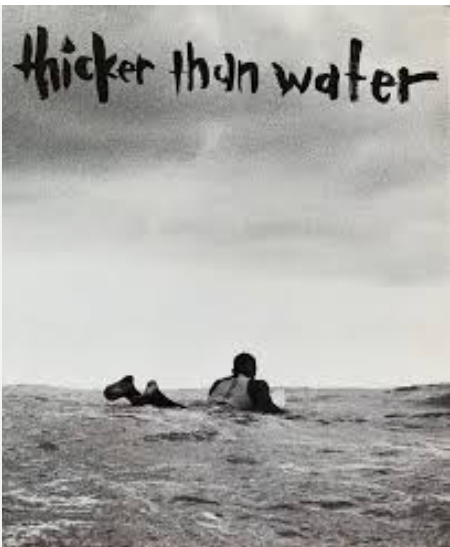
Movie-making is what was next, for both Pipe victims. In 1998, Jack Johnson, Emmett Malloy, and Chris Malloy formed The Moonshine Conspiracy while making their first surf film together, “Thicker Than Water,” a 45-minute documentary shot in 16mm and scored with Jack’s music.
With more enthusiasm than money or technical knowledge, the crew started at an unnamed island — though if you listen closely to “Holes to Heaven,” the song Jack wrote about thay mysto boat trip, there’s a pretty big clue starting with B. Jack shot from the water and learned it takes skill and nerve to swim through waves with a heavy camera while surfers were coming at you, waves were trying to drown you, and sharks and salt-water crocodiles might be lurking below.
From there they went to Tahiti, to a wave far more dangerous than Pipeline — and if you want to hear “Teahupo’o” pronounced correctly, Raimana Van Bastolaer does it in four syllables.
There’s a segment called “Green Board,” where the world’s best surfers try to make sense of one single-fin board — including a very young John John Florence: “I remember filming John John riding the green board,” Jack says, “when he was a little neighborhood grom and we had no idea what was coming.”
Pretty soon, Jack’s musician friends would say the same thing about him.
From the Indian Ocean and South Pacific, they went to Ireland, where they drank Guinness and made music — the Irish being some of the most musical people on the planet — and then to France, where Kelly was competing and Jack watched from an anonymous distance what it was like to be famous and mobbed.
That was coming, too.
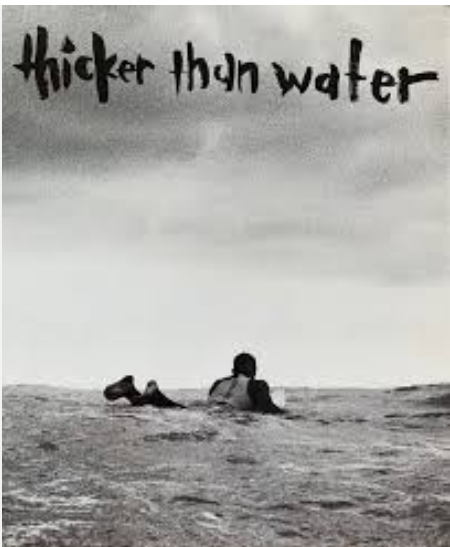
Emmett Malloy edited “Thicker Than Water” and included four Jack Johnson songs on the 12-track soundtrack: “Moonshine,” “Rainbow” (with G. Love), “The Cove,” and “Holes to Heaven” (Acoustic). The film premiered August 26, 2000 in Hollywood to the adrenalized reaction they’d all hoped for — released commercially on May 12, 2000.
None of these guys knew what they were doing, but what did Jack say about that: “When I think about making things — whether it’s music, or films, just anything in life — friendship is the most important part of the whole thing. We found this combination of friendships where none of us could have made it on our own. I always loved making these things, I never dreamed that I was actually gonna get to… you know.”
The movie was happening, but something else was happening too, as Emmett put it: “It was all starting to happen while we were finishing that movie. ‘Okay, we got this movie, but this dude’s music is just feeling like something really special needs to happen with it.’”
ACT THREE: MUSIC
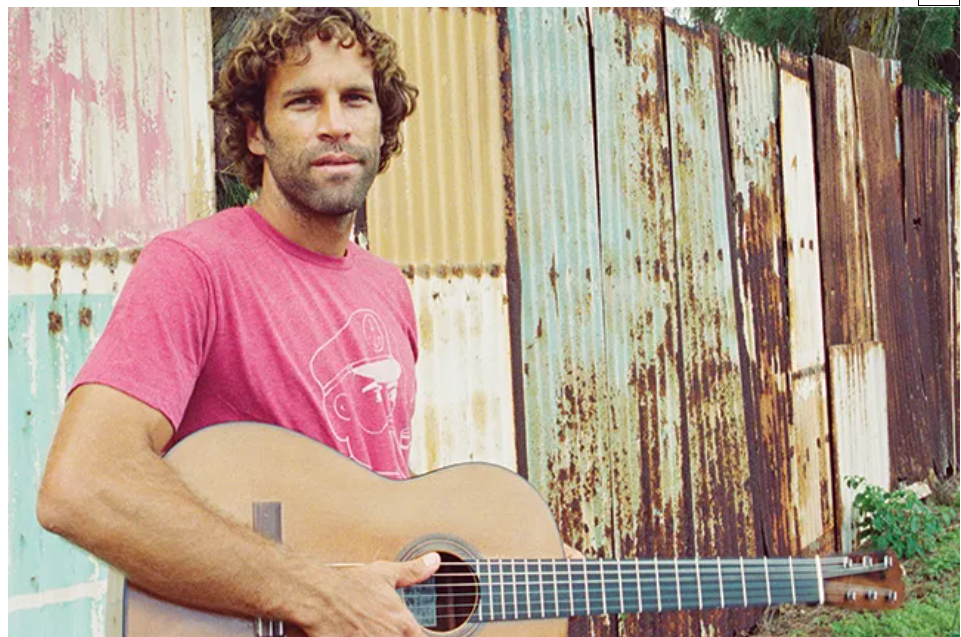
Jack Johnson could sing for his mother. He could sing for Kim. Anyone else walked in the room, and the guitar went back in the case. That’s not false modesty for the documentary’s sake — that’s a kid with a four-track recorder and zero interest in being seen: “At the time the only person I could really sing to was my mom,” Jack said. “If my dad walked in the room I had restrictors on. I met my wife when we were 18 and I could sing to her, but if anyone else was in the room I would shut down. But I slowly could start playing to friends and then in small rooms.”
Somewhere in there, singing to friends in a small room stopped being enough, the way it stops being enough for anyone who’s any good. While “Thicker Than Water” was being filmed and edited, Jack started coming out of his shell in Santa Barbara. He started showing up at open mic night at Roy’s, off State Street in Santa Barbara: “When Jack was back home, we would go to open mic night at Roy’s,” Kim said. “Some of these songs he was coming home with and trying out — they captivated people, and that’s when I went, ‘Something is different here.’”
Dan Malloy agreed: “When I first heard those songs, there was something impossible to quantify about this seemingly simple music.”
Emmett Malloy, digging through a box years later for SURFILMUSIC, found the original four-track tapes. Not confident yet. Really, really good anyway.
RODEO CLOWNS, AND A LITTLE HELP FROM HIS FRIENDS
The song that changed everything wasn’t engineered to change anything. Chris Malloy remembers what got passed around on mixtape: “Rodeo Clowns,” “Bubble Toes,” “Inaudible Melodies,” “Posters,” “Middle Man.”
That mixtape reached Rob Machado, who told a friend, who eventually connected Jack to Garrett Dutton of G. Love & Special Sauce.
Kelly Slater — who by then had his own reasons to know a good tune when he heard one — made “Rodeo Clowns” the favorite record among their friend group before it was ever officially recorded. People were dubbing tapes and just giving them away, the most grassroots way a song can catch fire.
When Jack got back from a trip to Ireland, he played it for Kim, and she told him flatly that it was a really good song. Small sentence, big moment — that was the turning point where Jack started believing he might actually be a songwriter and not just a surfer who happened to play guitar when the wind or the tide or the swell were wrong.
Jack and Garrett Dutton - aka G. Love - went surfing, then jammed a bit, playing “Rodeo Clowns” about ten times before Garrett said the magic words: “You wanna come to the studio, man? We could cut that song.”
With more push from Ben Harper to producer J.P. Plunier, they recorded it — and that started a ripple that has become a tsunami. Jack’s reaction, by his own account, was something close to disbelief. Nobody sets out to be the next big thing off a four-track tape and a favor from a friend’s friend. That’s just how it happened.
Organically, the best way.
None of it would have gotten off the ground without the people underwriting Jack’s uncertainty. Kim was in grad school while “Thicker Than Water” was coming together, and Chris Malloy was quietly paying their rent so Jack could keep making music instead of taking a normal job. The following year, Kim flipped it: “I’ve got a job now, it’s your turn — rent’s covered, groceries are covered, go do what you want to do.”
That’s the kind of support that doesn’t show up on a resume but shows up on every album that follows.
“After ‘Rodeo Clowns’ got released and started playing on the radio, we started getting phone calls from record labels,” Jack said. “Exciting but confusing. At that point I should have gotten a music manager, but Emmett and Kim started reading this book called ‘How to Manage a Musician.’ No idea what we were doing, but we would roll with every step and learn — and it’s how we’ve been doing it ever since.”
Winging it is a system that, by any reasonable standard, has worked out fine for twenty-five years running.
INDONESIA, AND BEN HARPER PULLS OVER
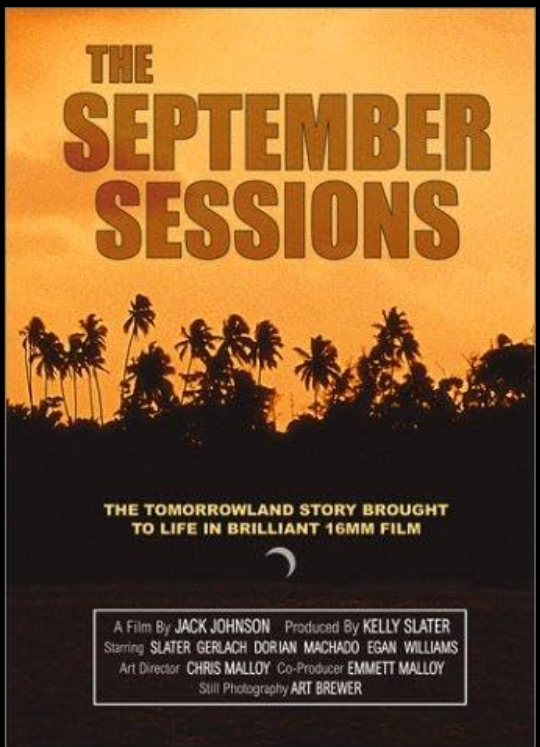
The album almost got made by accident, the same way everything else had. Kelly called at exactly the right moment: let’s make another surf film, and write some songs while we’re at it. That became “The September Sessions,” shot in Indonesia with a boatload of friends who, in Kelly’s words, didn’t question much about whether Jack was going to make an album — he just was.
It fits Jack’s whole arc, honestly. His father sailed from California to Hawaii by himself in his early twenties without knowing how to sail, and Jack remembered looking down at the Pacific as a kid, wondering if he could ever do something like that himself. Jump in before you’re ready, and find out if you can pull it off. That’s not a metaphor he came up with for the cameras — it’s just how he’s operated the whole time.
Every origin story needs one lucky break that isn’t luck at all, just preparation meeting the right car radio. Ben Harper heard Jack’s music, pulled over, and knew immediately: this is the cat. He called producer J.P. Plunier and told him he already had the same tape in his own car. When Plunier sat down and actually listened, what struck him wasn’t the production — there wasn’t much — it was that Jack was telling a story he understood.
2000: BRUSHFIRE FAIRYTALES
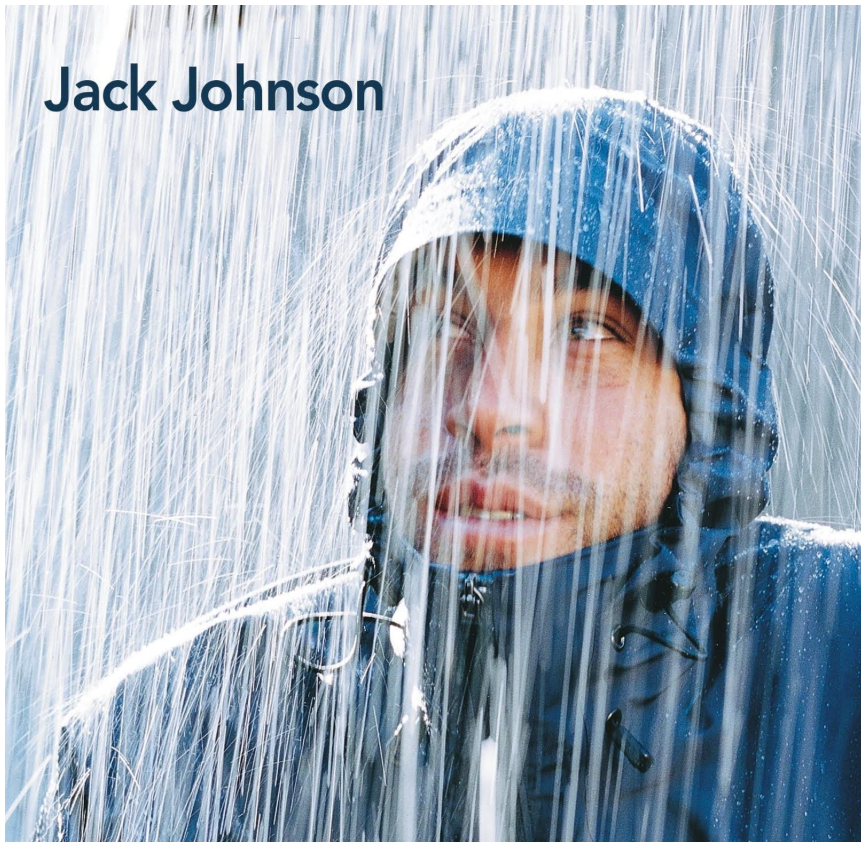
That connection became “Brushfire Fairytales,” recorded in December 2000 near Jack’s home in Hawaii — at Grandmaster Recorders and King Sound in Los Angeles — and produced by J.P. Plunier, released January/February 2001 through Enjoy Records, distributed via Universal, the label later renamed Everloving Recordings.
They needed a bass player and brought in Merlo Podlewski, who’d go on to anchor Jack’s sound for the next two decades alongside drummer Adam Topol — the same trio that would carry his live sound for twenty years. And at one of Harper’s own shows, backstage, Jack had one of those surreal, career-affirming moments — hearing someone behind him singing along to his own lyrics, turning around to find it was Ben Harper himself, hugging him, having somehow absorbed the words to songs that had barely left the four-track.
FLAKE
It was a slow-burn success — no big marketing push, built almost entirely on word of mouth and Jack’s surf-film connections. The lead single “Flake” got real radio traction and became the song most associated with launching him. Commercially, it became a slow-building phenomenon rather than an overnight hit: certified Platinum by the RIAA in November 2002 for one million units shipped in the U.S. (roughly 1.2 million copies), and by some retailer estimates has gone on to sell over 2.5 million copies worldwide, with additional Platinum and multi-Platinum certifications in Australia (triple-Platinum), the UK, Canada, and New Zealand.
DAD ROCK AND DON HO
Critically, the reception broke fairly cleanly along a fault line: Rolling Stone called his sun-kissed acoustic melodies and unfailingly positive vibrations “pretty much impossible to hate,” while The Washington Post placed his sound at the “mythical intersection of dad rock, Don Ho, and the acoustic solo discs Eddie Vedder will one day make when he’s angst-ed out and retired to Maui” — a backhanded compliment that captured the album’s love-it-or-shrug-at-it reputation.
THE QUIETUS DIDN’T DIG IT
In that corner, The Quietus published its takedown of “Brushfire Fairytales” on February 2, 2021, timed to the album’s 20th anniversary, in a piece written by David Bennun and headlined “How Jack Johnson Burned A Path For Some Of The World’s Worst Artists.” Bennun doesn’t pull punches, calling the record “dull, beige and interminable” both on its original release and on relisten two decades later, and seems almost baffled that a record that drags so much only runs 45 minutes.
But the piece is less a straightforward pan than an argument about influence and legacy: Bennun’s real target is the genre Johnson supposedly midwifed — a strain of “sensitive and authentic” indie-folk mumbling that he credits (or blames) for paving the way to artists like Ed Sheeran, Passenger, and Mumford & Sons. He frames the album as the rare case of a record that was a massive commercial success in its moment but has been all but erased from critical memory, even as its creator’s own star has dimmed since.
But that just ain’t so.
SEPTEMBER SESSIONS, AND A PIRATE LOOKS AT 40
As all this was bubbling, Jack flew off with Kelly Slater and the Malloys to make “The September Sessions” — directed by Jack Johnson, produced by Kelly Slater and Emmett Malloy, with Chris Malloy as cinematographer/art director, starring Kelly Slater, Shane Dorian, Rob Machado, and Ross Williams on a boat trip in Indonesia, living the dream and filming it in 16mm. Released December 17, 2002, Jack scored it with two songs: “A Pirate Looks at 40,” his cover of the Jimmy Buffett tune — a tribute to Kelly, a known associate of Jimmy Buffett who turned 30 during filming, though in the surfing world, 30 can easily feel like 40 — and “F-Stop Blues,” written during the shoot.
The alchemy of these talented surfers who had filmmaking and music as side hustles worked, and worked well. Their surf movies were soulful, beautifully crafted, and the soundtrack struck nerves outside of the surfing world.
NEVER UNDERESTIMATE THE POWER OF TELEVISION
Tony Hawk once said “Never underestimate the power of television,” and that proved true for a guy who went from only being able to sing to his mom and Kim to performing in front of millions. From there it stopped being gradual. Jack went out with Ben Harper on tour, and Harper is on record saying it never felt like Jack was opening for him — it felt like the two of them went out together.
A year into that tour, an interviewer poked a microphone at Jack and asked how he’d gotten so big, so fast. Jack’s honest answer: “I don’t know.”
Filling out a form before landing in Australia, under OCCUPATION, he wrote “musician” and admitted it sounded ridiculous even to him: “This is what I’m going for, I guess.”
LENO, LETTERMAN, KIMMEL, SNL
Jack Johnson's rise played out across a real television circuit, and the dates track his climb from surf-movie musician to mainstream act, and later, elder statesman. He made his first appearance on The Tonight Show with Jay Leno on June 3, 2003 — introduced, notably, as much for his surfing as his music, on a bill that also included Paul Walker. He came back to Leno again on July 27, 2005, this time riding the momentum of "In Between Dreams," released March 1, 2005, which had debuted at No. 2 — his highest chart position to date.
Letterman came calling too, with Jack's album by then sitting at No. 3 in the country, though the exact broadcast date remains unconfirmed in what I could find.
Then came Saturday Night Live, where he headlined on March 12, 2005, performing "Banana Pancakes" and "Sitting, Waiting, Wishing" — with Ben Stiller dressed as a scarecrow in a sketch alongside him.
Jimmy Kimmel Live has become a recurring stop across three different decades of his career: he first appeared on September 8, 2017, alongside Christian Slater and Richard Lewis; returned on June 8, 2022, on an episode that also featured President Joe Biden, performing music the same night as a sitting president; and most recently, on December 2, 2025, performing "Hold On to the Light" with Hermanos Gutiérrez — a track from the SURFILMUSIC soundtrack — timed to the 25th anniversary of "Thicker Than Water" and "The September Sessions," and previewing his 2026 tour.
Jack Johnson somehow never did an MTV Unplugged, but he says seeing Nirvana on that show in December 1993 inspired him: “I remember watching Nirvana Unplugged in particular and thinking ‘Wow, those songs still work even without all the distortion. They’re still just beautiful songs.’ I would play them on acoustic guitar, like a folk version, and my friends would pay attention. I started learning that a really good song can be played in any form.”
It’s a strange kind of fame — a guy who used to shut down if anyone but his mom was in the room, suddenly doing bits with Ben Stiller on national television. Harper’s read on it is the right one: Jack didn’t grow into the arena, he stepped into it fully formed. Everyone else just had to catch up.
Since “Brushfire Fairytales,” Jack has released Since Brushfire Fairytales, Jack has released seven more studio albums — On and On (2003), In Between Dreams (2005), Sleep Through the Static (2008), To the Sea (2010), From Here to Now to You (2013), All the Light Above It Too (2017), and Meet the Moonlight (2022) — along with three live albums (En Concert, 2009; From Here to Now to You: Live, 2014; and Songs for Maui, 2023, a benefit release recorded live in 2012 and issued after the Lahaina wildfires), the dub remix collection In Between Dub (2023), and the new SURFILMUSIC Soundtrack and 4-Tracks (2026), featuring the lead single "Hold On to the Light" with Hermanos Gutiérrez. Collectively, his catalog has sold over 25 million copies worldwide.
He's toured behind nearly every one of those records — the To the Sea World Tour (2010), the From Here to Now to You Tour (2013–14, 88 shows across seven legs), the All the Light Above It Too World Tour (2017–19), and the Meet the Moonlight Tour (2022–23, taking his "All At Once" environmental campaign to more than 350,000 fans across North America, Europe, and South America).
Since 2008, Johnson has directed 100 percent of his touring proceeds to charity, split between the two foundations he and his wife Kim run: the Kōkua Hawaiʻi Foundation (founded 2003, focused on environmental education in Hawaii schools) and the Johnson Ohana Charitable Foundation (founded 2008, funding similar environmental/arts/music education work worldwide). The Johnson Ohana Charitable Foundation donates between $2,500 and $5,000 to several nonprofits in every town they play, usually 5 to 10 groups per show, and has distributed more than $2 million to date.
It started specifically with the 2008 Sleep Through the Static tour, when Johnson adopted a "greening" concept and gave 100% of that tour's proceeds to the Johnson Ohana Charitable Foundation, and continued with the 2010 To the Sea tour, whose proceeds went to All at Once, a Johnson-backed coalition of environmental charities. It's stayed policy on essentially every tour since — the practice, not just the amount, is the through-line: "aggressively pursuing green alternatives to traditional rock 'n' roll outings" has been standard for his tours for close to two decades now. Combined, the two foundations have raised roughly $25 million as of recent reporting.
2004: A BROKEDOWN MELODY AND IN BETWEEN DREAMS
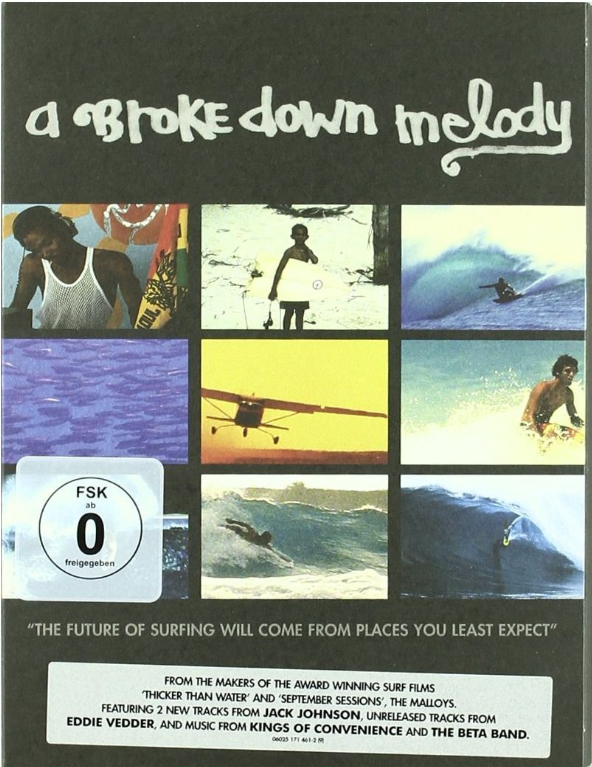
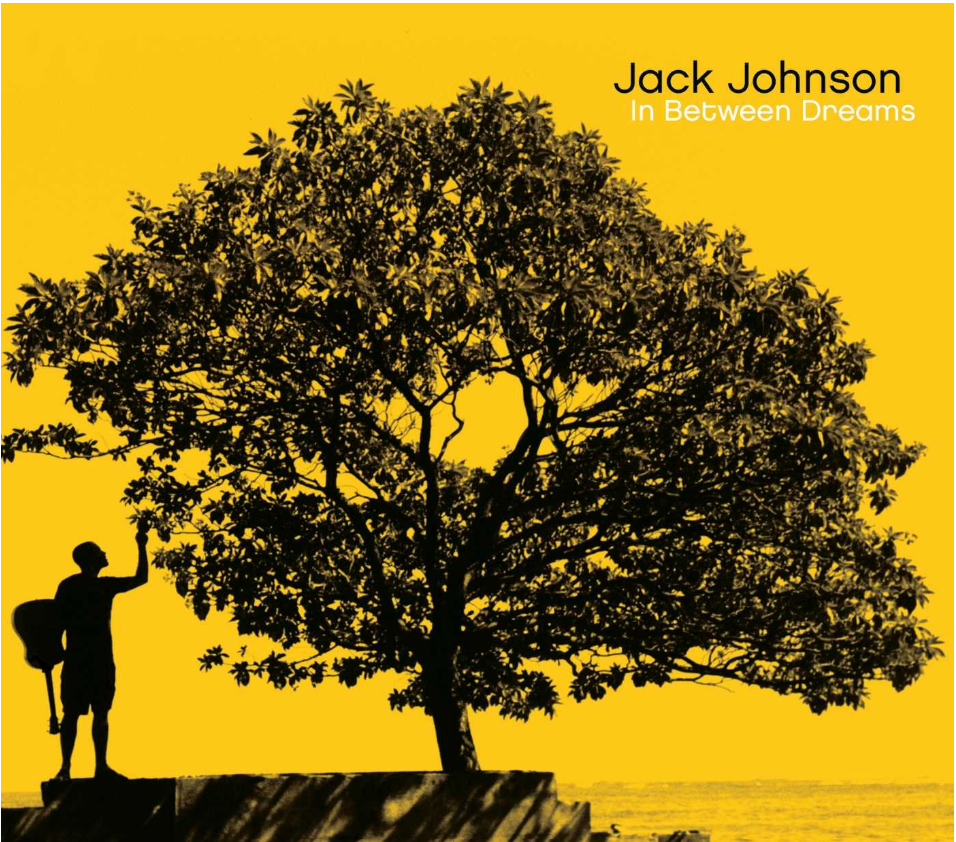
Released September 16, 2004, “A Brokedown Melody” was directed by Jack Johnson and Chris Malloy, produced by Emmett Malloy, starring Kelly Slater, the Malloy brothers, Tom Curren, Rob Machado, CJ Hobgood, and Johnson himself. This one landed right as Jack’s second album, “In Between Dreams,” was about to launch him into the mainstream, featuring Better Together (1,072,904,575 streams), Banana Pancakes (745,608,561 streams), Good People (228,010,133 streams), Sitting, Waiting, Wishing (474,730,909 streams), and Do You Remember (190,422,415 streams).
On streaming today, his biggest hits remain Better Together at just over 1 billion plays, followed by Banana Pancakes (roughly 748 million), Upside Down (roughly 740 million), and Sitting, Waiting, Wishing (around 470 million) — proof that songs from “In Between Dreams” especially have stayed in heavy rotation nearly two decades on. Do the math.
2006 - 2007: CURIOUS GEORGE
Ron Howard hired Jack Johnson to score the 2006 animated Curious George film, and Jack later said simply that his name "was one that came up" while he was riding high off a platinum album and two Grammy nominations.
He worked directly from storyboards, writing songs to match specific scenes before the film was finished — nearly all of them solo compositions, plus one cover and guest spots from friends like Ben Harper, G. Love, Matt Costa, and Hawaiian slack-key guitarist Kawika Kahiapo.
The resulting soundtrack, released February 7, 2006, became a genuine commercial landmark: it topped the charts in Australia and New Zealand, held No. 1 in Canada for four straight weeks, and on February 25 became the first soundtrack to top the U.S. Billboard 200 since 2003 — and the first animated-film soundtrack to hit No. 1 since Pocahontas in 1995.
The lead single, "Upside Down," went platinum and became his only U.S. Top 40 hit for years afterward, while the follow-up single, "Talk of the Town," didn't repeat that success.
All told, it remains one of the biggest, most surprising commercial peaks of his career.
2003 - 2008: KOKUA MEANS “HELP” & “AID” & “COOPERATION”
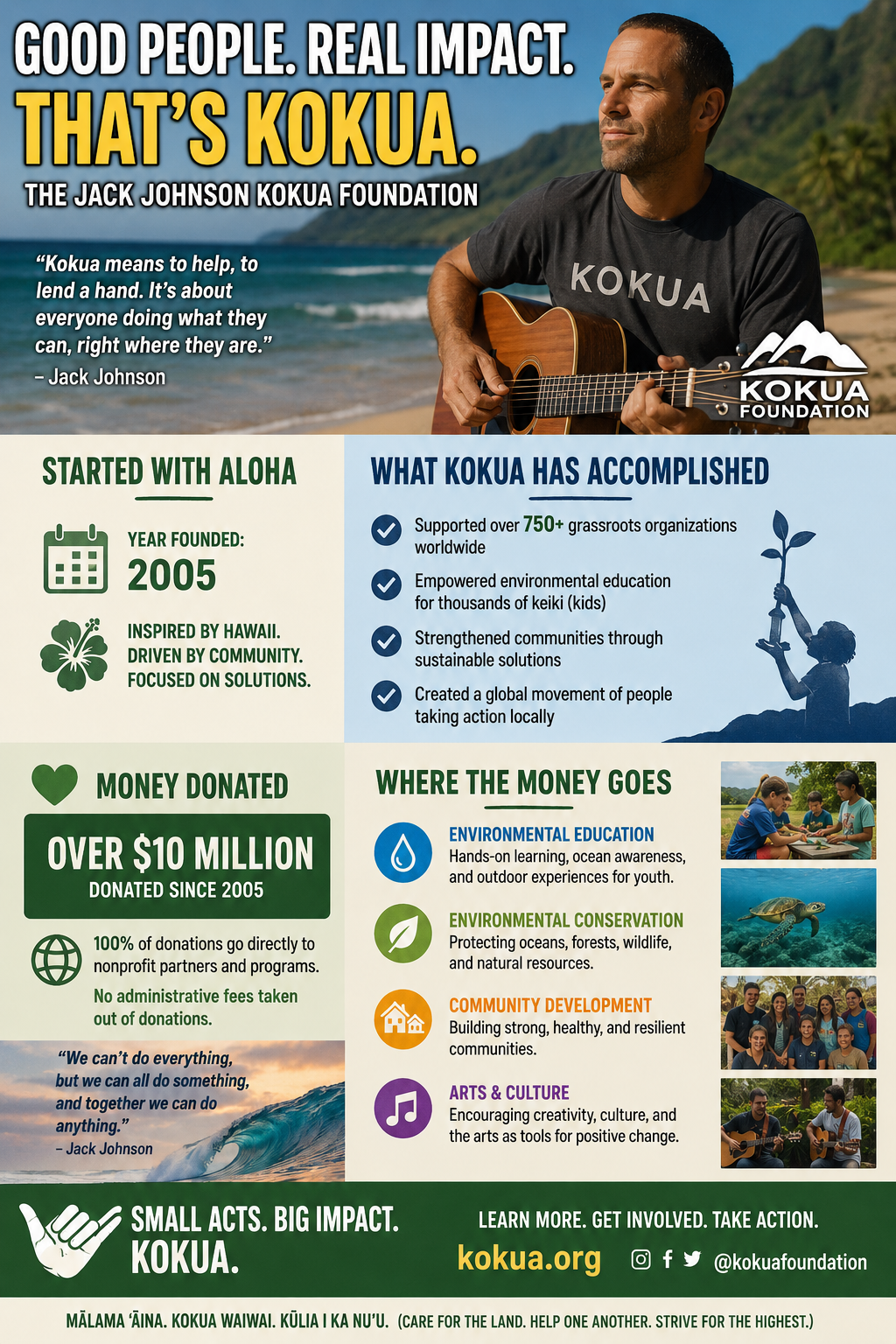
What Jack did with the platform matters as much as how fast it arrived. In 2003, Jack and Kim founded the Kōkua Hawaiʻi Foundation, funded largely by the “Kokua Festival,” a benefit concert at Waikiki Shell Jack has headlined periodically since 2004, bringing out guests like Eddie Vedder, Dave Matthews, Willie Nelson, and Jackson Browne.
In 2008 they added the Johnson Ohana Charitable Foundation, and Jack has directed 100% of his touring profits into it ever since, plus one-off gifts like $50,000 apiece to Hurricane Sandy and Japan tsunami relief.
By the mid-2010s the two foundations combined had raised roughly $25 million. As Jack puts it in the film, nothing worth creating comes from anywhere but relationships — the foundation exists because of friendship, same as the band, same as the movies.
ALOHA MEANS “HELLO,” “GOODBYE,” AND “LOVE”
And then the film does something few music documentaries have to do: it grieves. The documentary ends with an aloha tribute to Tamayo Perry — a fellow of infinite jest, a talented Pipe surfer, a Pipe Masters Trials winner, and one of the watermen who shaped that whole world — who died in a shark attack off Oahu’s North Shore in June 2024, at 49.
SURFILMUSIC doesn’t rush past it. There’s a paddle-out at Waimea, an outrigger pushed into the water in Tamayo’s honor, and Jack, on a stage decades removed from Roy’s open mic night, playing an old song that suddenly means something different than it did the day he wrote it.
At the Moonshine Film and Music Reunion in 2025, Tamayo’s image was up on the screen while Jack played, and the room felt it. Chris Malloy talks about it as a big family sharing stories that matter more with each year that passes. Harper, reflecting on Jack’s music generally, nails what makes it work: an intensity built for surfing, carried into songwriting with an ease that doesn’t sound like it came from technique — it sounds like it came from somewhere real.
Emmett has his own stories.
Kim talks about being embarrassed, at this point in life, to still be the subject of those not-so-silly love songs, but how she falls in love with her kane all over again.
HEAPS AND HEAPS OF WORTHLESS SOULS
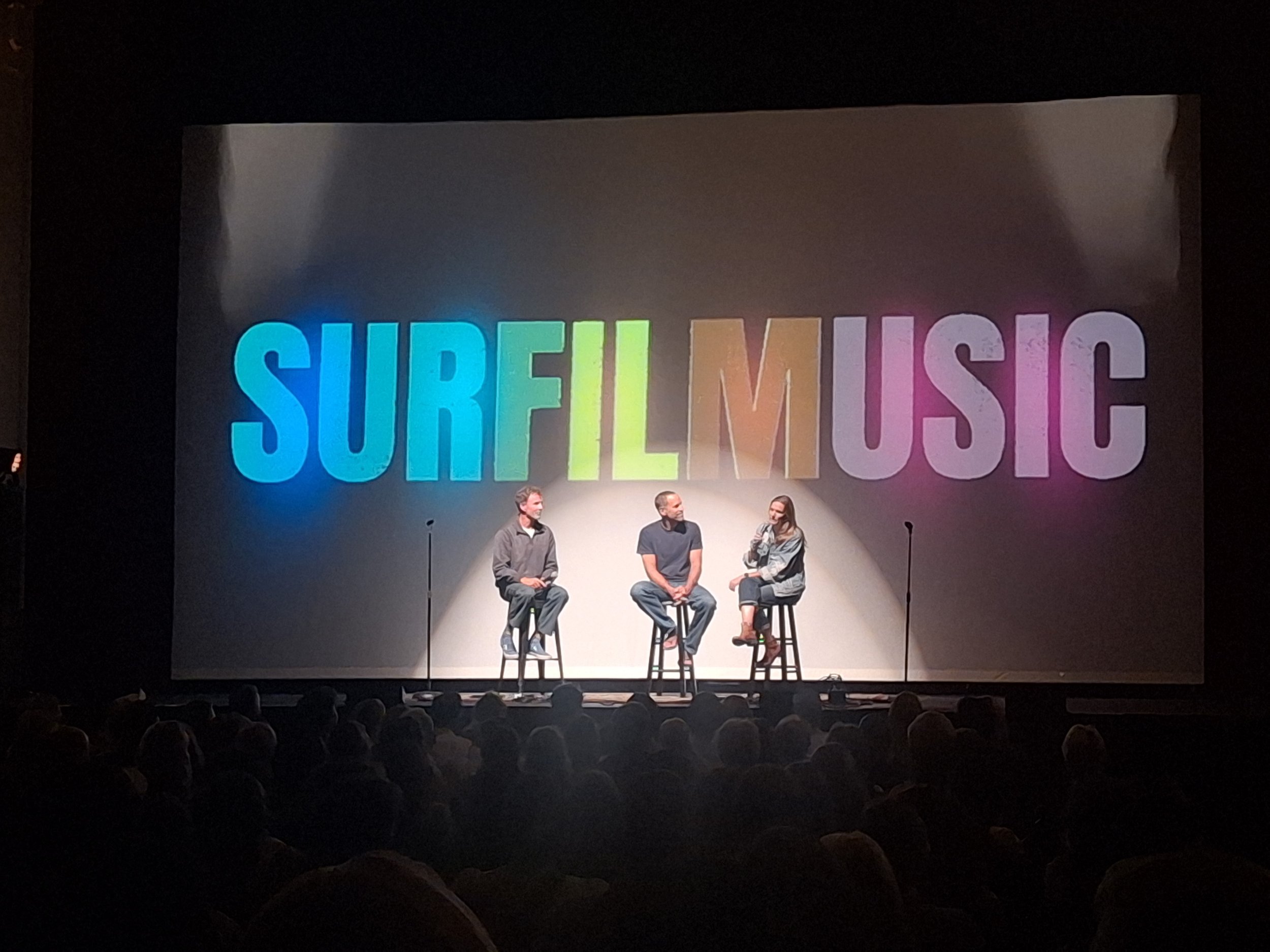
So that’s what the movie is about, but words don’t do justice to the musical montage of surfing and travel images, the interviews, the familiar faces and exotic places and cameos by everyone from Sonny Miller (RIP 1960–2014) to Ben Stiller.
After the movie, Emmett, Jack, and Kim took the stage for a Q&A that solved a nagging mystery for me: Jack was inspired to write “Good People” when he had to refuse several times an offer to write music for a reality show filming on the North Shore. And I finally learned the correct lyric — “We’ve got heaps and heaps of worthless souls” — after wondering for years if it was “reap and reap what we sow.”
BACK TO THE SWINGIN’ 70S
For Alex and me — Team Boomer, veterans of 1970s Santa Cruz — this had the fun vibe of every surf movie ever screened at the Civic, combined with a music show. Jack pulled out his guitar and played some of his greatest hits, joined by Zach Gill, from Saratoga, on accordion and melodica. I was a big fan of Dan Hicks and His Hot Licks way back in the 1970s. He called his band The Acoustic Warriors, and if you were playing violin or bass or piano alongside Dan Hicks, you were a serious cat.
Same, same with Jack Johnson.
OSCAR WORTHY?
I enjoyed “SURFILMUSIC” the way I enjoyed the Charlie Sheen documentary — both put together with craft and insight and love and brains. I’ve been pestering Emmett and them to make it an Oscar contender, and hopefully they do.
“I’ve won a Grammy for Best Music Film, for directing ‘Big Easy Express’ in 2013 — I am on it with the awards stuff,” Emmett said. “I have a good publicist for the film, so we are doing all award submissions for sure.”
Asked about the backstory to this story, Emmett said: “I worked hard on this because it was for Jack and all of us. It took a long time, but we were not really intending on making a film. For a while I was just doing interviews for the re-release of ‘Thicker’ and ‘September Sessions.’”
I rudely asked what it cost to produce SURFILMUSIC. Emmett fouled that off but said: “We spent so little to make it because the director was so cheap! (I’m not cheap.) We did it with no expectations, so we always kept things very lean. And we didn’t have to license much footage. For sure it was worth it, just for Jack’s career it was worth it. Business is way up. Touring is so strong this summer.”
I wondered if SURFILMUSIC would get sold to a streamer, and Emmett said: “I am just super happy our film made it to the finish line. The theatrical run has been amazing and it will have a good next life. Just haven’t figured that out, but will keep doing more things independently.”
MEET ME AT THE GREEK
Touring is strong indeed for 2026: 43 shows that began June 19 in Gilford, New Hampshire, to shows in Australia, New Zealand, Argentina, and Brazil in October. The special screening we saw at the Golden State Theater in Monterey on July 25 showed the movie, plus the Q&A and music, but that might have been special because Kim is a Monterey hometown gal and family and friends were in the house.
I think most of the shows will be music only.
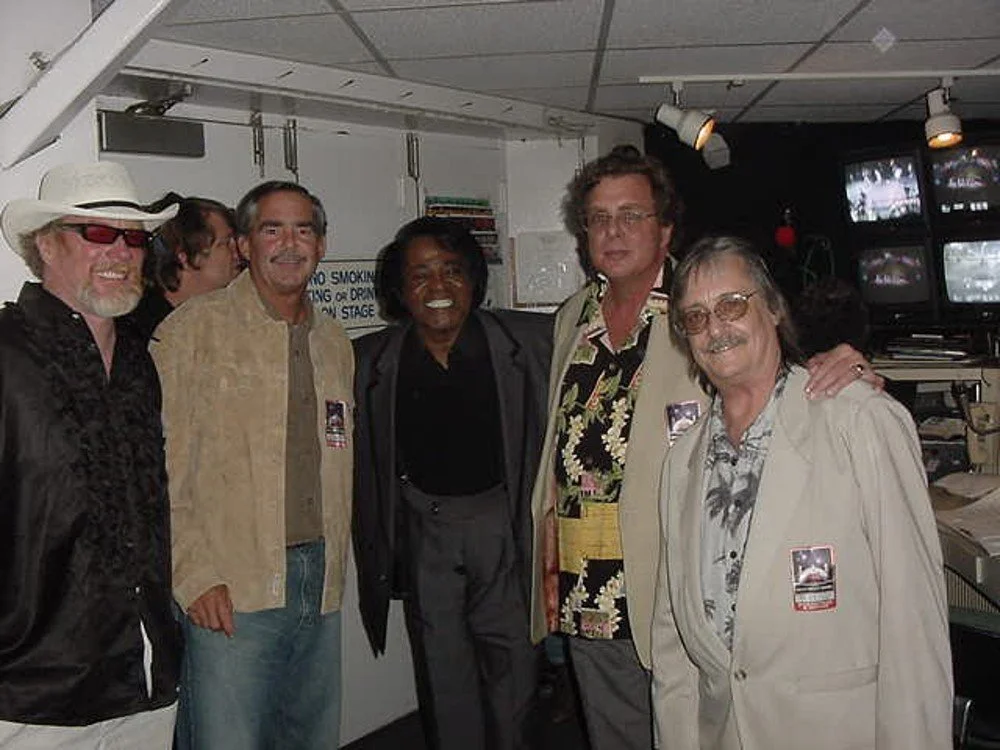
Backstage at the Hollywood Bowl. Me hiding behind two Quiksilver guys, the GFOS, Jim Fuller of the Surfaris on the right and Jim’s friend Dennis (??) between them. Brown had a killer band, two hot Brazilian dancers and put on a great show. Bootsy Collins and Ike Turner were backstage too. Fun!
The “SURFILMUSIC” tour is coming to the Greek Theater in Berkeley at the end of September into October. My friend David listens to “Home” all the time and wants to go with his wife, Victoria. Years ago we saw Chris Isaak at the Greek and it was rocking good times, so I’m gonna try to talk our way backstage or something.
And then the Northern Hemisphere tour will end October 10 and 11 at the Hollywood Bowl. I once saw James Brown from backstage at the Hollywood Bowl, sitting beside Jim Fuller, the guitarist for the Surfaris who wrote “Wipeout.” I accused him of ripping off the Batman theme, because “Wipeout” goes da na na nana nana nana da nana nana nana nana, while “Batman” goes da na nana nana nana da na nana nana nana. But the guitarist fouled it off and said Wipeout came first — so the Caped Crusader ripped off The Surfaris.
I wouldn’t mind going backstage again, which is why I wrote this review in two pieces.
Shoots!