Ben Marcus Rules
Writing, Research, General Word Nerdiness
×
HARD HAT/SOFT OPENING FOR THE SURFING HERITAGE AND CULTURE CENTER
The Alexandrian Library/Cooperstown/British Museum of Surfing Moves Into Posh New Digs
June 20th, Laguna Beach, California
The cultural stereotyping of surfers in the media - Frankie and Annette to Jeff Spicoli to Mick the Masochist to Surfer, Dude with Matthew MacConaughey and Woody Harrelson (A movie I have not seen because the word of mouth was vomitous and that picture infamously scored a %0 on Rotten Tomatoes) would have you believe surfers uniformly suffer from the Seven Deadly Uns:
Unsophisticated
Uncultured
Uncouth
Uncreative
Unintelligent
Uneducated
Unmotivated.
THE ENDLESS DUMBER: SURFER STEREOTYPES IN HOLLYWOOD “WAXPLOITATION” MOVIES
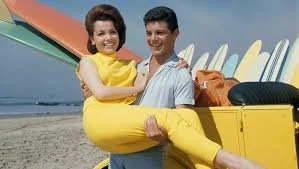

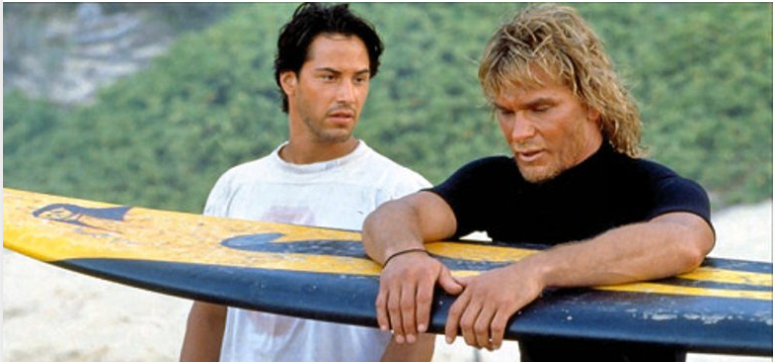
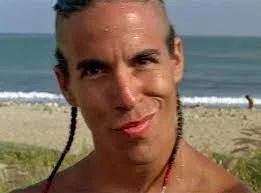
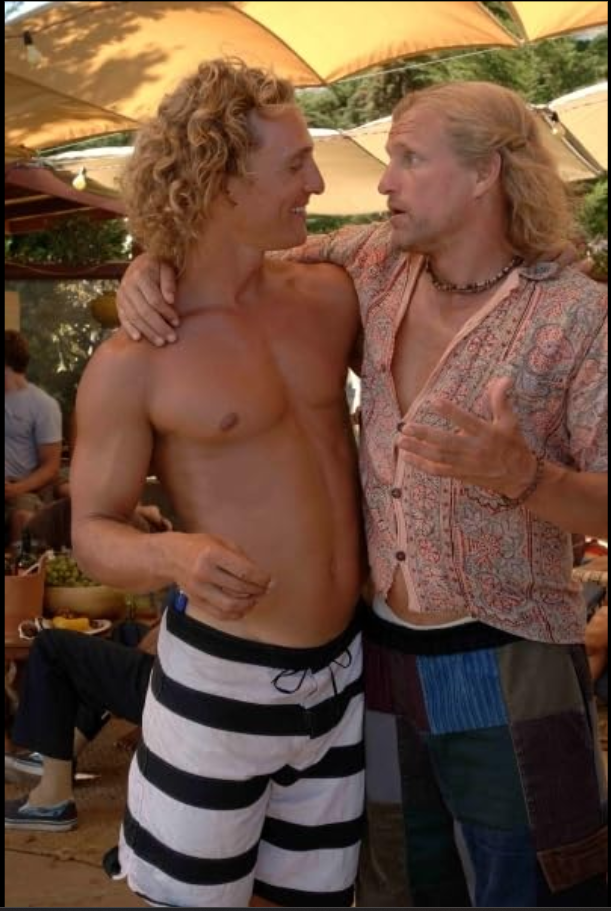
While that is true of many in the surfing tribe, those who believe all surfers suffer from all Seven of the Deadly Uns are Uninformed and indulging themselves in a canard (cool word, look it up)
The new iteration of the Surfing Heritage and Culture Center Formerly Known as the Surfing Heritage Foundation (SHACCFKATSHF) is a shining beacon of how sophisticated, cultured, creative, intelligent, educated and motivated surfers can be about their history and culture.
For a special invitation only sneak preview on June 20th - one day after the Obama Presidential Center was unveiled to the unsurprising mixed reaction - the founders of the Surfing Heritage and Culture Center Willy Wonkaed open the doors of their new facility in Laguna Beach, for what founder Dick Metz called a “hard hat” opening, because the SHACC is about 90% pau, with refinements and polishing to be done before a Grand Opening some time in September - after the hordes of summer have gone.
In a word: Unique. Unprecedented. Unreal.
I have been involved with the SHACCFKATSHF going back at least as far as 2005, when it was called the Surfing Heritage Foundation and it was squirreled away in a nondescript business park out the back of San Clemente.
SHACC curator and historian Barry Haun gave some backstory to the early evolution of what was the Surfing Heritage Foundation.
“Spencer didn’t come on board as co-founder until 2004, at which point he bought the San Clemente space, got very involved, and we were able to open our doors to the public in 2005. Prior, Dick and Spencer shared Spencer’s warehouse in Costa Mesa where their boards were mostly kept and Spencer also had his office – some of Metz’s boards were still at the Hobie shop in Lahaina (might want to double check on this and whether there were also boards elsewhere) but those eventually made their way to San Clemente. Dick’s office at the time was literally a closet inside his then girlfriend’s office, and he and I shared a desk, two chairs and a computer. That office is just up the street on PCH, across from the Laguna Art Museum, and was above what was the Indian Territory store. Full circle.”
Spencer Croul added: “The Croul Foundation donated the San Clemente building to SHACC in 2015. It only (?!) sold for $4,200,000, but the proceeds went a long way to covering the cost of the new building.”
Malibu citizen John Mazza added: “I think you need to add that Dick was the founder and partner of the Hobie surf shops in Hawaii and California for many years and had the foresight to understand that there was value in keeping old wood boards that were traded in or going to be dumped as they were replaced by modern technology during the fifties and sixties.
Dick ended up with what was the basis of the collection that exists at SHACC today. When he moved back to California he brought the gems of that collection with him. At the time collecting surfboards as a hobby did not exist and actually consisted of surfers like Dick understanding that the culture of surfing was expanding and valuable. Only with the first organized surfboard auctions did the value of saving the history of surfboards become understood.
It was really from surf shops that Dick ran that the origin came from not his closet which would have to have been pretty big.”
SIDEBAR 1: BROCK LITTLE AND DA BULL’S 11’ 4” ELEPHANT GUN
(Sidebar #1: When I worked at SURFER Magazine in the 1990s, we borrowed an 11’ 4” 4-inch-t’ick beast of a yellow Greg Noll elephant gun from off the wall at the Hobie Shop in Dana Point. I think it was Dick’s and it might have been the board Greg was clutching as he timed the shorebreak at Pipe before paddling out and catching that Second Reef beast with his bare hands. Or maybe this was the board he rode at Makaha in 1969.
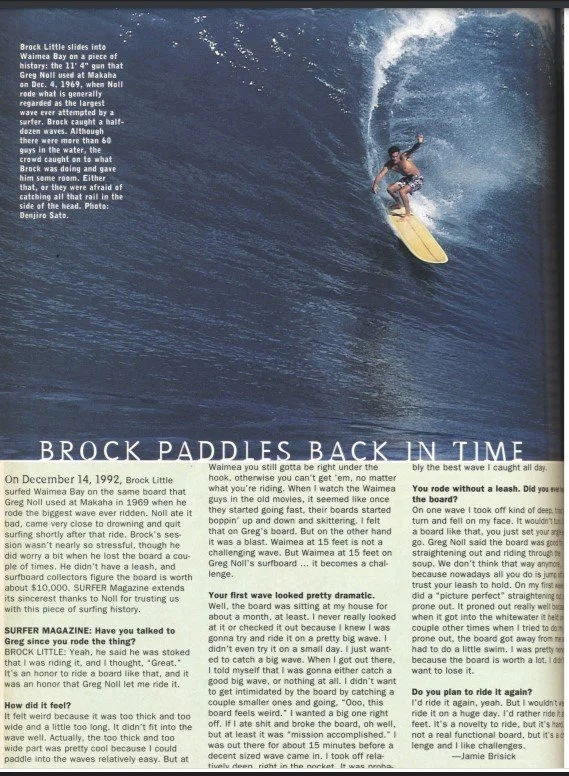
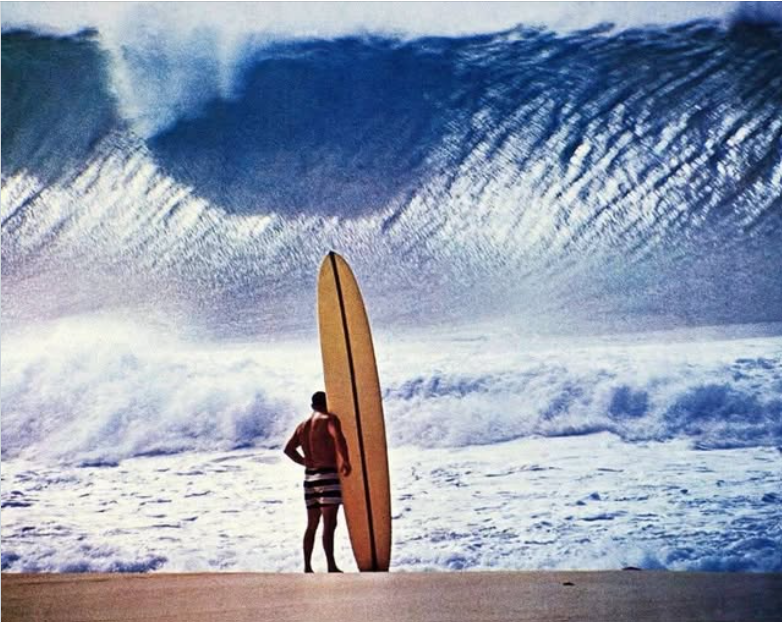
Whatever, that board was a beast. I found a Very Large Packing box and barely got that thing on the plane and rented a U Haul in Honolulu and very carefully transported that gun to Oahu and delivered it to Brock Little. I think that board weighed more than Brock. He said it paddled great but didn't turn too good. That board almost went into the lava rocks but a dozen guys went after it and rescued those lava rocks from getting pukaed. Jamie Brisick interviewed Brock about that and got it back to the mainland in one piece.)
Working at SURFER Magazine from 1989 to around 1999, I had saved a lot of artifacts and tchotkes and other pieces of history, and was jazzed to donate them to the SHACCFKATSHF where they would appreciated, curated, protected: I gave them all the VHS videos from the first four years of the Surfer Magazine Surfer Video Awards, some of those 14-foot-long faxes Derek Hynd would send us from J Bay or wherever. All kine cool stuffs.
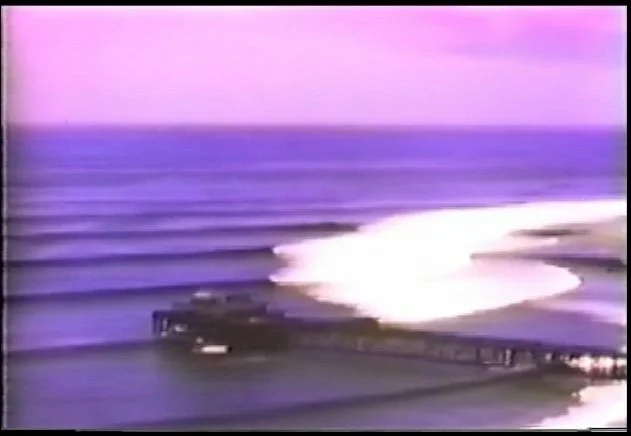
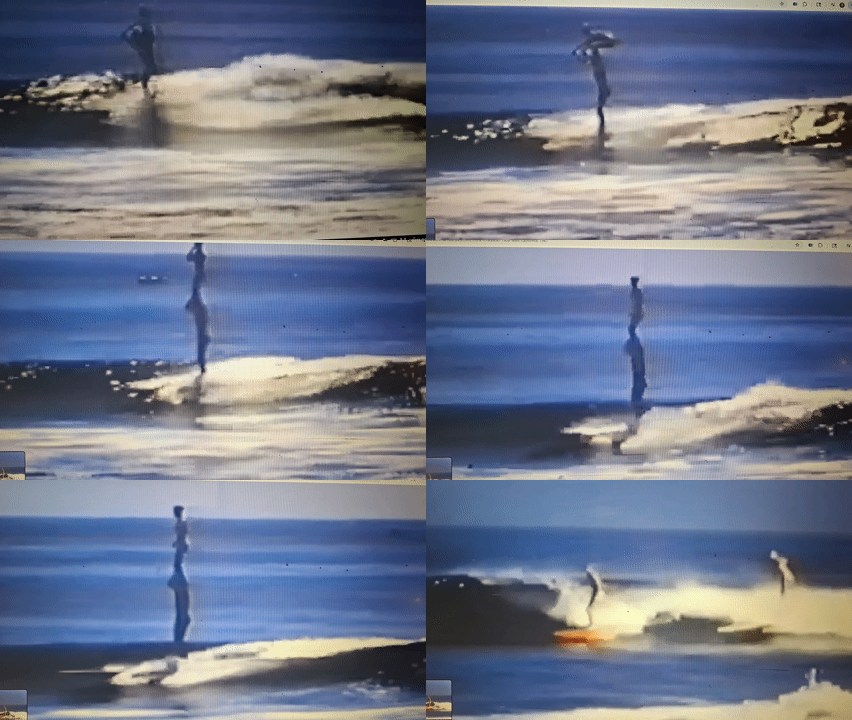
In 2005 I put together a video musical montage called Trunk It which begins with Bishop Museum moving images of Waikiki in the first half of the 20th Century: Guys surfing Canoes in 1906, Duke dancing hula at the Moana Surfrider, paddleboard and canoe races at the Outrigger Canoe Clubs - all kine cool stuffs from the Golden Era of Waikiki before passenger jets and statehood.
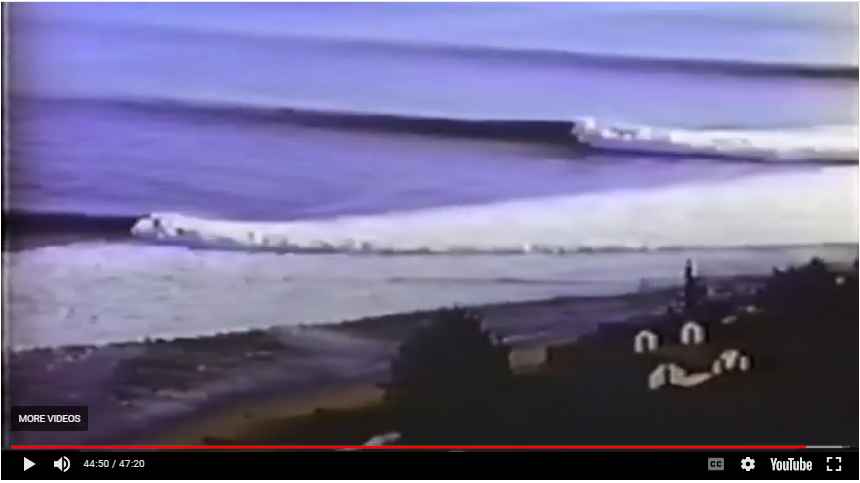
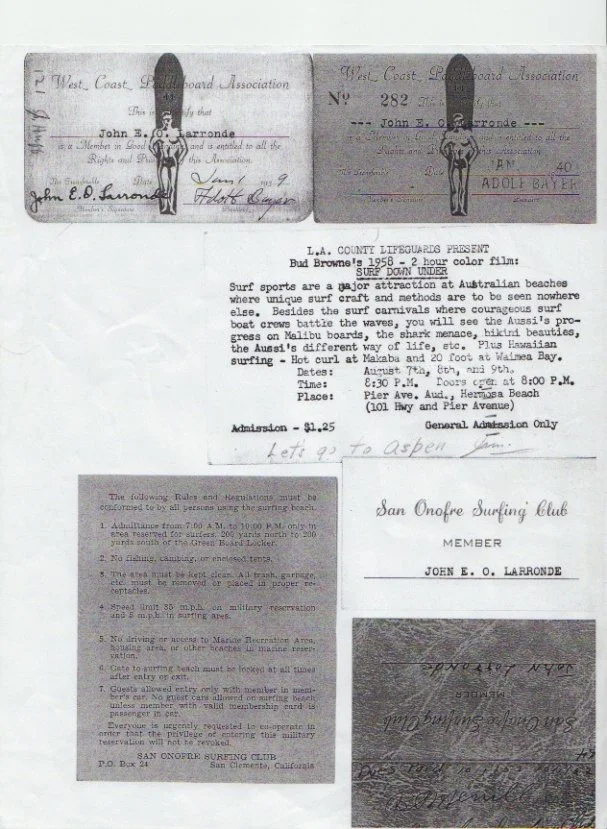
At the end of Trunk It is Sweet Sixteen: 16 minutes of 16 mm film shot by John Larronde in California in 1947: What appears to be a club contest at San Onofre, big Malibu with Matt Kivlin and friends, Bob Simmons driving his old jalopy with two boards strapped to the roof down to the Ventura Overhead, and then Simmons and a Happy Few surfing big Overhead in ways it apparently doesn’t break anymore. Eight foot Rincon with no one in the water, and then Joe Quigg and two others with no wetsuits or leashes surfing Rincon about halfway down and loving every minute of it.
They are on huge hardwood planks they turn like 747s and you can see the oil pier at Little Rincon being built in the background. Three guys, not 300. 1947, right on the cusp of a big change in surfboards. That Sweet Sixteen footage is like the Rosetta Stone of surfboard history.
I kiped it from a Malibu guy who didn’t know what he had, copied it, digitized it, returned it,used it as the end of Trunk It and now a copy is secure in safe keeping at the SHACC
GLIMPSES FROM TRUNK IT
Waikiki from 1906 to World War 2. Then 16 minutes of California in 1947.


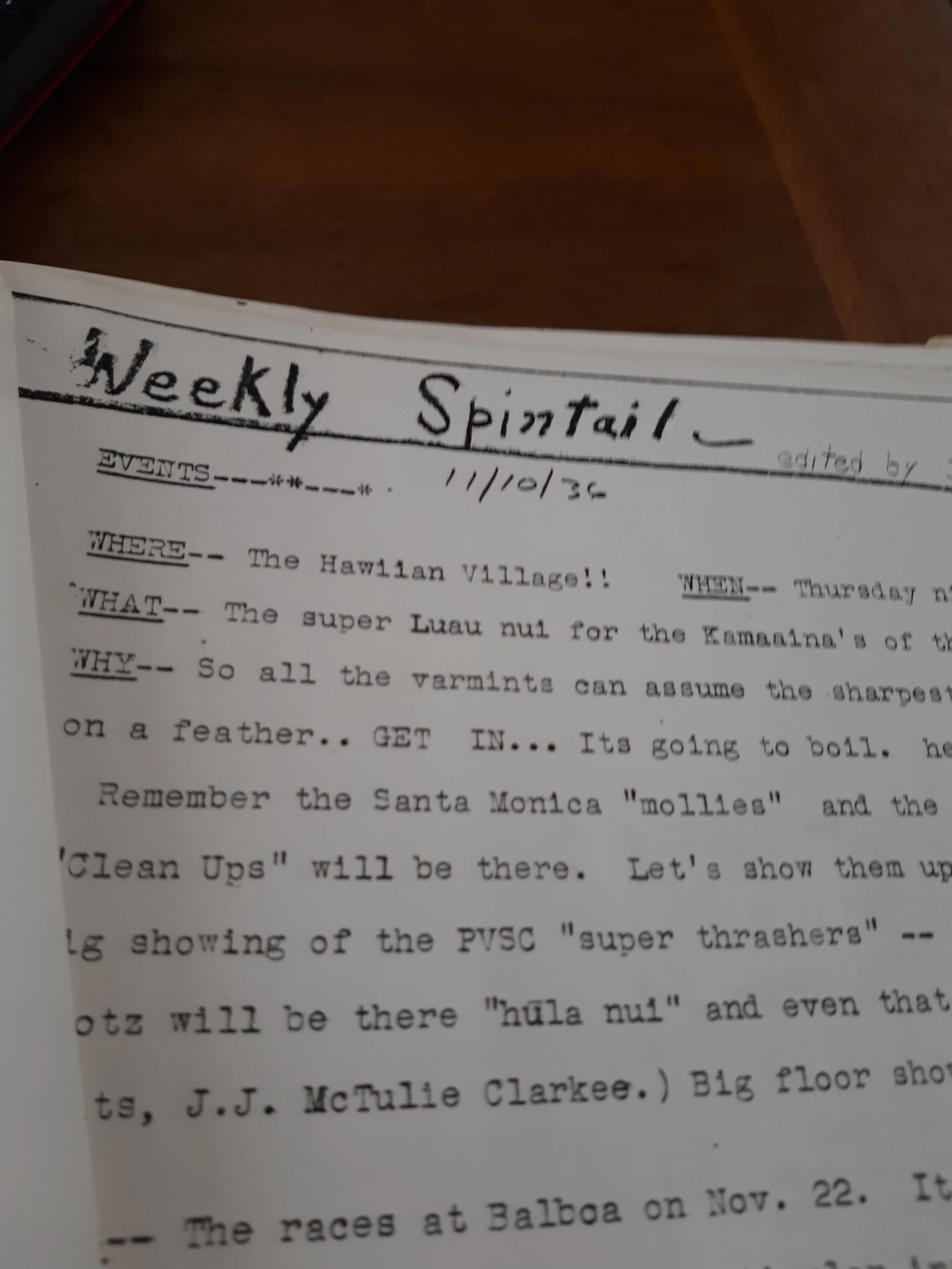
As a writer and history geek, I love that the SHACC exists because I find stuff sometimes and am jazzed to have a place to archive and store it: Like when they were cleaning out the warehouse at SURFER Magazine (RIP 1960 - 2022) I found a thick binder with Xeroxed copies of The Weekly Spintail - the newsletter of the Palos Verdes Surf Club. The first pages are dated November 10, 1936 and then there are hundreds of pages that end abruptly on November 22, 1941. The attack on Pearl Harbor happened two weeks later and all normal activities in California came grinding to a halt.
GLIMPSES OF THE WEEKLY SPINTAIL 1936 - 1941
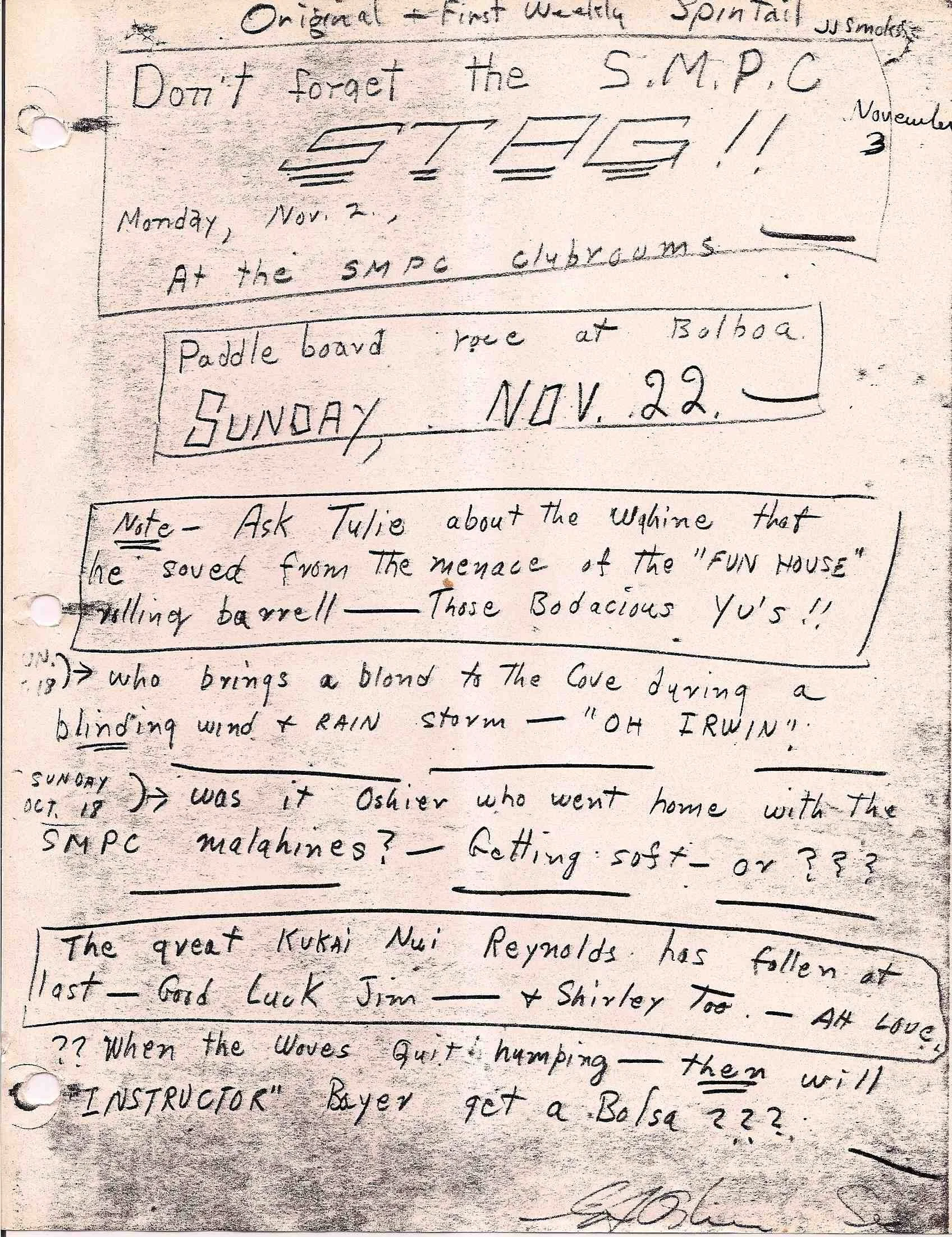
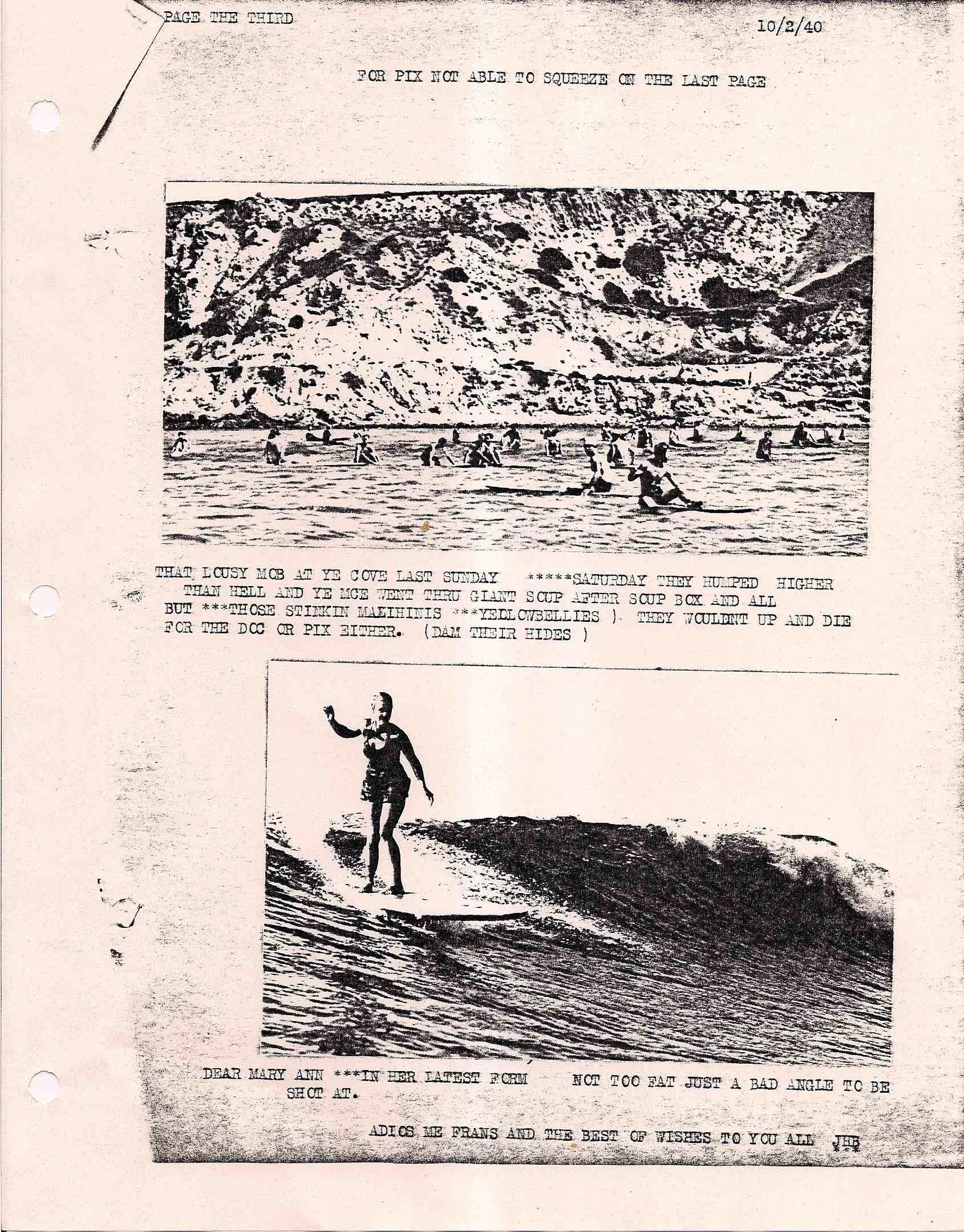
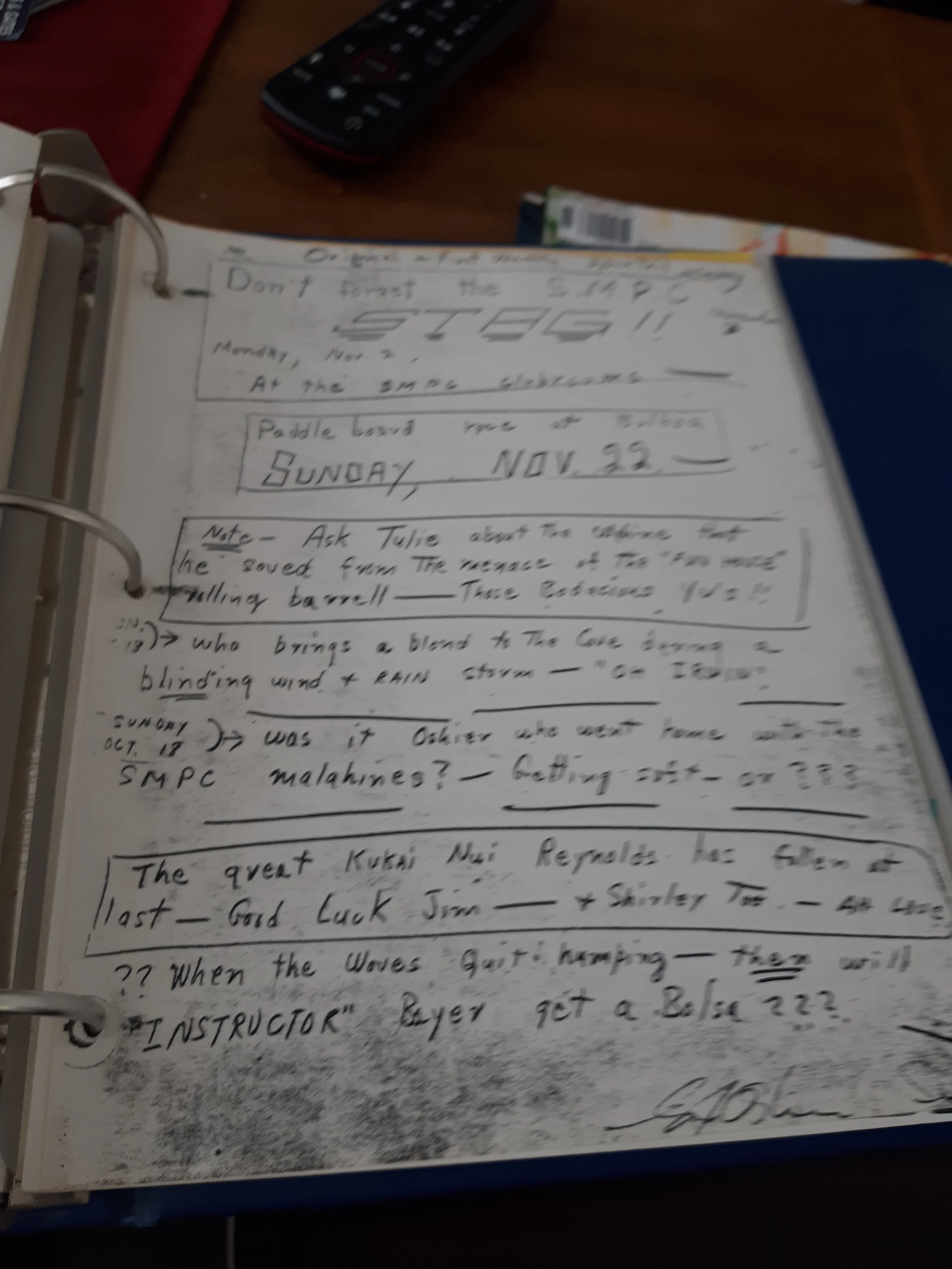
I confiscated that big thick binder of what was probably the first ongoing surf-related periodical of any kind, retrieved it from Griff Snyder and handed it over to Dick Metz for safe-keeping. It’s probably tucked away in their library upstairs - indexed and cataloged as it should be.
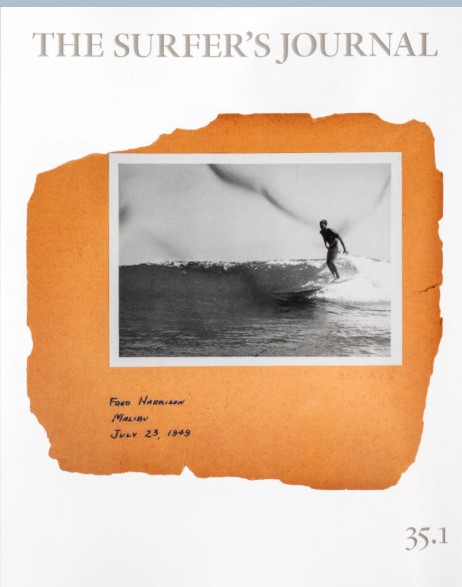
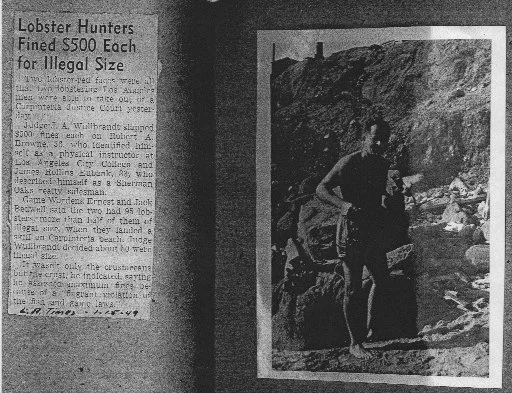
I also begged Dick Metz to go to the Ventura County Museum to look at the John Larronde Collection of photos. Larronde is the same guy who filmed Sweet Sixteen and was recently featured in The Surfer’s Journal. He photographed Southern California beach life from the 1930s into the 1960s and the collection is a treasure trove - I felt like Howard Carter looking into King Tut’s Tomb and seeing wonderful things.
Dick took a historic haj to Ventura and saw the whole collection and agreed on the quantity and quality, but the Ventura County Museum weren’t selling for any price. So now all that mid-century surf and beach and diving and lobster history is squirreled away and dusty in some corner of the museum like the Ark of the Covenant at the end of Raiders of the Lost Ark.
No bueno.
The Larronde Collection belongs in the Surfing Heritage and Culture Center and that’s a tragedy right up there with the Elgin Marbles in the British Museum.
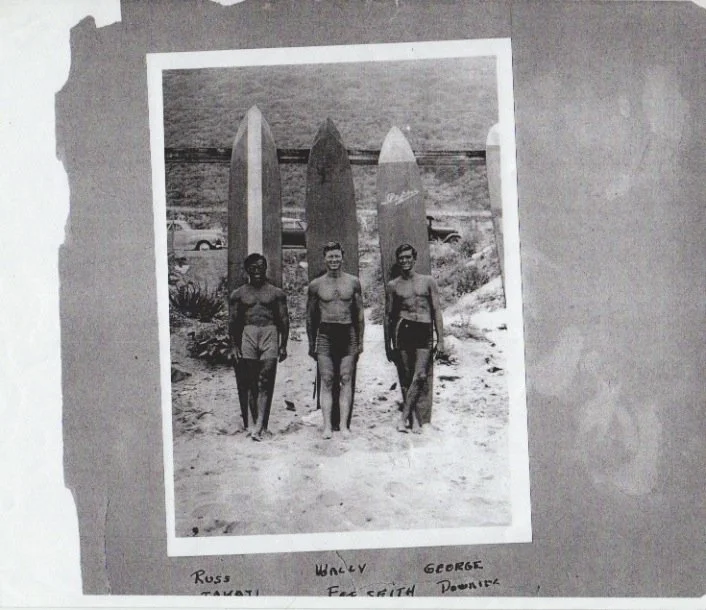
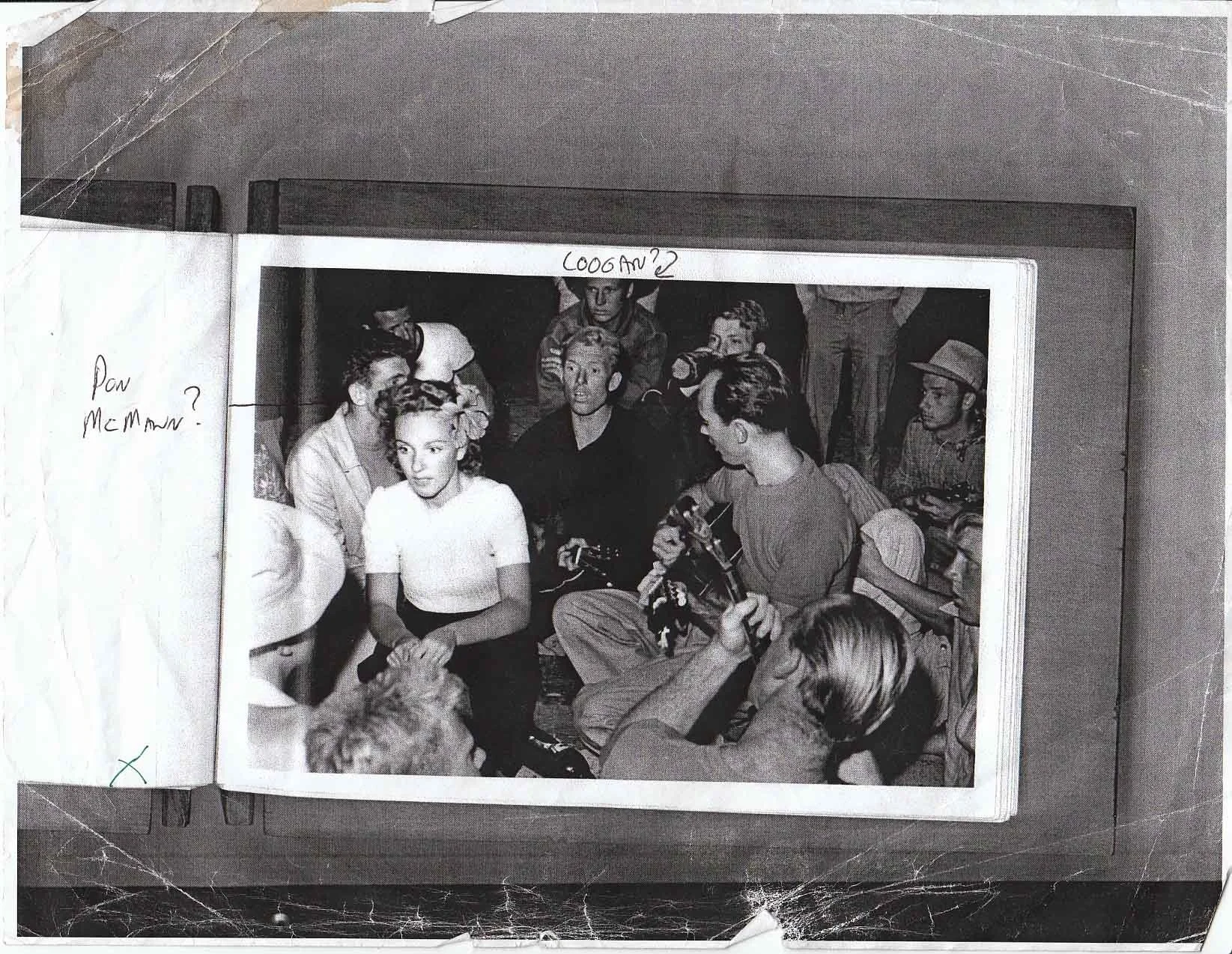
THE LARRONDE COLLECTION SAMPLES
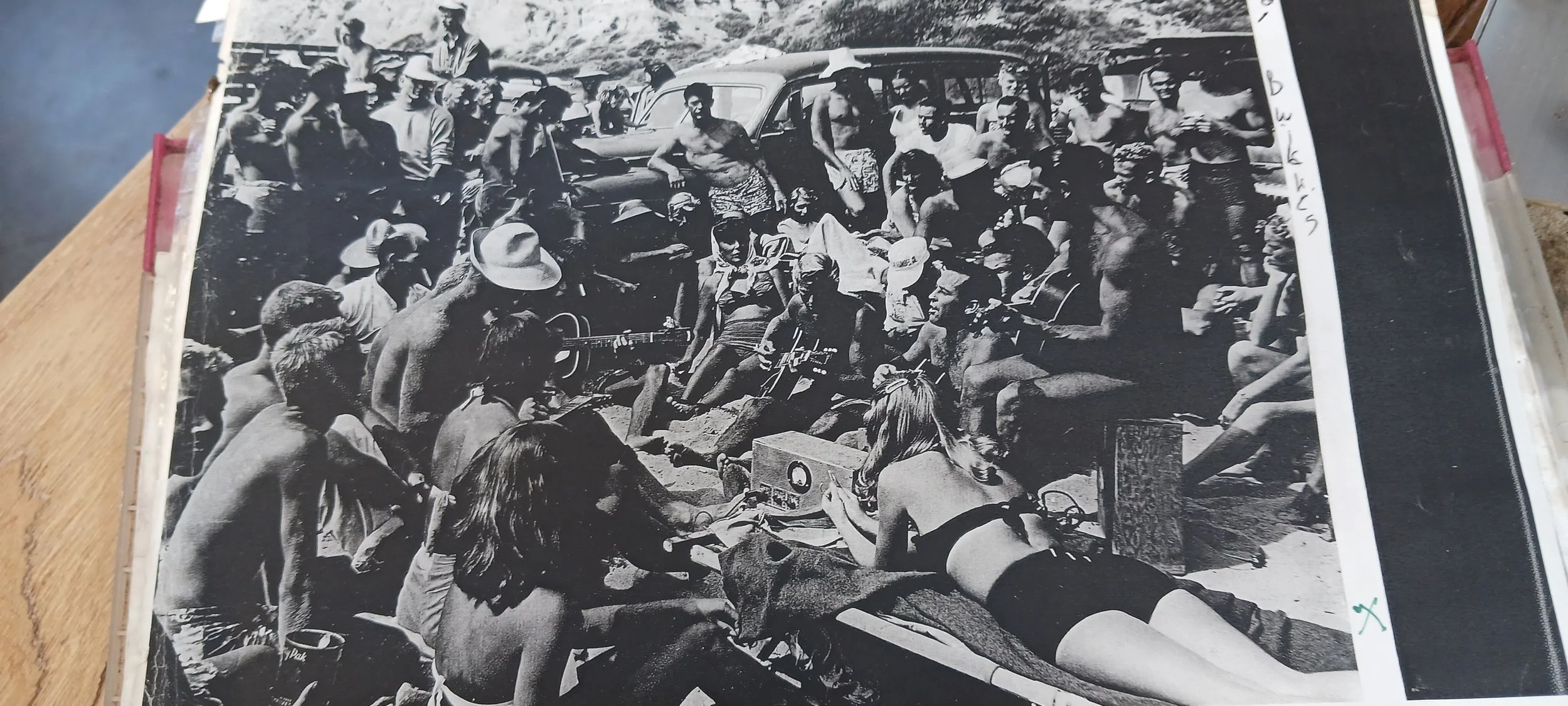
Look close and you’ll see Norma Jean/Marilyn Monroe hanging with Jackie Coogan/Uncle Fester, Pete Peterson, Whitey Harrison and Tommy Zahn at a Malibu Beach party at Cap Watkins circa 1947.
You’ll also see George Downing on the beach at Malibu with the Wally Froiseth and Russ Takaki with the Pepe board he ran into the Malibu pier and thought it was pau. Bob Simmons offered ot fix it: ”And that was the first time I saw fiberglass and resin,” George said.
That beach party photo at San Onofre beach party photo was blown up big on the wall of the old Surfing Heritage Foundation building in San Clemente (RIP)
And check the outline of that Super Waikiki Board held by the mysterious Dick in the Srping of 1946. Ever seen a mid century outline that modern? Almost seems like a time travel anachronism.
This is just a sliver of what is in the Larronde Collection. Auwe.
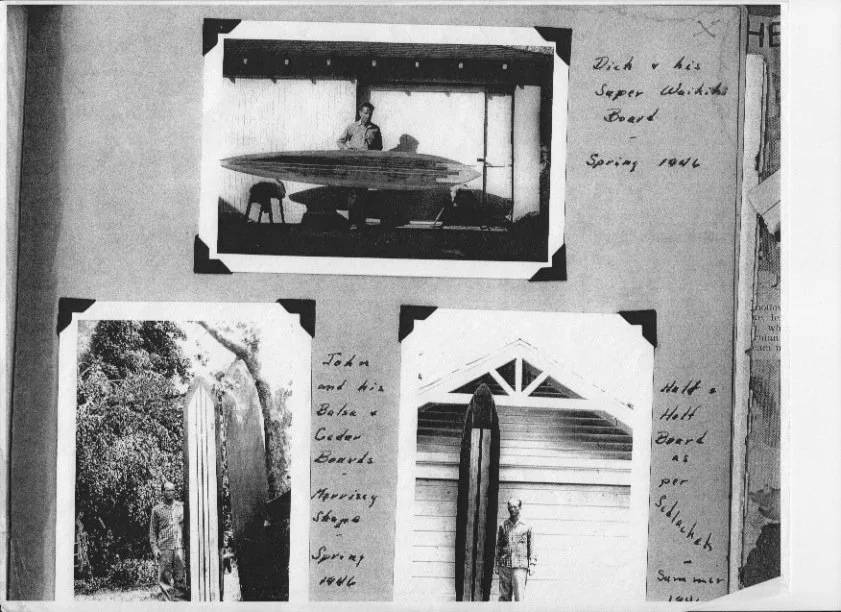
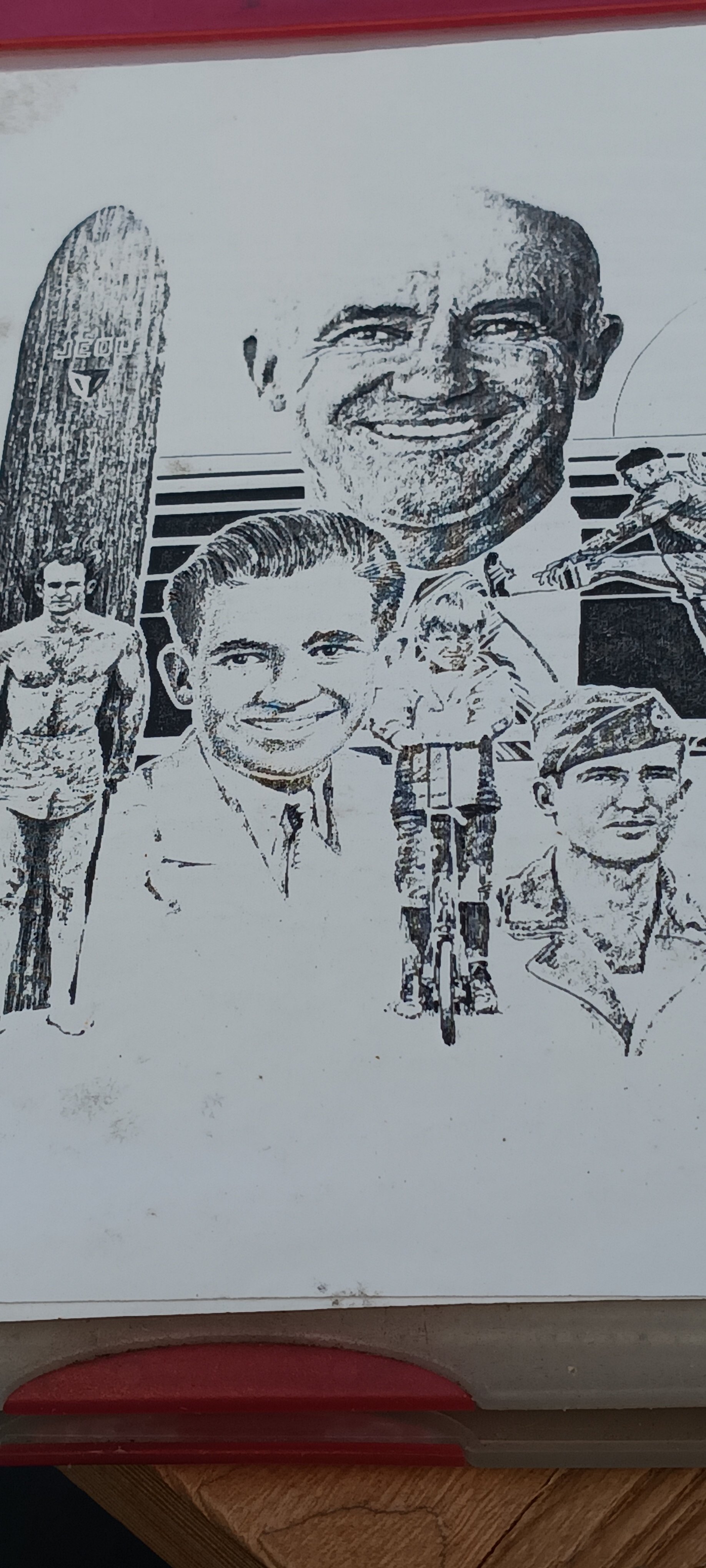
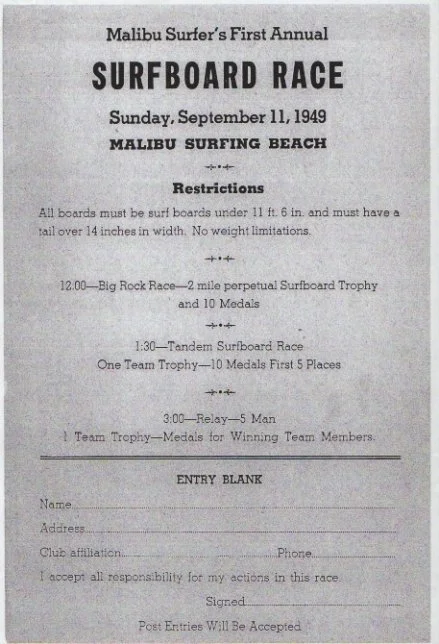
At one time the founder Dick Metz wanted me to produce a book of his photos and many stories he had collected from deep in the 20th Century to well into the 21st: Frolicking with Shirley Temple on the beach in Laguna in the 1930s, his world travels in the 1950s - where he tripped over Cape Saint Francis and told two friends. Dick was one of the founders of the surf indutstial complex as Hobie Alter’s right hand man beginning in the 1960s and through the decades. All kine cool stuffs. Too much for one book.
I tried to condense it all into a book and gave up, and said the internet was the only way to do justice to the material: Video clips and webstories with galleries so no photos would be left on the editing floor.

As a test case, this is the story of Dick’s adventures in Africa. Check out the quality, color and texture of the photos he took with a funky camera way back in the late 50s: “Kodachrome Brings out the nice bright colors. Brings out the greeeens of summer.”
http://www.benmarcusrules.com/dick-metz-hey-im-in-africa-excerpt
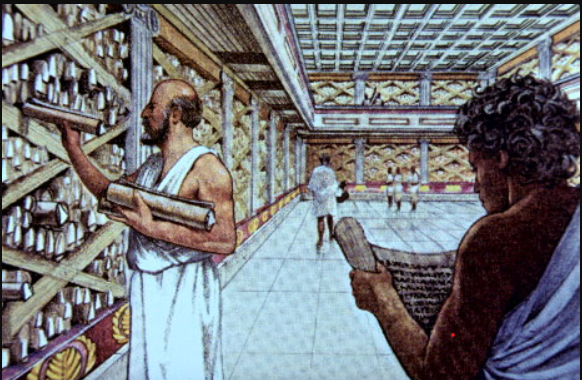
All knowledge under one roof at the Library of the Alexandrian Greeks.
THE ALEXANDRIAN LIBRARY
From the beginning I have called the Surfing Heritage and Culture Center Formerly Known as the Surfing Heritage Foundation “The library of the Alexandrian Greeks for surf culture,” where the Alexandrian library (c. 295/283 BCE – 391 CE) was an attempt to put all human knowledge under one roof - and that included raiding visiting ships for whatever charts or books or logs they were holding. They wanted it allllll.
That was the Surfing Heritage Foundation until it became the Surfing Heritage and Cultural Center, but the object of the exercise remained the same: Collect, authenticate, archive, display. For a time they were talking about moving to a more public facility in Dana Point Harbor, which could have been good for putting it all in front of the public, but that got shot down by COVID. But now they have moved into the former Sprouse Reitz building on Ocean Street across from Hennessey’s Tavern - about four doors up and smelling and roaring distance from Mother Ocean at Main Beach Laguna.
Where it otter be, not squirreled away in the hill country of San Clemente.
The new SHACC is located, located, located equidistant between the Huntington Pier and San Clemente Pier - and also La Jolla and Malibu - and Odin knows how many surfers are lurking between those points. Too many, you say, but enough to keep the SHACC floating.
They’ll be serving coffee and food and drink which is a good call. There is a surf shop in Malibu called Sea N’ Soul which stays afloat selling coffee and snacks. Surf retail is a tough hustle these days.
BACKSTORY TO THE BUILDING
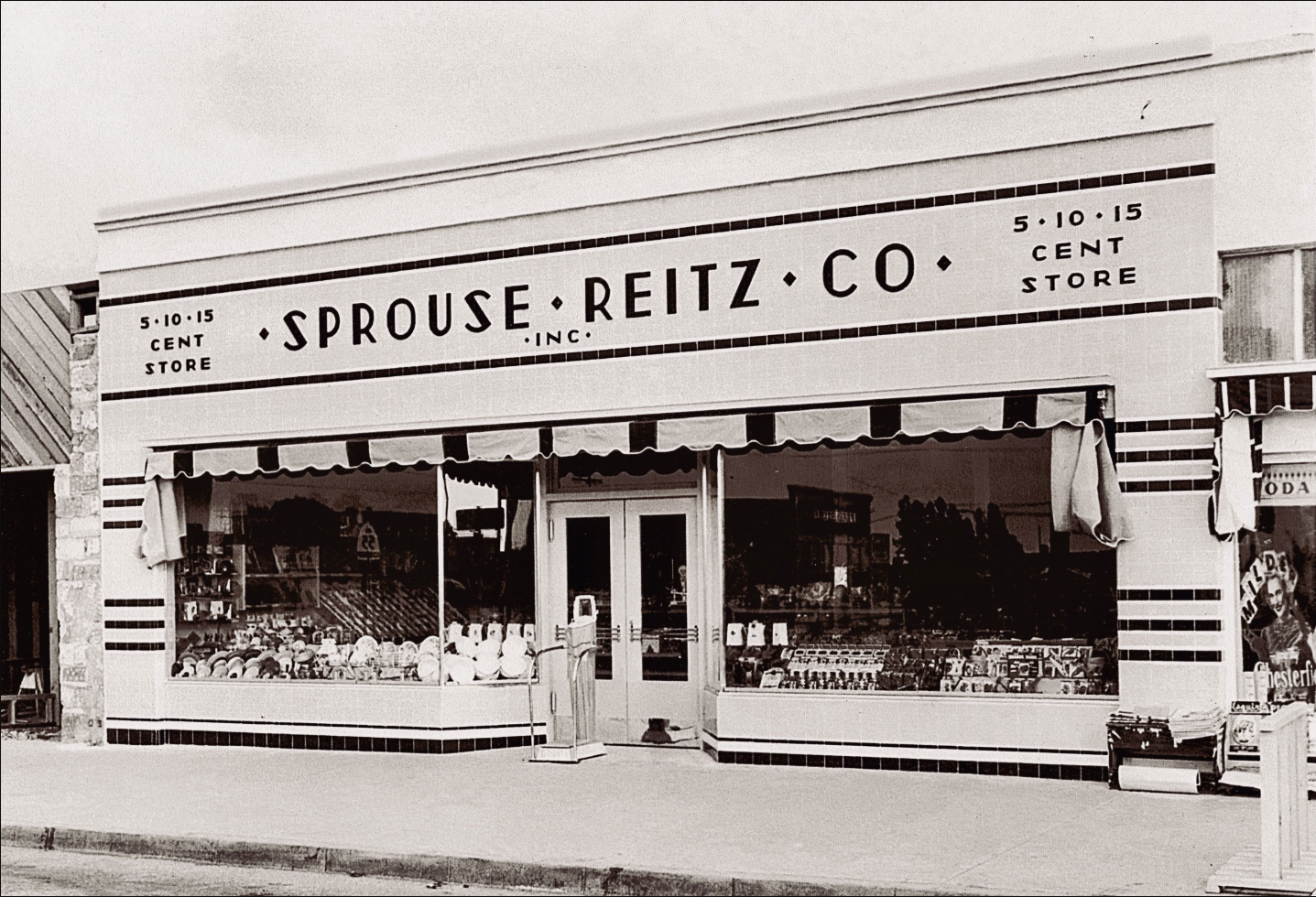
Sprouse-Reitz on Broadway, circa 1941
In this photo taken shortly after their opening, we see the striped awning drawn back, and if you click on the photo to enlarge, you’ll see a large selection of plates in the left front window.
In front, a sidewalk scale beckons local passersby to get their current weight for a penny, often with a fortune to boot.
Serving faithfully for five decades, the town took the stores’ closure hard. A variety of tenants passed through this space, including the recently departed Laguna Drug. As we await the next shop to set up in this spot, we can use the magic of historical archives...with the support of Stu News...to keep the spirit of our Sprouse-Reitz dime store fresh in our minds.
• • •
Laguna Beach Historical Society is located at 278 Ocean Ave. They are open Friday - Sunday from 1 - 4 p.m. For more information, call (949) 497-6834 or visit www.lagunabeachhistory.org.
The building at 239 Broadway in downtown Laguna Beach dates to 1941, when it opened as a Sprouse-Reitz five-and-dime store. Decades later it became Laguna Drug, run by Dave and Cyndi Olsen, who closed up shop in June 2019 after 15 years, leaving the 14,378-square-foot storefront empty with no tenant lined up. In 2017, CVS had tried to move into the space but was turned down after city staffers argued Laguna Beach didn't need another drugstore. For the next several years the building sat mostly vacant, aside from a bank occupying a small portion, while preservationist and future SHACC board member Mark Christy — who had actually tried to buy the building 15 years earlier for a music venue, and been rebuffed — kept an eye on it.
The building's fortunes turned in 2025, when the Surfing Heritage and Culture Center began looking to leave its longtime home in an industrial pocket of east San Clemente for something more public-facing. Founded in 1999 by Dick Metz and Spencer Croul — who combined their personal surf collections into what's grown to more than 500,000 objects, images, and artifacts, often called the "Smithsonian of Surf" — SHACC had operated out of San Clemente since 2005. When the owners of 239 Broadway, who hadn't wanted to sell before, warmed to the idea of a surf museum, a deal came together.
Escrow closed December 15, 2025, and by the next morning construction crews were already demoing walls and floors, with local firm Tuvalu Home leading the design. The 12,000-square-foot space — roughly 9,500 square feet downstairs for exhibits and events, with offices and archives upstairs — kept its 30-foot exposed-truss ceilings and brick walls intact, features well suited to displaying the towering wooden boards of early-1900s surfing. For Metz, who first started collecting surf memorabilia out of a rented office above the Royal Hawaiian near Main Beach in the 1990s, the move brought things full circle: back to the Laguna Beach stretch of coast where he grew up surfing and lifeguarding, just steps from the new front door.
THE FIRST VISIT
Around February 2026 I visited the future home of the SHACC, after nearly getting wasted on the 405 when my fuel pump died and my trusty Ford Expedition just STOPPED on the 405 in Inglewood. Fortunately I was in the slow lane and shaded under an underpass, but seeing how fast traffic moves on the 405 - and wondering what would have happened if I had been in the middle or fast lanes - that scared me good.
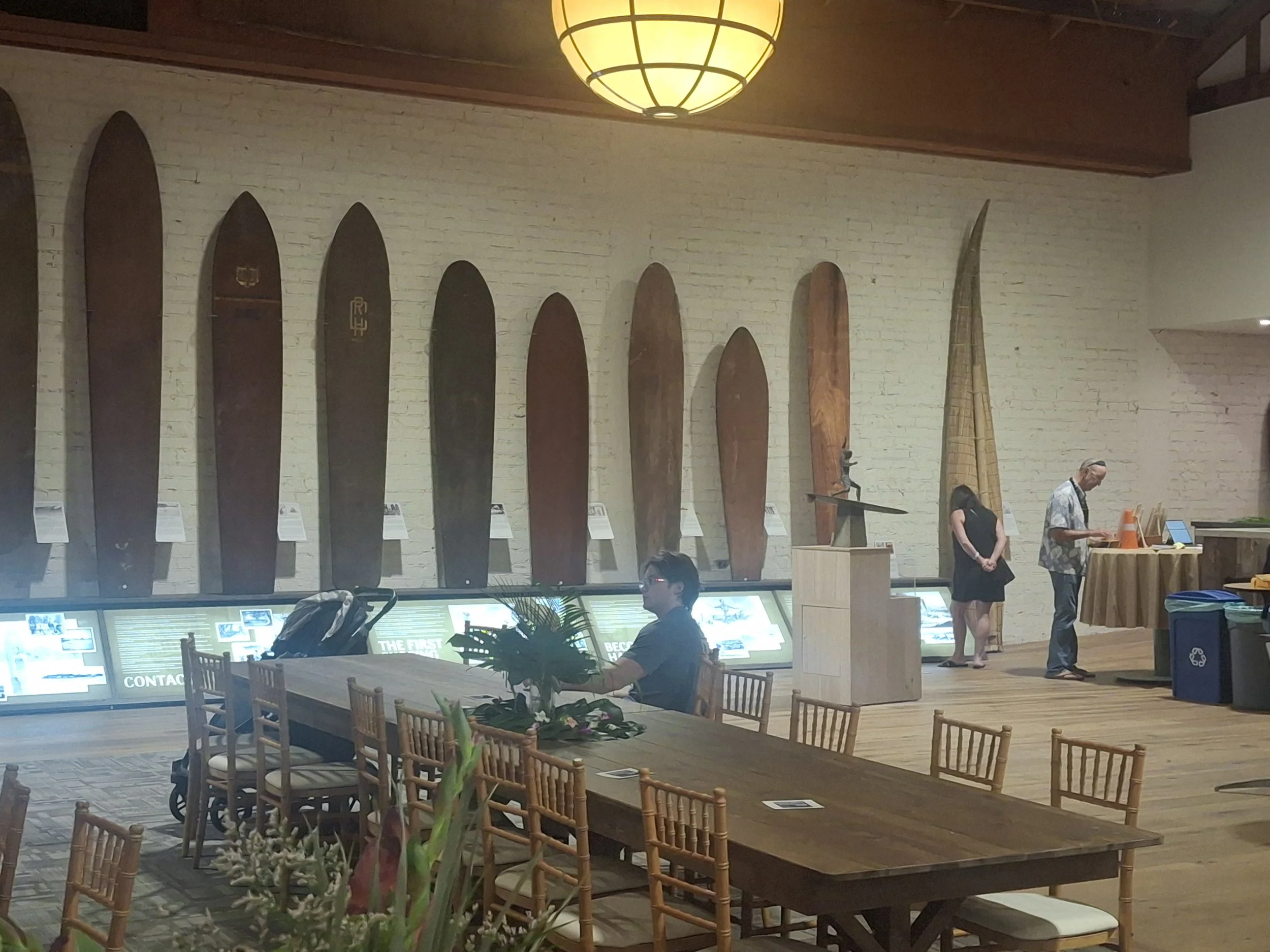
That time I made it to Laguna Beach with the Charming and Glamorous Joni Casimiro and Dick showed us around a building that was under construction and a shambles, but the potential was obvious: A big-enough, empty space with lots of offices, nooks and crannies, but 20-foot-high ceilings to fit even the largest hardwood tank planks in their collection of as many as 800 surfboards from olo to Occhiluppo.
(Sidebar 3: I was trying to be clever there with an olo/Occhilupo alliteration, but SHACC curator and historian Barry Haun fouled it off:
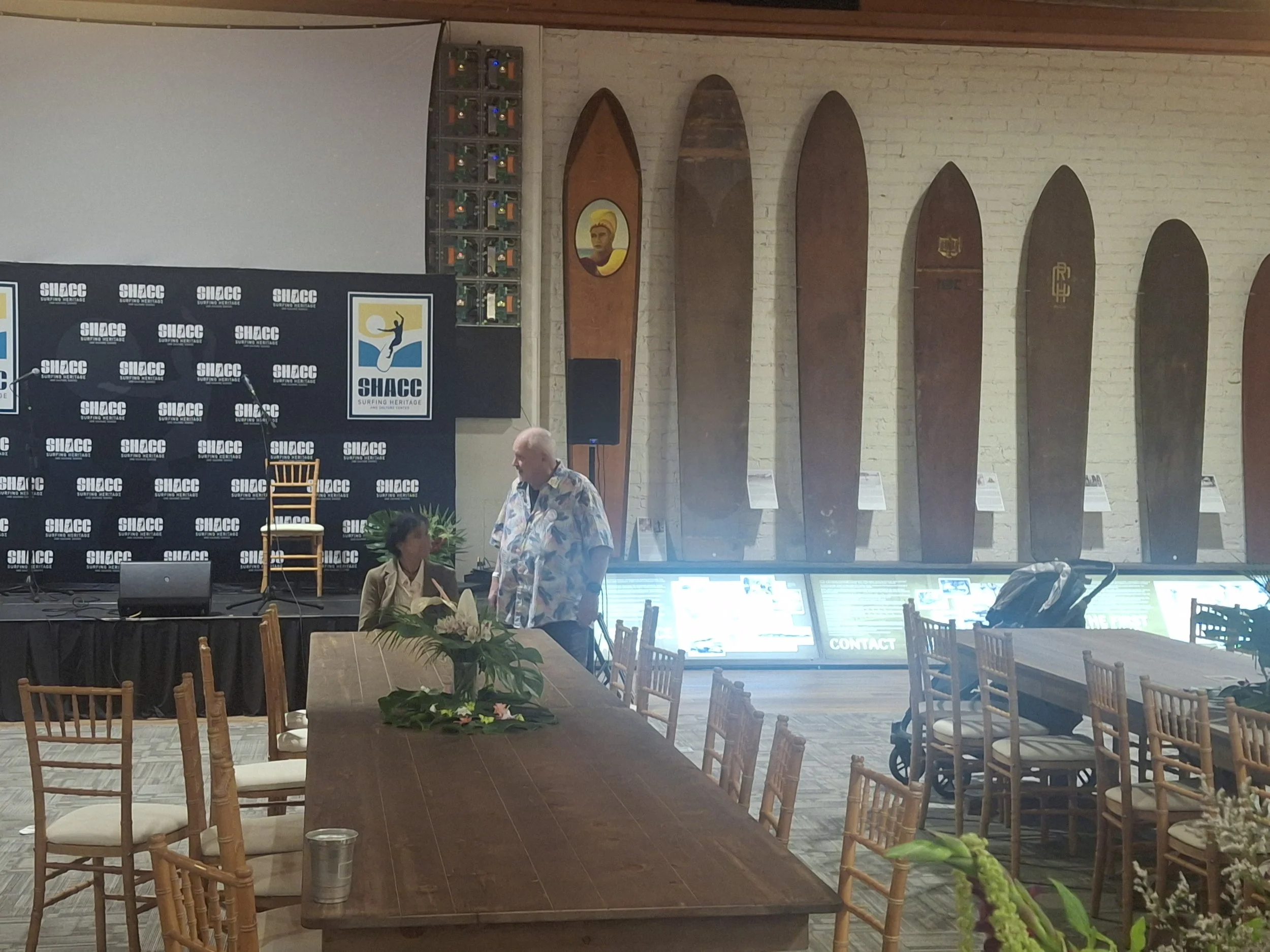
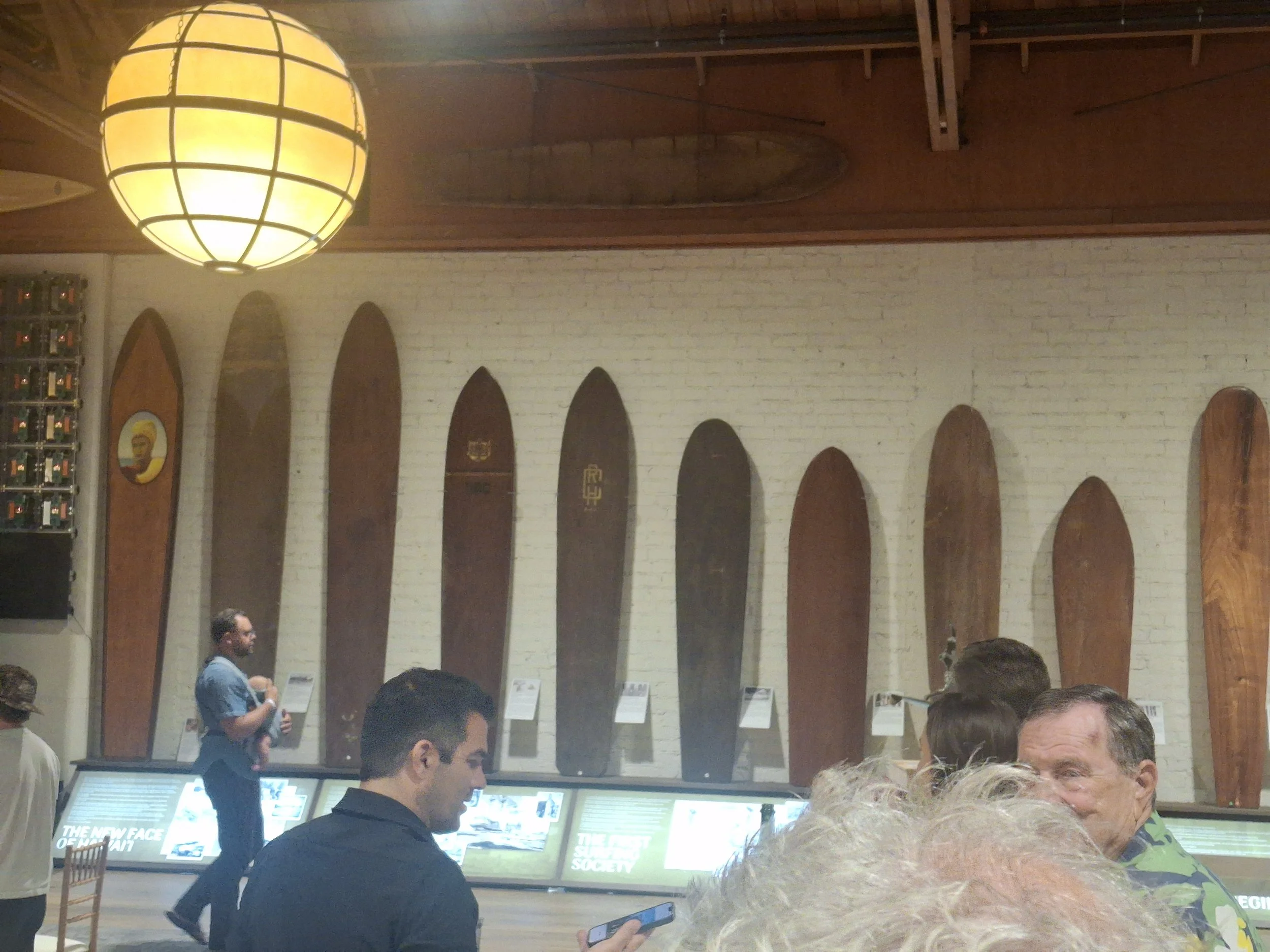
“No actual Olos, just a Greg & Jed Noll recreation board. There are early redwoods dating back to at least the early 1900s if not earlier even. Outside of the Bishop Museum, it’s the greatest collection of wood boards, including five boards associated with Duke (3 shaped by Duke – the Vultee, the one shaped for Ron Drummond, and Dale Smith’s that was used by Duke in the Corona del Mar rescue, one PSH plank – the “Chief” board owned and ridden by Duke, and Sam Kahanamoku’s paddleboard ridden by Duke).
And no Occy board yet.
Malibu collector and SHACC supporter John Mazza added: “The addition of a pre-1900 breadfruit paipo board is planned.”)
Wow, cool. A platoon of workers were going Amish on the place, while computer-generated images showed what was gonna go where and how it was all going to fit, and that was great.
Plenty of space. More than enough space. A XXXLCD screen for shows and presentations. Their own parking area! Which in Laguna is golden.

COOPERSTOWN
I’d been to the Baseball Hall of Fame eons ago - a family trip to New York at the same time Woodstock was happening - and this new SHACC had that kind of potential.
THE BRITISH MUSEUM
The British Museum is #1 on my list of Best Museums, which includes the Picasso Museum in BarTHelona, the Prado, the Baseball Hall of Fame, the Bishop Museum in Hawaii, the Margaret Herrick Library for the Academy of Motion Picture Arts and Sciences in Los Angeles and The Exploratorium in San Francisco - if it’s still there.
At the British Museum you can see the Rosetta Stone sitting right there. Also Lindow Man - some poor 1st Century AD bugger who got hit upside the head twice, then garroted with a cord (which was still around his neck when found), and had his throat cut, then was placed face-down in a peat bog which preserved him remarkably well over the centuries. He was discovered and uncovered in 1984 - now on display in a glass case. Poor bugger.
(Maybe someone should open a peat clinic for women to dip their faces in that goo, if it preserves that well?)
BRITISH MUSEUM VISIONS
Lindow Man, Elgin Marbles, Rosetta Stone and a Killer Cafe.
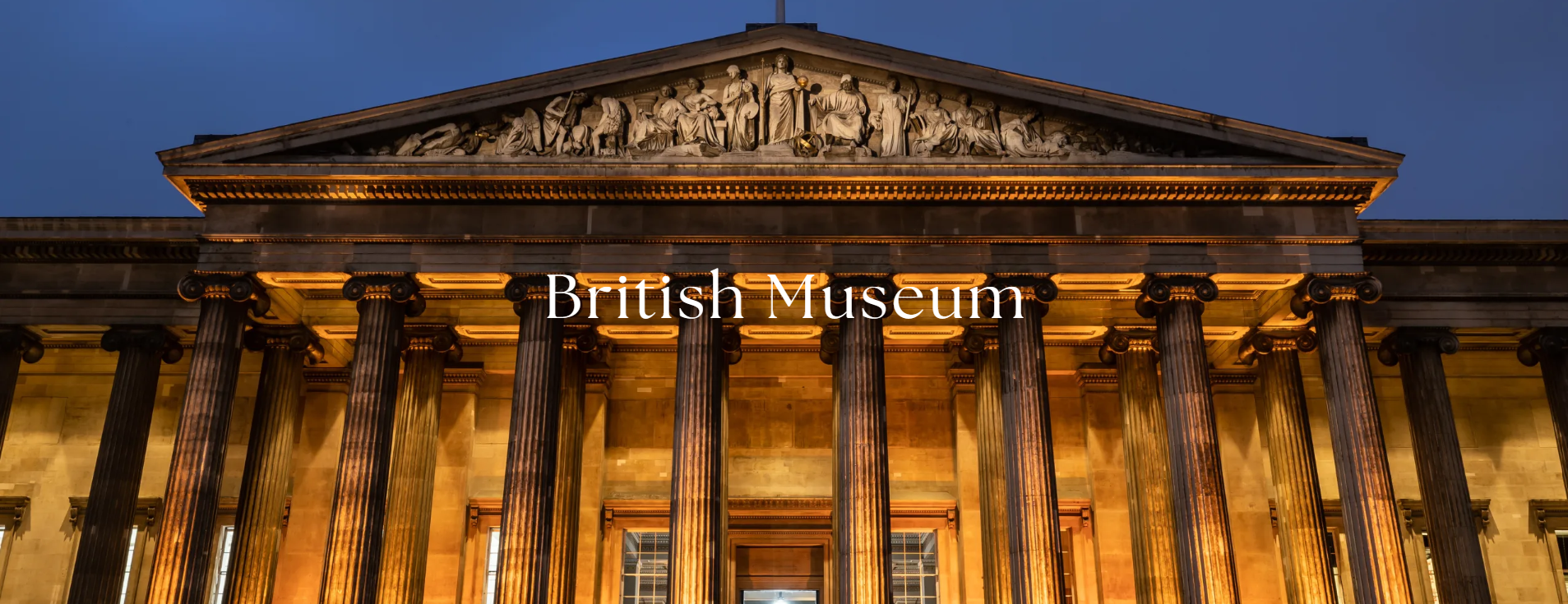
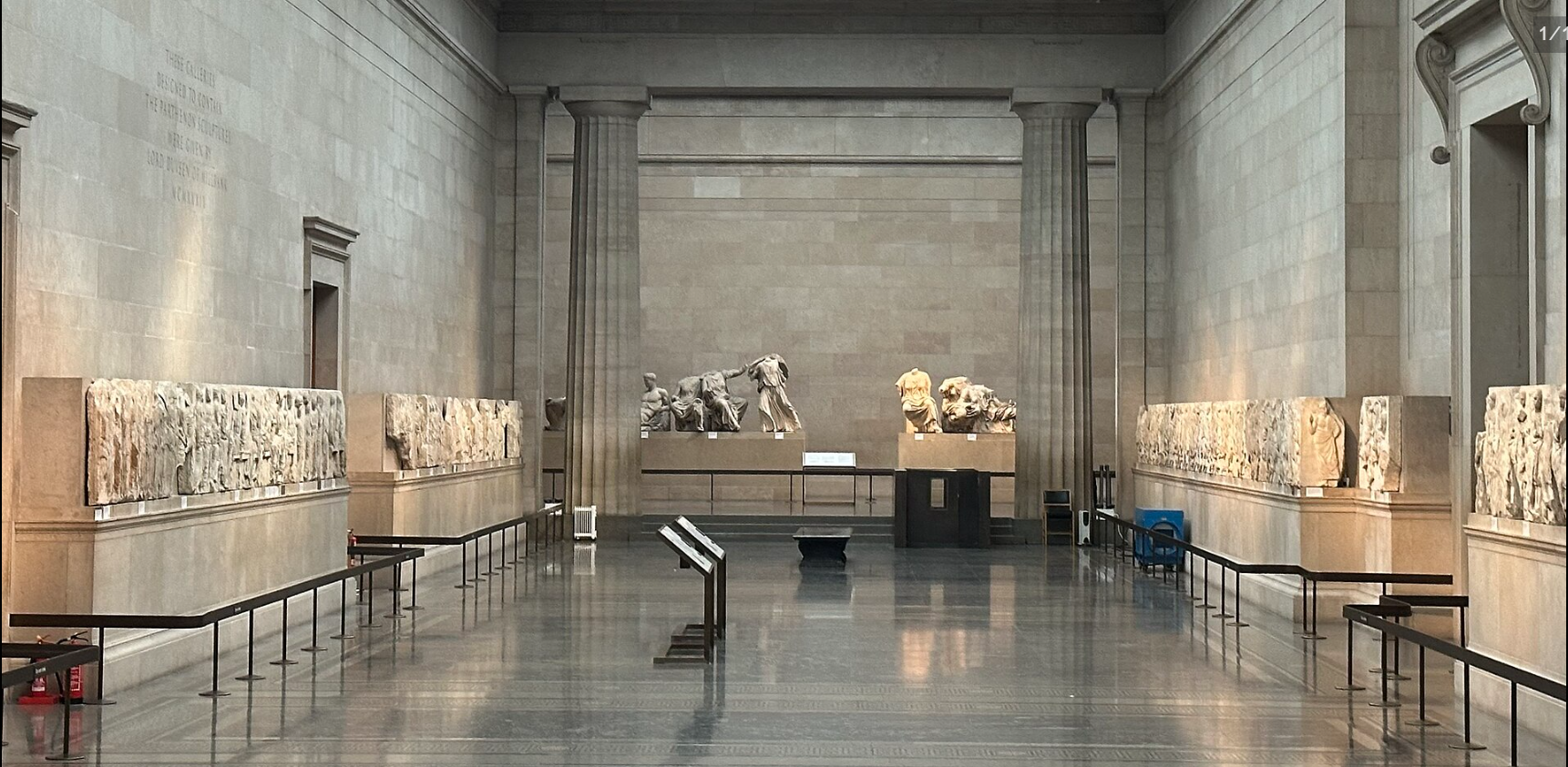
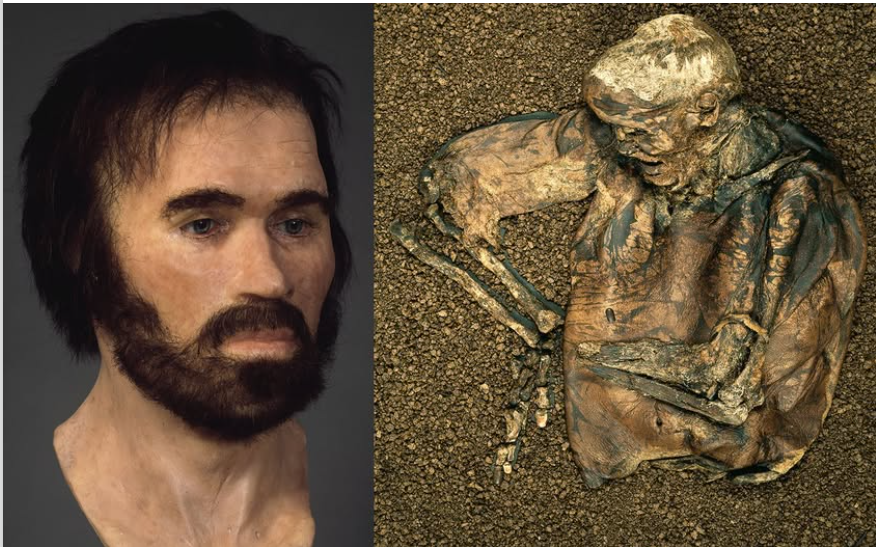

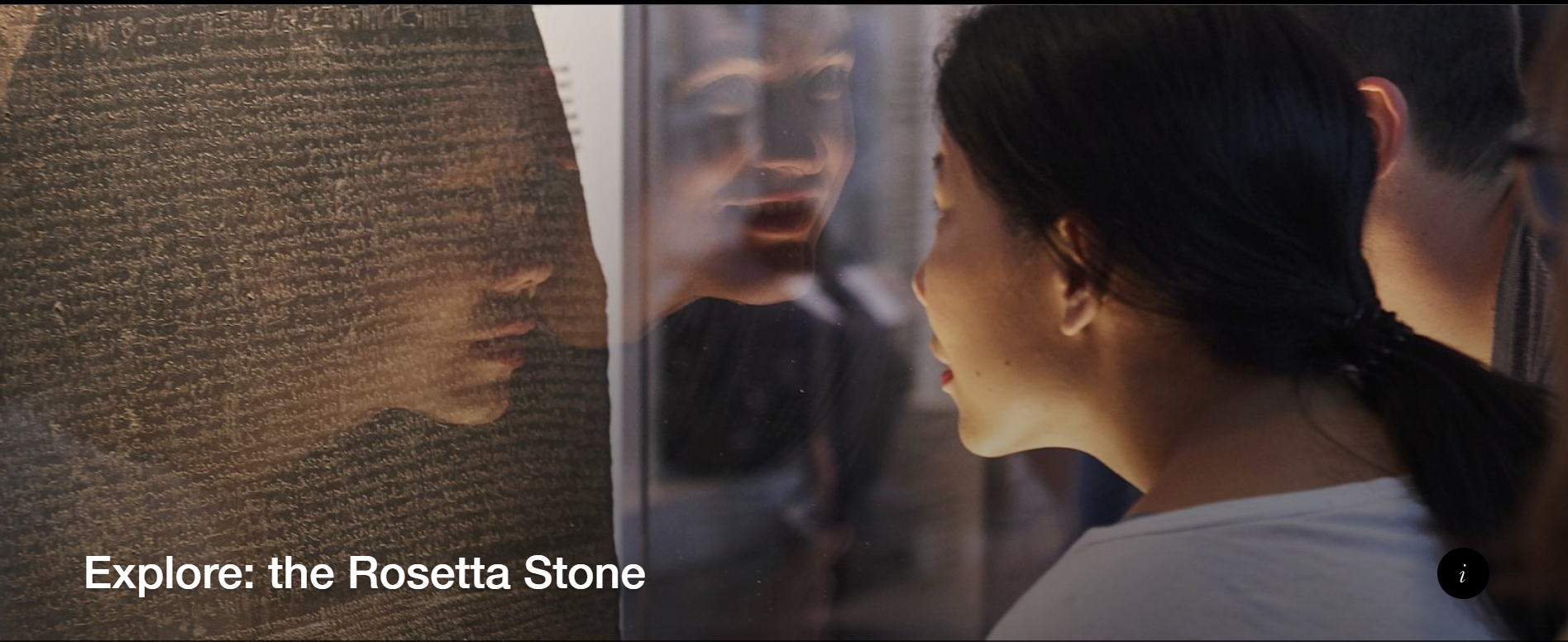
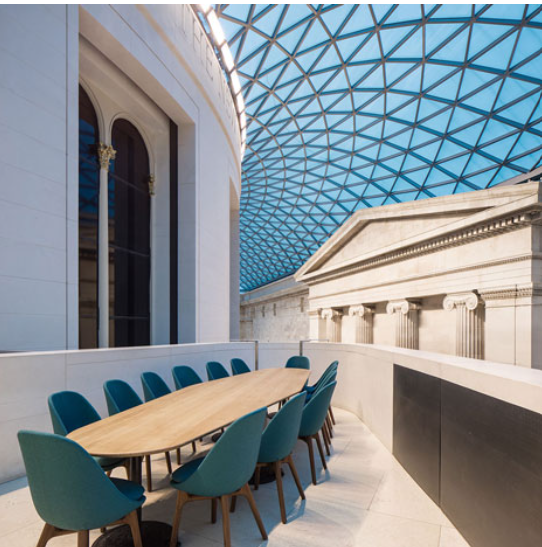
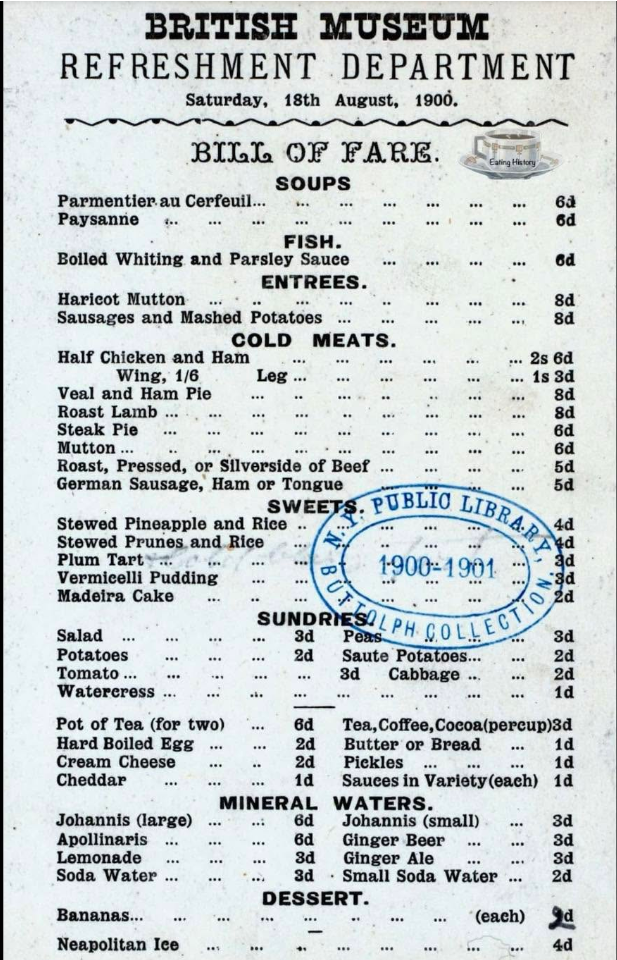
(Sidebar #3: I was at the British Museum in the 1990s, maybe before the Ireland trip, but I do remember going to see Faster Pussycat, Kill! Kill! with Gerlach and them before we headed south.
When I walked through the high-marbled hall where the Elgin Marbles were stored, there was no other human in there except the sad, mournful, eternal wailing of a baby I couldn’t see.
It was all very Hitchcockian, echoing off the walls and raising chicken skin. Cool.
The British Museum also has a great cafe.)
BLANQUE CHEQUE - RIGHTEOUS BUCKS!!!
Checking out the lavish future home of the SHACC I thought the same thing I said to myself when I saw Kelly Slater’s Surf Ranch in Lemoore: “Blanque cheque.” There is a LOT of money behind the new SHACC. The building itself cost muchos milliones, and they don’t seem to have spared any expense on appointing the interior.
So on June 20th I bravely crossed from Malibu deep into the Orange Curtain with Victoria Marie and her offsider Stevie. Sitting up high in the passenger seat I had a high angle on all the post-Palisades damage to the hundreds of houses along PCH - they look like Roman and Greek ruins. a sadness similar to the Elgin Marbles.
Suffering that hideous 405 traffic that was tolerable this time, and made it to the SHACC “hard hat” opening by 6:30 - an hour after the whole shebang started. Victoria must have good parkarma because we got a spot next to the building and went in to a sea of surfboards and aloha shirts.
Inside it was “on for young and old” as the Australians say, with the likes of Dave Rochlen, Tom Servais, Paul Holmes, Corky Carroll, Phil Roberts, Mike Parsons, Jeff Booth, Randy Rarick, Steve Pezman - the guy who hired me at SURFER Magazine and publisher of The Surfer’s Journal - and of course the founders and board members and brains of the operation: Spencer Croul, Dick Metz, Jeff Alter, Barry Haun, Linda Michael, Kate Luitjens and a lot of dedicated decent docents and volunteers.
(Oh geez I almost forgot to mention Shaun Tomson. Who else am I forgetting? Apologies.)
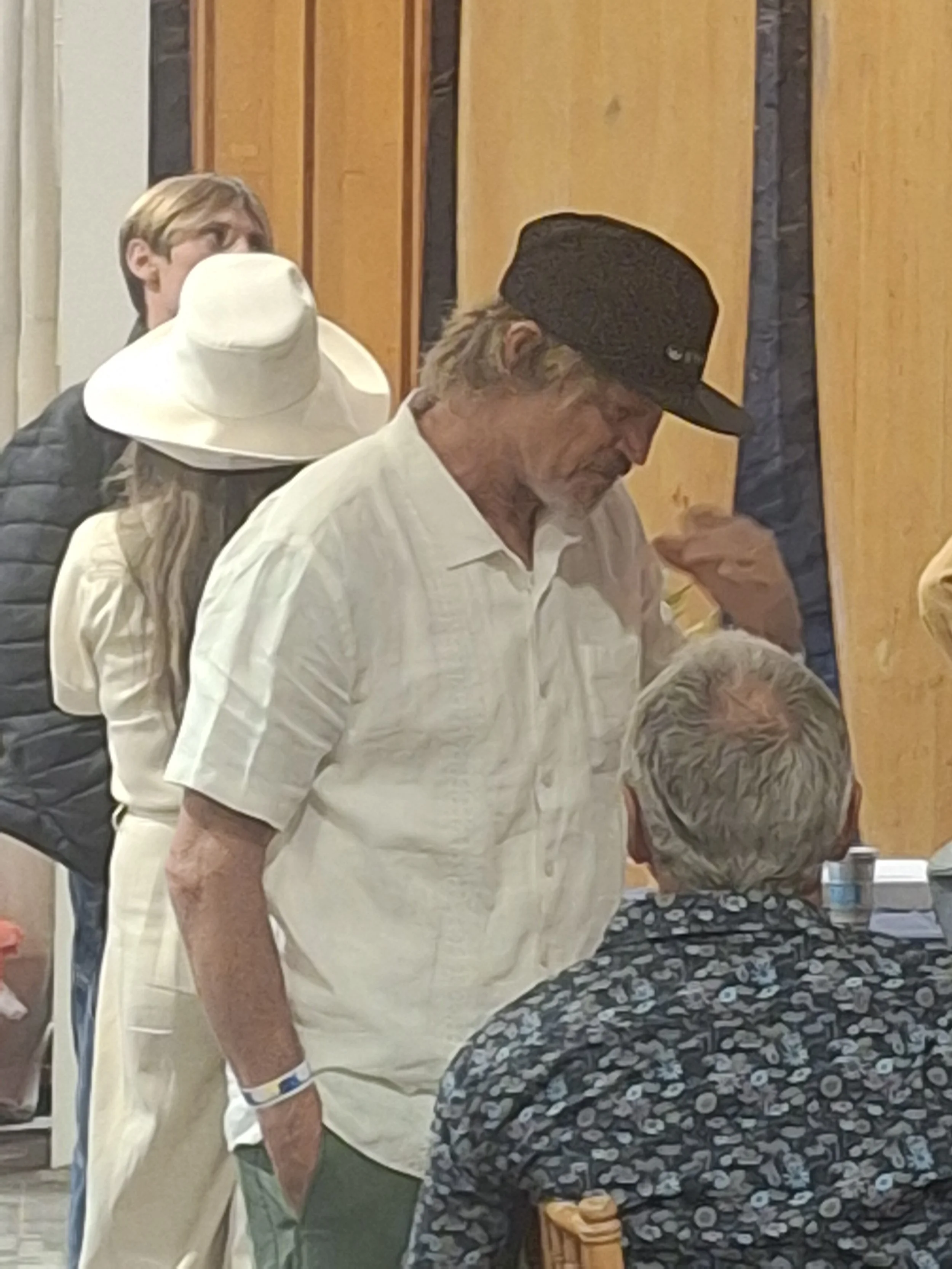
And that guy who looked like Brad Gerlach was indeed Brad Gerlach. I knew him, Horatio: A fellow of infinite jest who was on a SURFER trip to Ireland way back in the 90s with Brock Little, Strider Wasilewski, Cody Graham and Shawn Briley - filmed by Sonny Miller and his offsider Tommy Soto. We saw Mullachmore before it was famous, and those guys scored The Peak going both ways
A cool dude, a very good surfer and possibly a comic genius. Maybe the best mimic I’ve ever seen: Better than Rich Little. Better than Jim Carrey. Travel with Gerr and you travel with lots of people.
(Sidebar 4: I have a funny story about Gerlach, Stonehenge and druids. Ask me if we meet.)
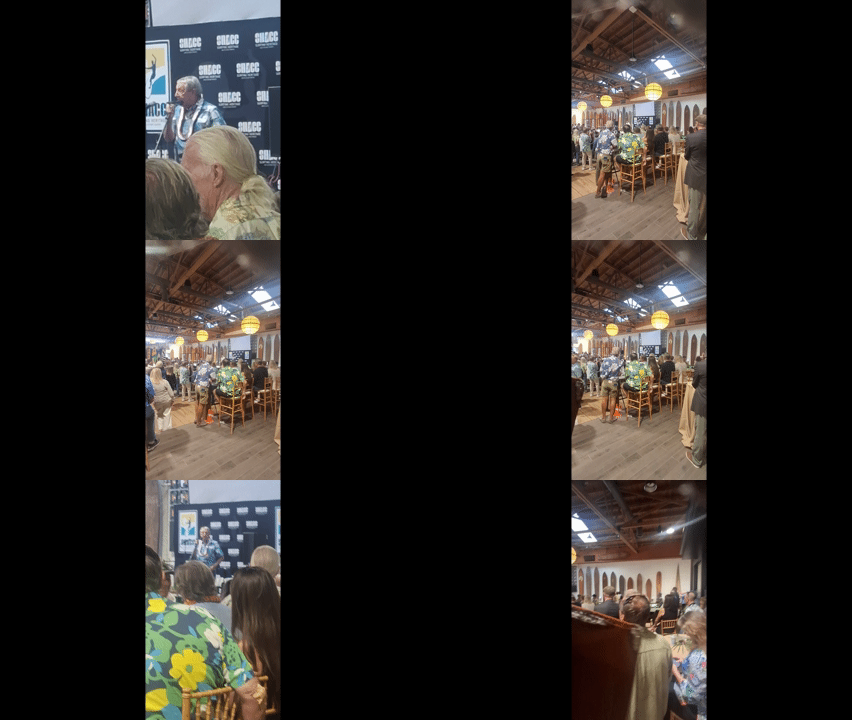
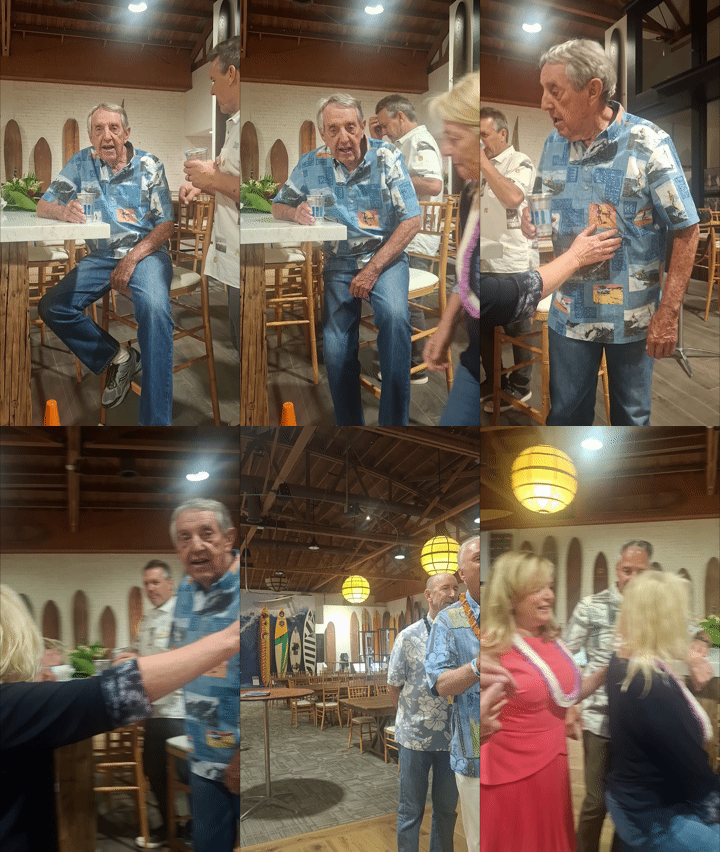
Speeches, schmoozing, alohas, misty water-colored memories, charcuterie, wine, waves and song. More speeches. A great party and a good opening vibe to what is going to be a very very popular facility for heros and hodads.
The SHACC will have an official opening in September after all the summer Laguna Beachaos has cleared, because the place is relentlessly popular all summer long with all the arts festivals and everything.
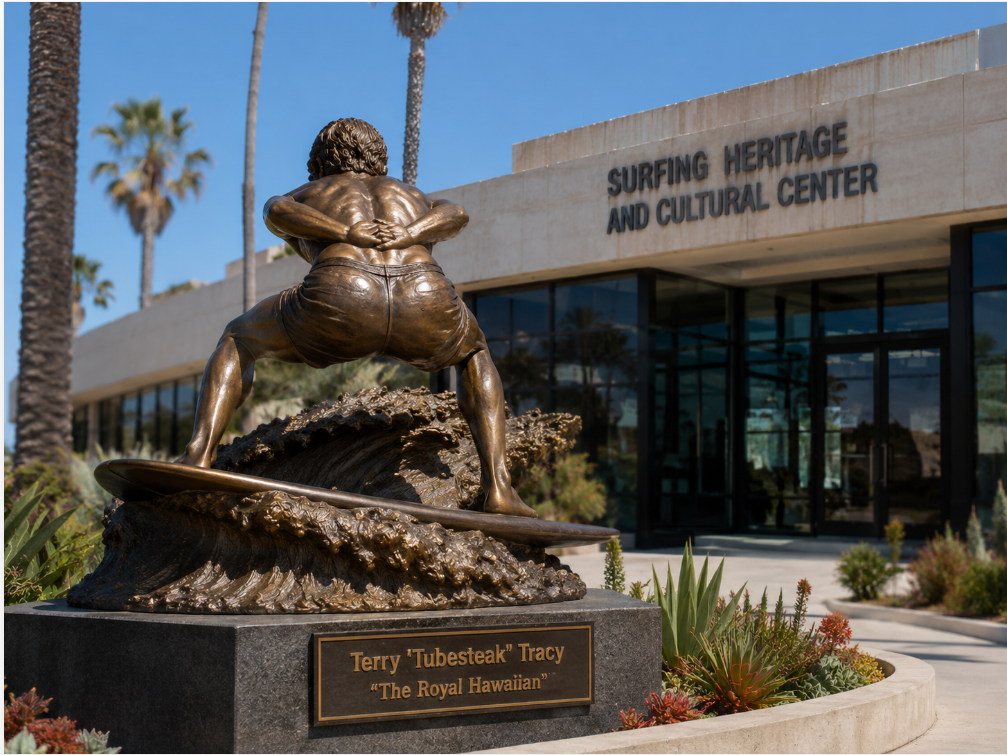
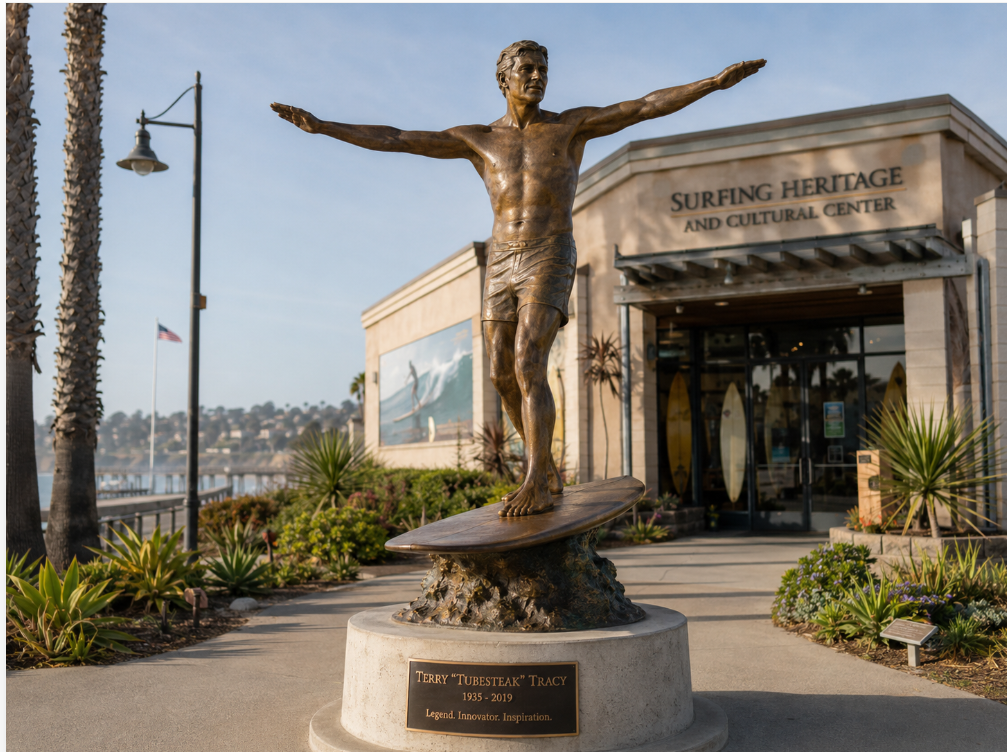
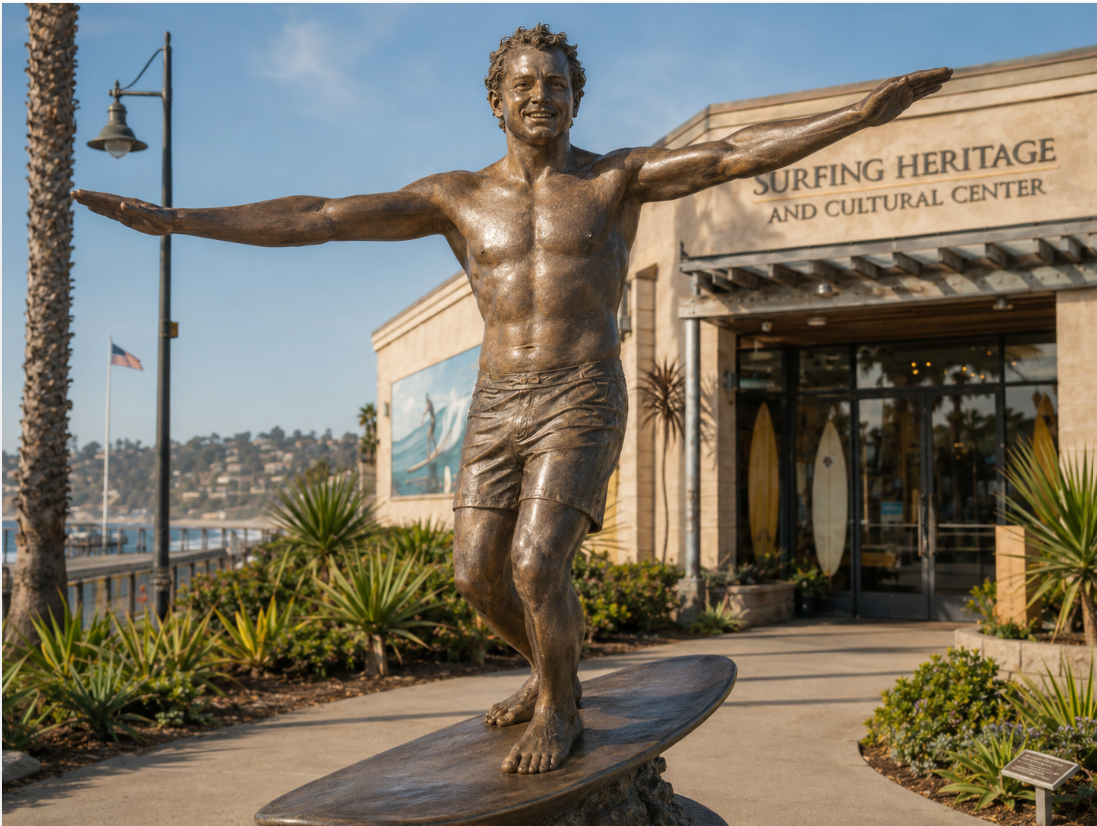
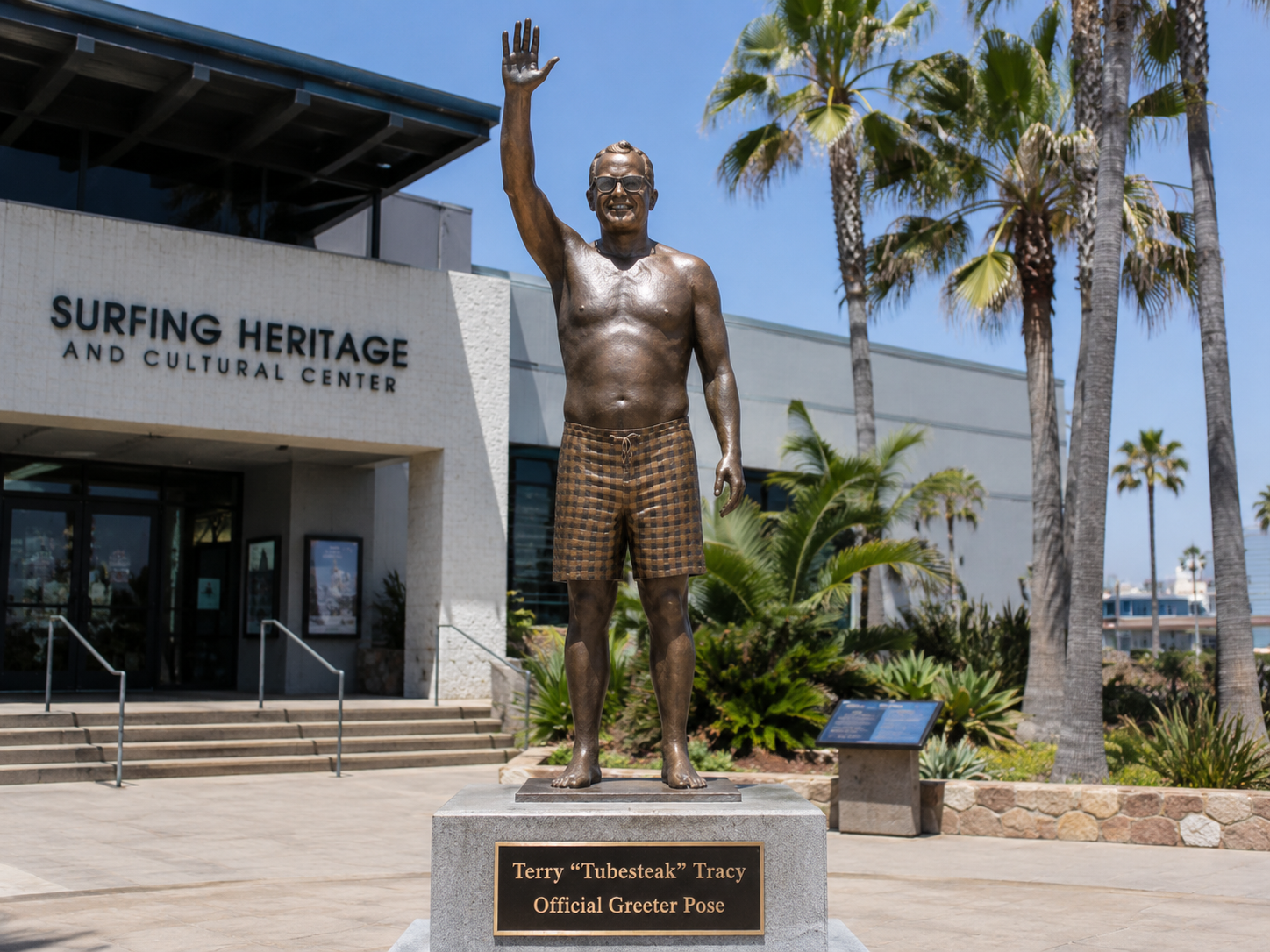
OFFICIAL GREETER: TUBESTEAK
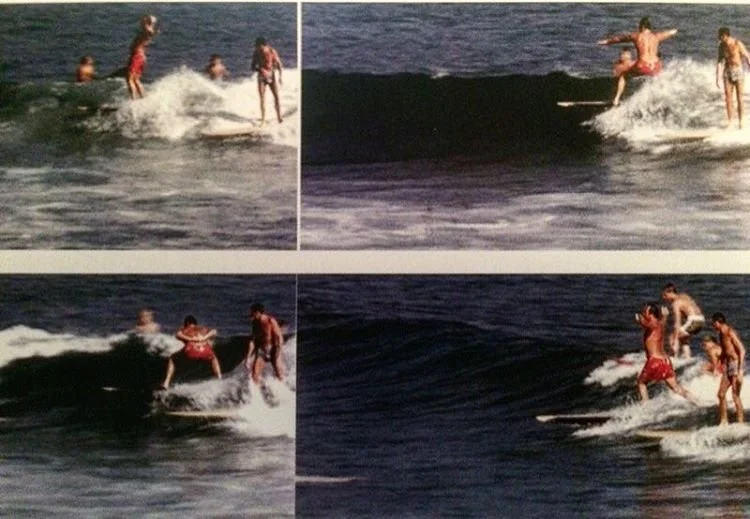
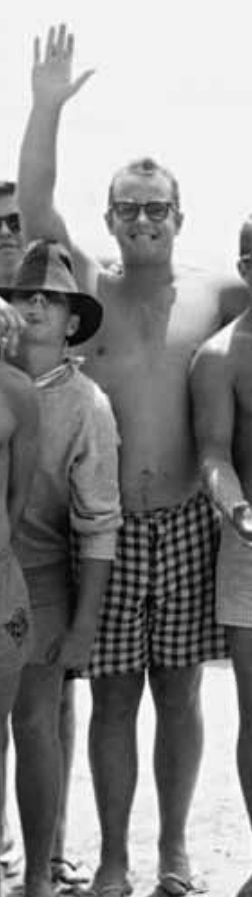
A long time ago in a decade far far away, during a time called the 1950s, Terry “Tubesteak” Tracy was the unofficial greeter and Director of Good Times on the beach at Malibu.
He was also a style master, who innovated the Royal Hawaiian stance as a form of crowd control at First Point.
I suggested the deciders at the Surfing Heritage and Culture (not Cultural) Center immortalize Tube with a bronze statue as the official greeter - but nobody listens to Turtle.
LOCATION, LOCATION, LOCATION
The new SHACC is equidistant between the Huntington Pier and San Clemente Pier, and beyond that, equidistant between La Jolla and Malibu. Location, location, location.
Odin knows how many surfers are lurking between those points. Too many perhaps, but enough to keep the SHACC floating.
But fear not, because of the location, location, location of the new SHACC, it will be income producing. There is a bank in one corner of the property paying a monthly rent. There is a gift shop in one corner of the SHACC that will be selling books, clothes and other surf tchotkes. And like Sea N Soul here in Malibu - which stays in business selling coffee and snacks - the SHACC is going to offer food and drink.
Barry Haun said charging admission is “under discussion” and the SHACC will provide space for: “Exhibit openings, book signings, movie screenings(some in conjunction with the Rivian Theater located next store, concerts, guest lectures, photographer slideshows, and perhaps some community events aimed at specific target groups such as young people (kids), etc.
The space is also available for rent and will accommodate a wide range of private and public gatherings with a state-of-the-art A/V system.”
SO WHO IS MR BIG?

John Mazza with a Hawaiian plank circa early-1900s, and a 1946 Ford Super Deluxe Woodie Wagon. Photo: Lucia Griggi.
I know what you’re thinking? “Who is Mr. Big?” Who is the deep pockets surfer who flowed millions to make this all happen? There are similar mysteries around Malibu, like who was the benevolent benefactor who flowed $750,000 to the Community Brigade to buy much-needed Wildland Fire Fighting trucks and other fireccoutrement?
Could Mr. Big be….. John Mazza, the Malibu resident most involved with the SHACC? John Mazza has collected surfboards and been a part of SHACC for decades. He is turning over his surfing museum and his collection - part of which has been on display at Pepperdine for over twenty years and has become a popular gathering spot for Pepperdine students and events and is open to the public for viewing.
If he is Mr Big, he’s not saying, but he was forthcoming on questions about the past, present and future of the SHACC: “This is much more than a collection of surf boards,” Mazza said. “It has a dedicated staff that archives and promotes the culture of surfing which has been spread world wide since it grew on the beaches of California and Hawaii.
The real goal is to make sure that the venue has the income to maintain its operation and also create an endowment that will assure its future operations and charter to promote surfing culture and understanding. Generous endowment gifts including the recent gift of a house are building up this endowment to assure success.”
MODERN PLEASURE: THE GREENOUGH BOOK

Sam George summed up George Greenough perfectly in 25 words or less. Surfer, tuberider, kneeboarder, innovator, sailboarder, boat-builder, cinematographer, auteur. All of that and more, George Greenoughis inarguably the most influential surfer of the second half of the 20th Century, and an excellent argument against the civilian belief that surfers are Uncreative. Unambitious. Unproductive. Unsophisticated.
Greenough is mostly a 20th Century name somewhat lost to the modern generation of surfers, although John K at Surf N Sea in Malibu says the Greenough 4 is still the most popular surfboard fin he sells. So maybe he is still relevant.
We shall see. Hope so.
“Genius” is an overused word, like “iconic” and “curated,” but for the last couple of years I've been researching, writing, and finishing a book about surfer/shaper/sailor/ cinematographer/innovator George Greenough — a curious-looking chap with a self-bowled haircut who NEVER wore shoes - not even in airports - who might just be a genius, going back to the 1950s and still relevant here in the 21st Century: surfboards, surfboard fins, sailboards, cinematography. This hippy-dippie looking dude custom built a housing for an Arriflex to shoot the stunning water scenes for “Big Wednesday.” He designed the GARC - Greenough Advanced Rescue Craft that was adopted by the Navy SEALS.
Working title on the book: Modern Pleasure, borrowed from Aldous Huxley: "Speed, it seems to me, provides the genuinely modern pleasure."
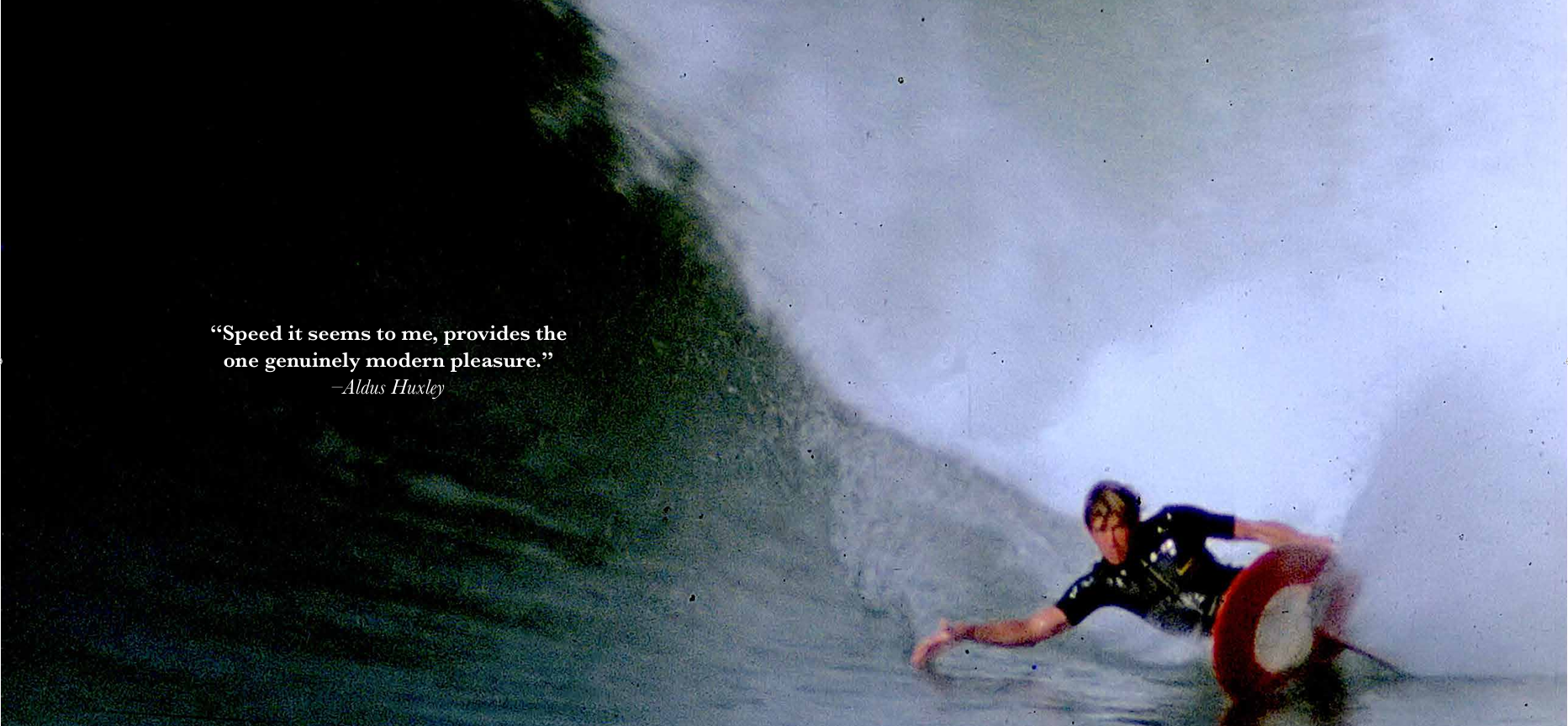
Marc Andreini is publishing the book, with Jeff Canham the Art Director and Paul Ferraris the Photo Editor. I turned it in last October and it's ready for the printer. Hopefully it arrives from China at Long Beach around the same time as the SHACC's official September opening — and I can't imagine a better place for a book release party.
The Surfing Heritage and Culture Center Formerly Known as the Surfing Heritage Foundation is way cool, and lives up to the Seven Virtuous Uns: Unprecedented. Unreal. Uncanny. Unmatched. Unbridled. Unspoiled. Unlimited.
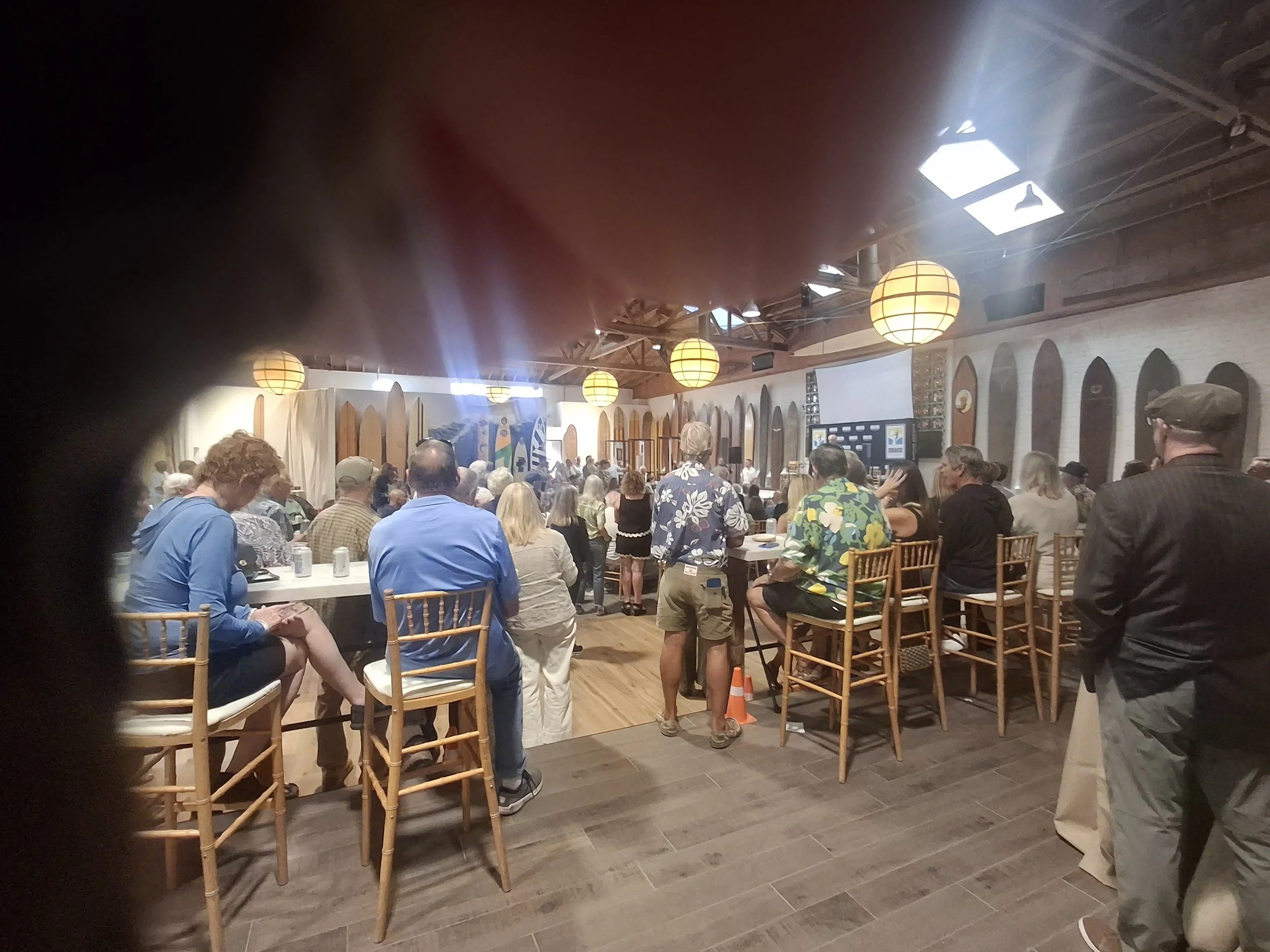
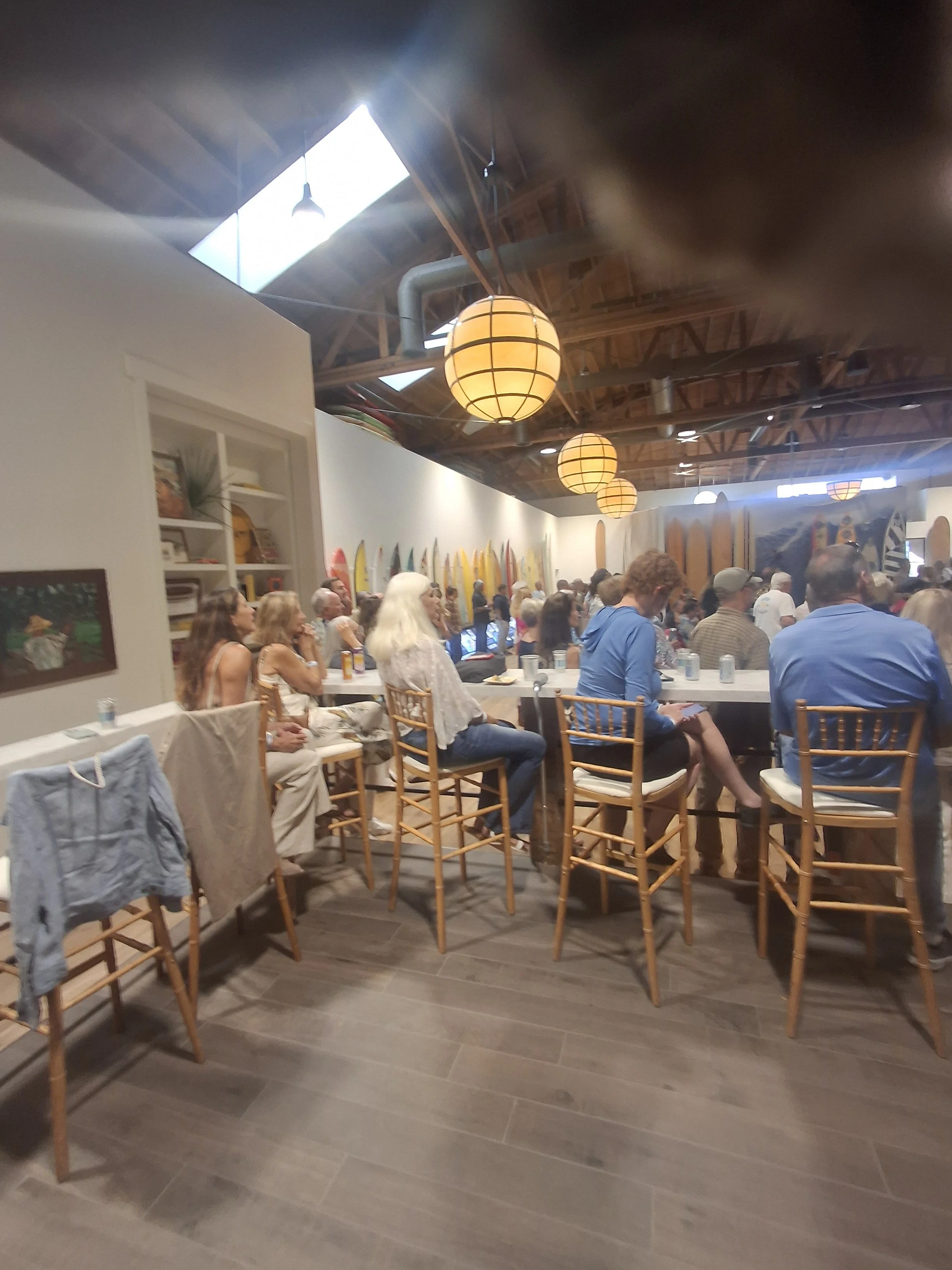
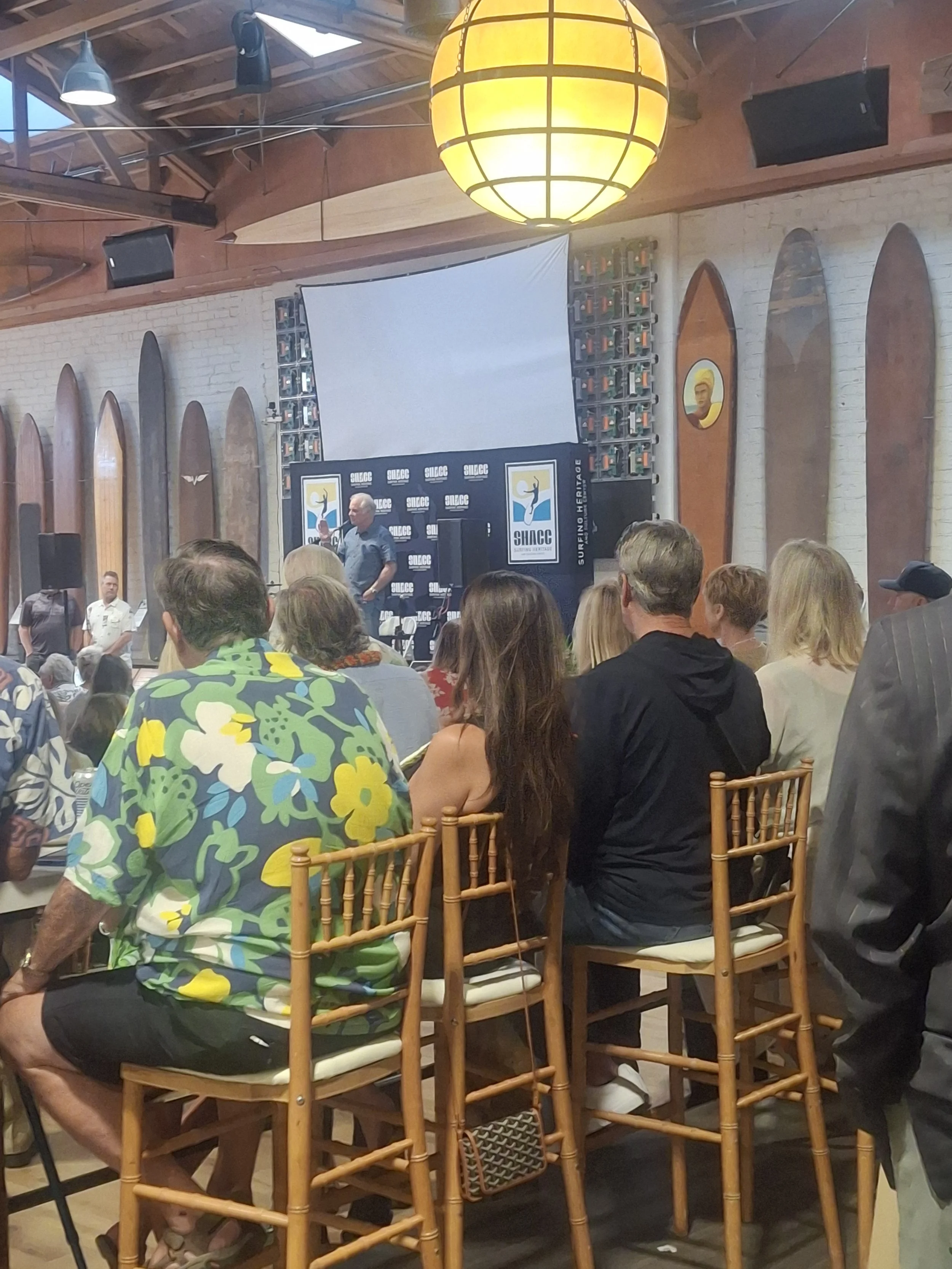
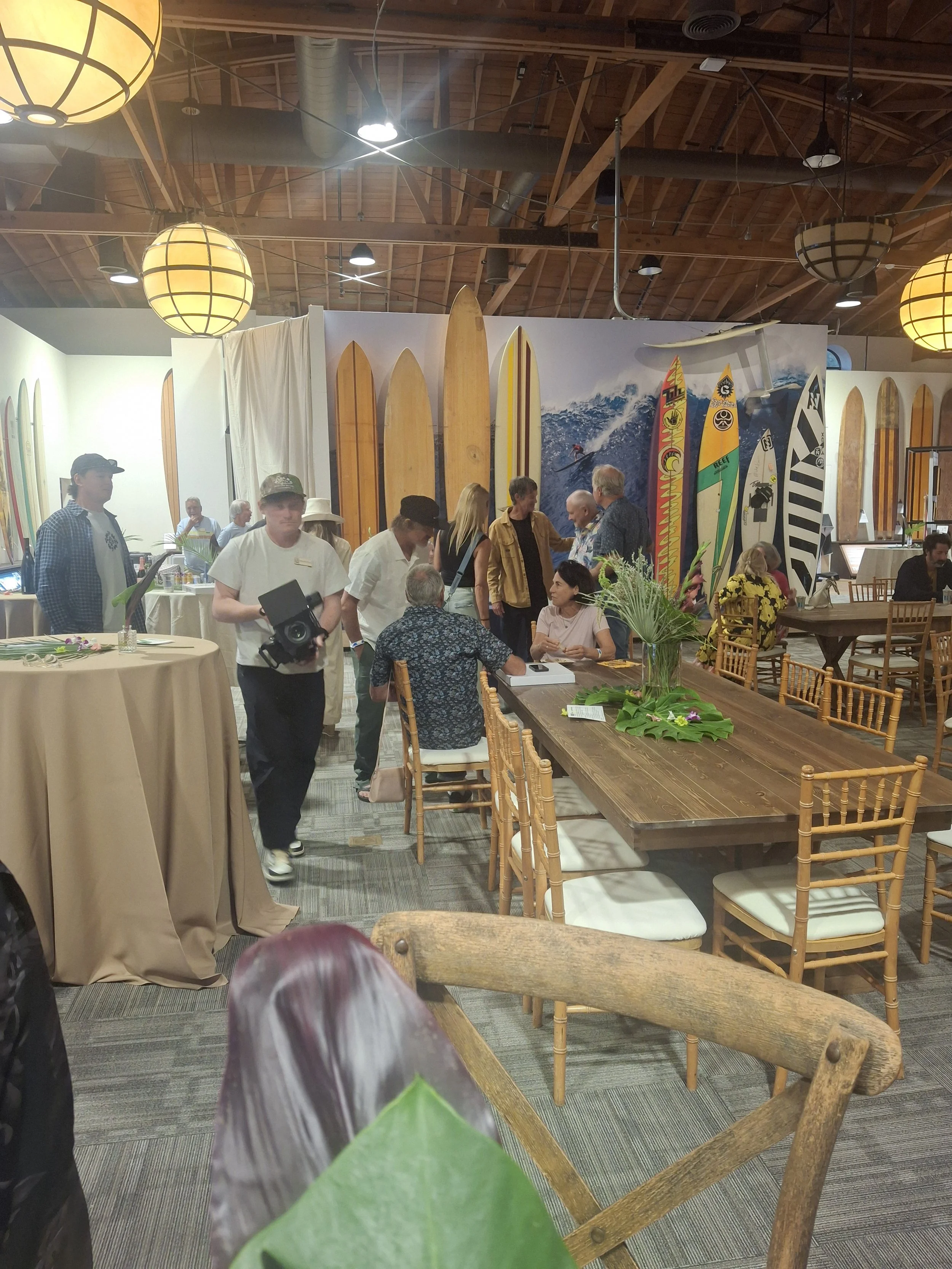
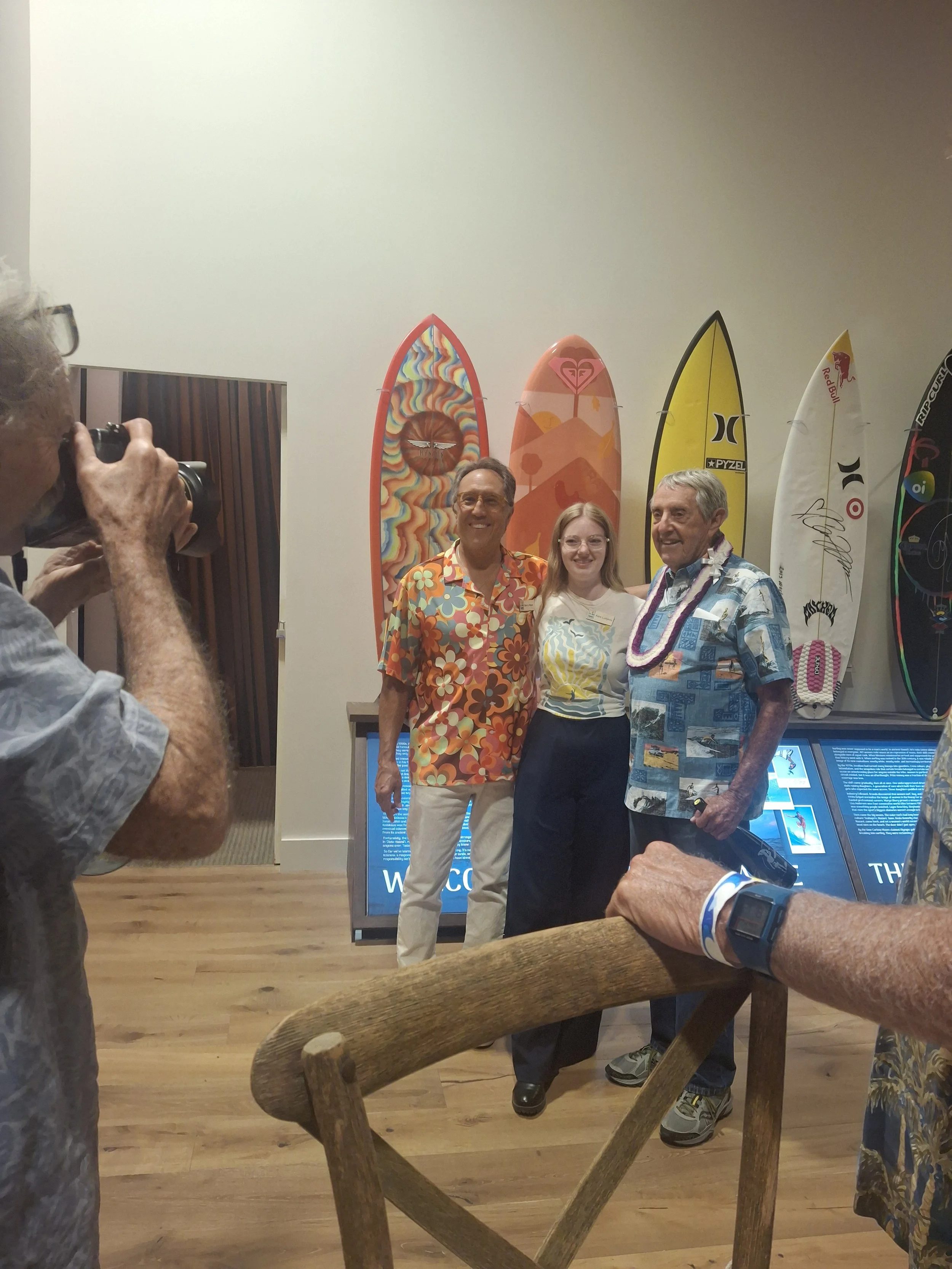
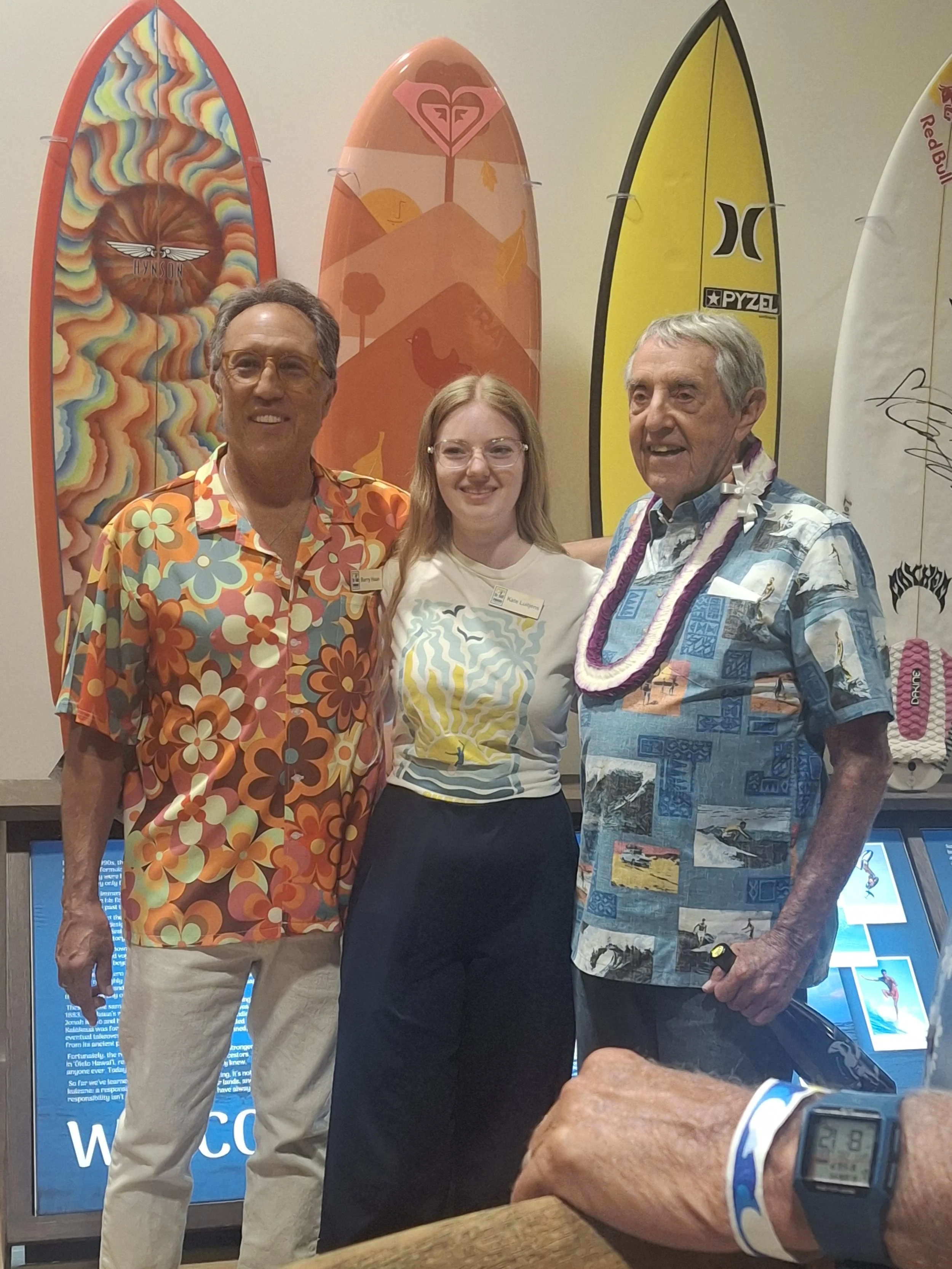
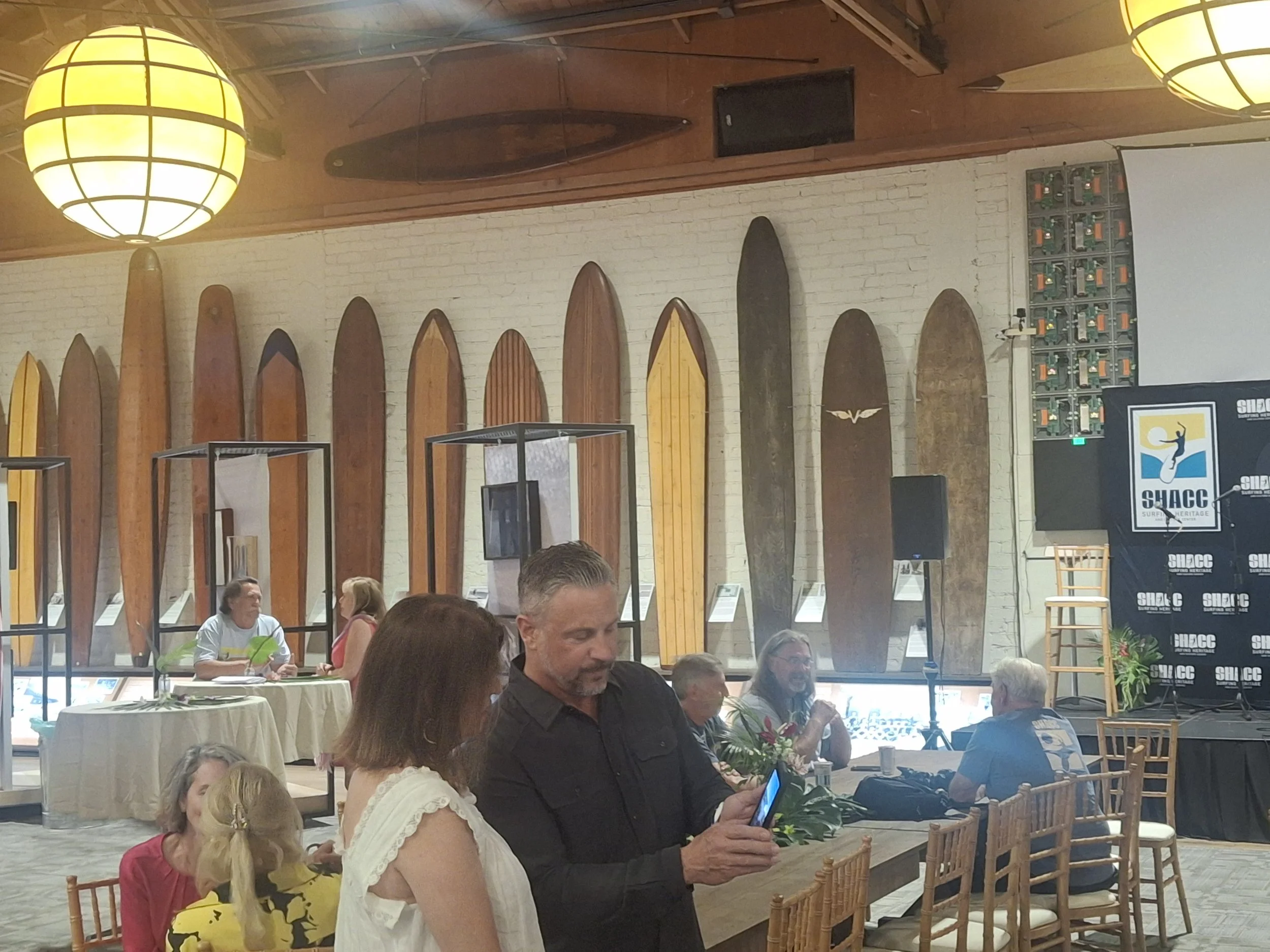
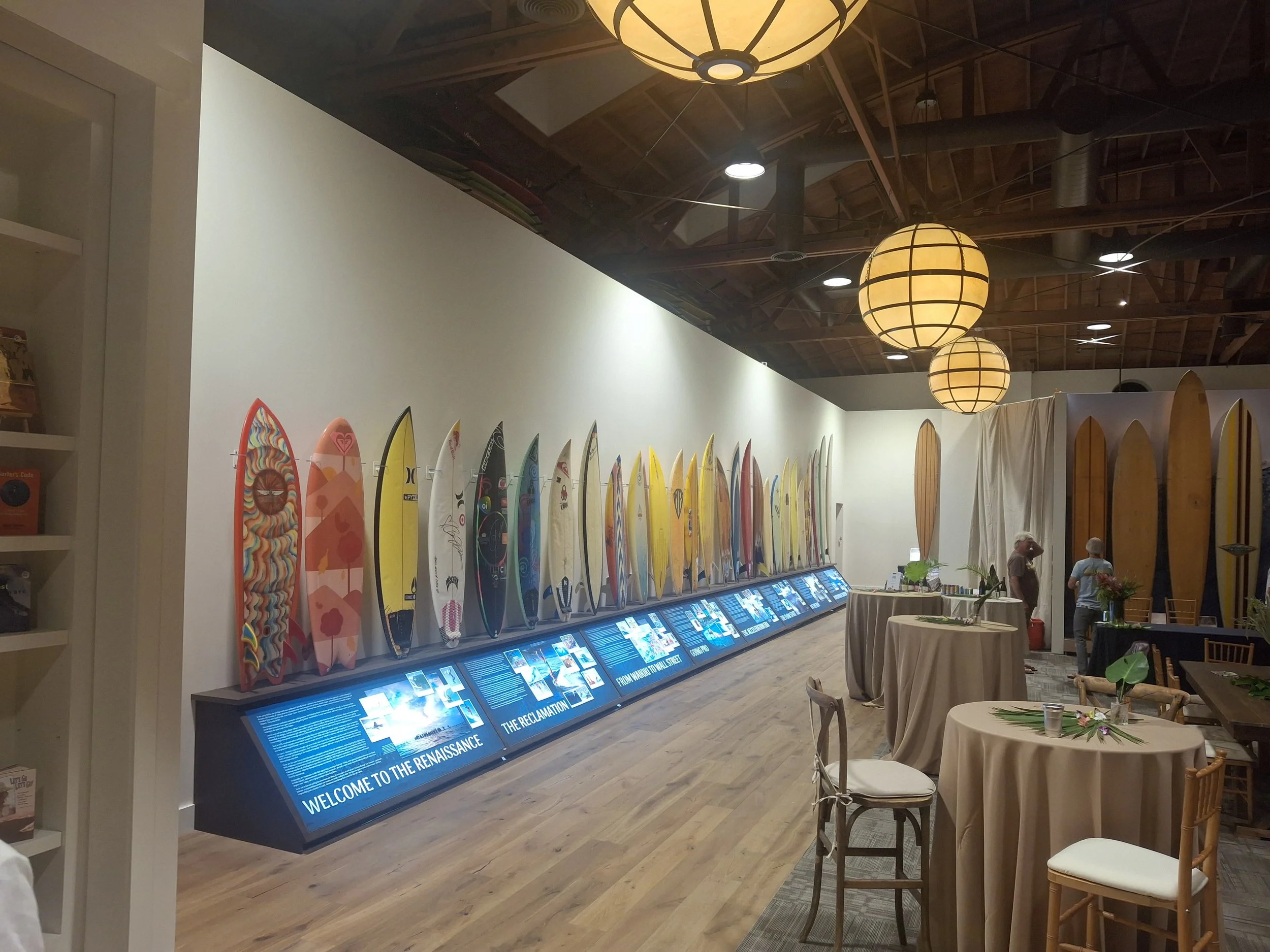
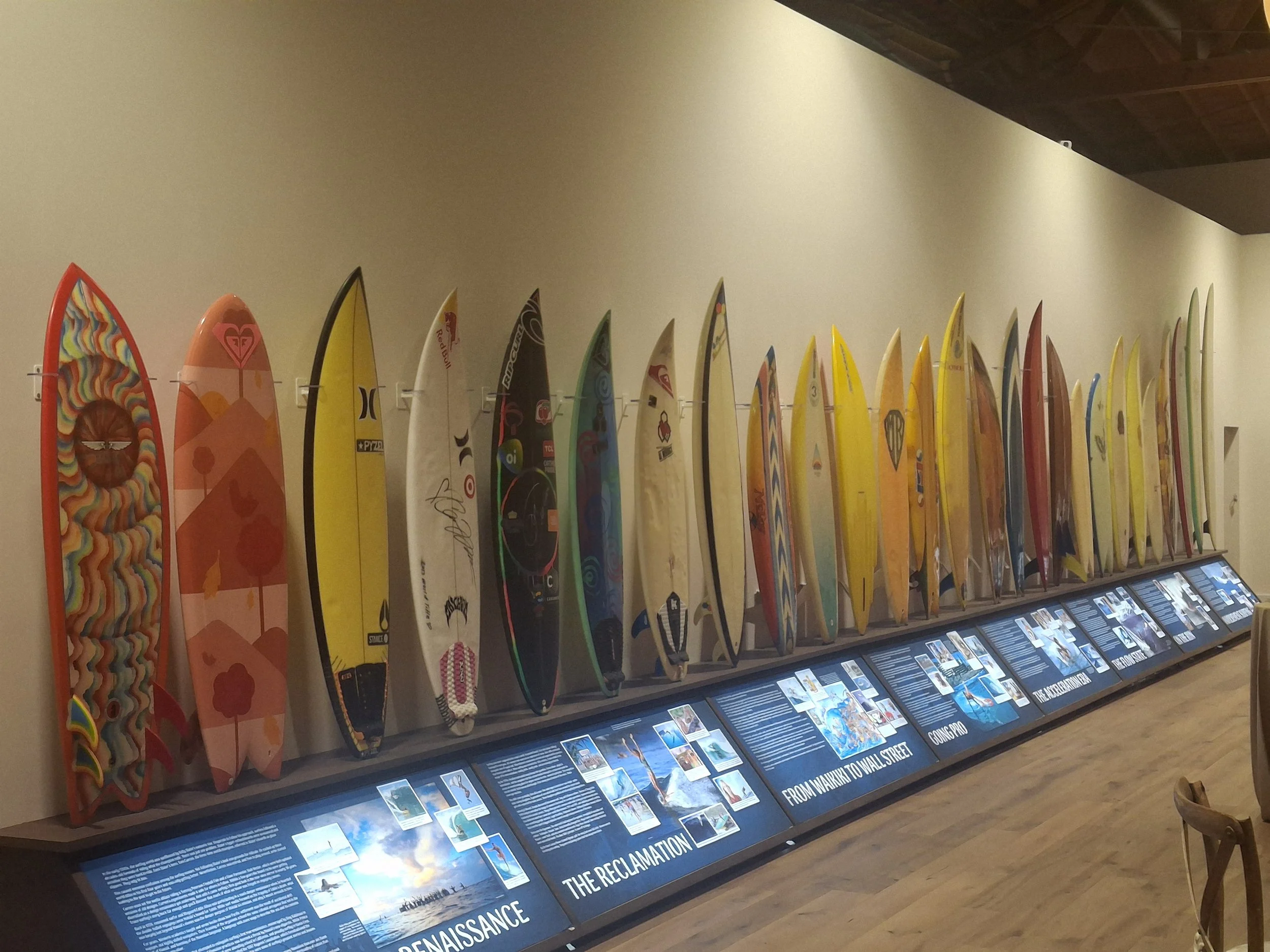
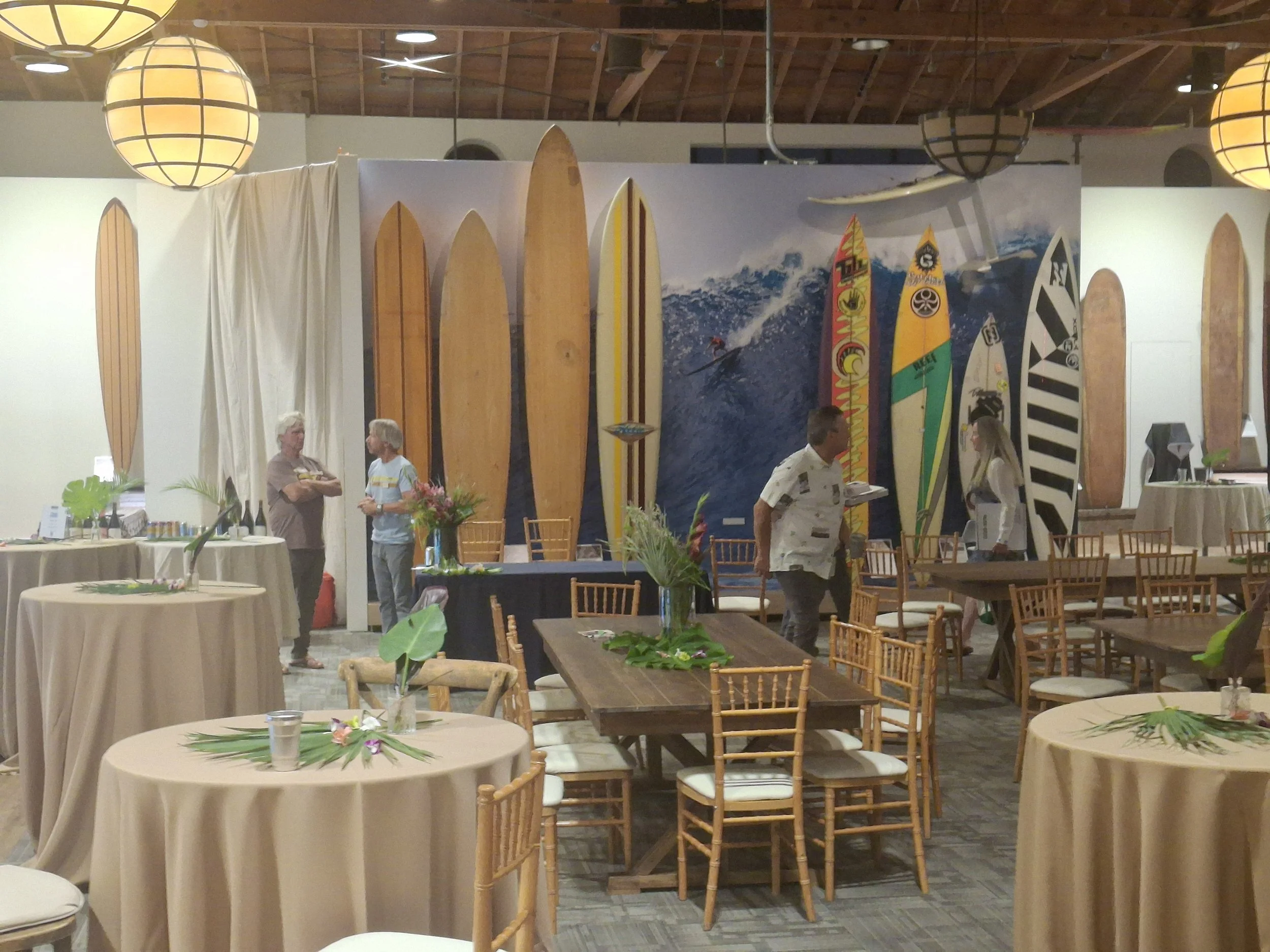
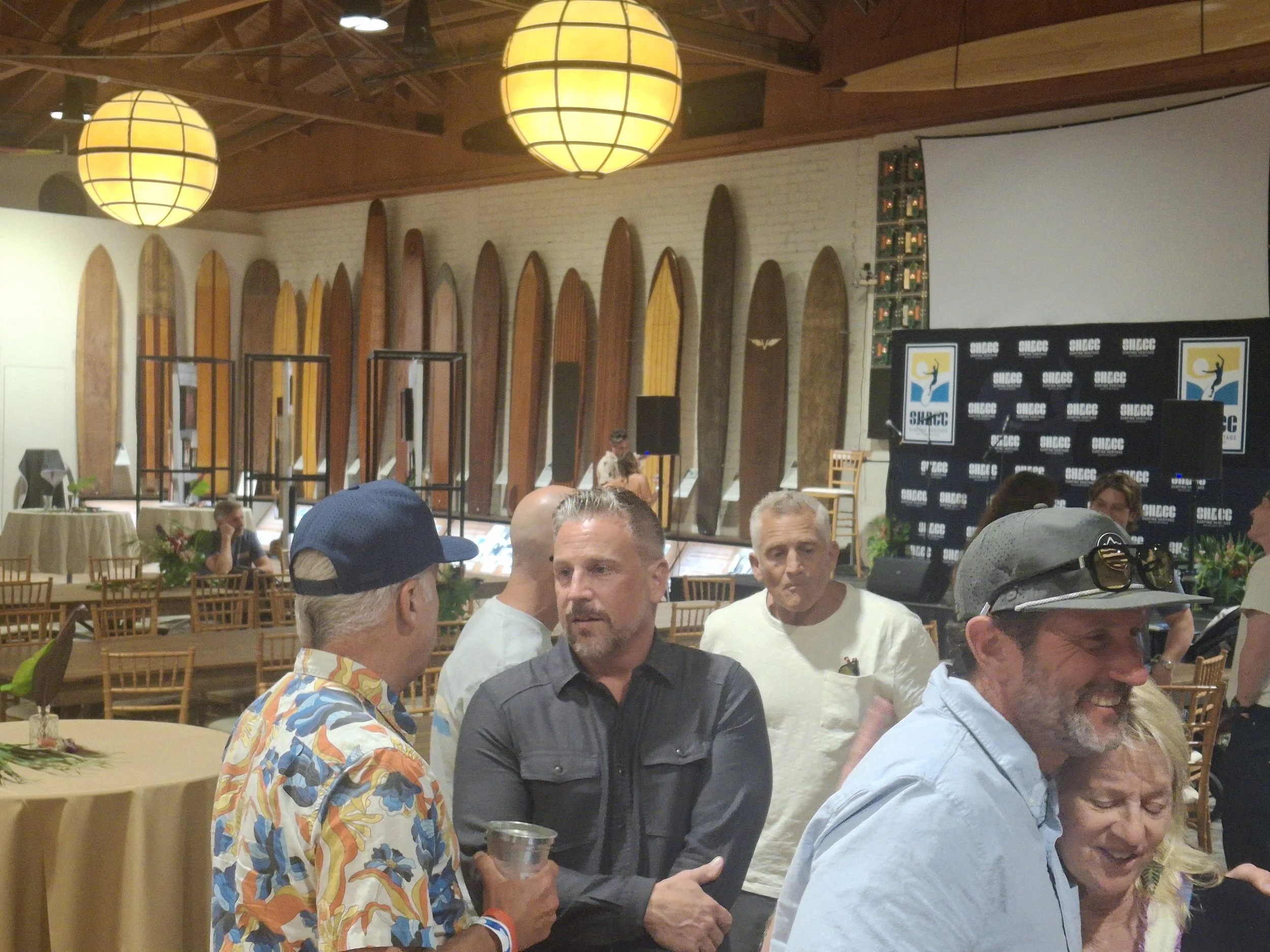
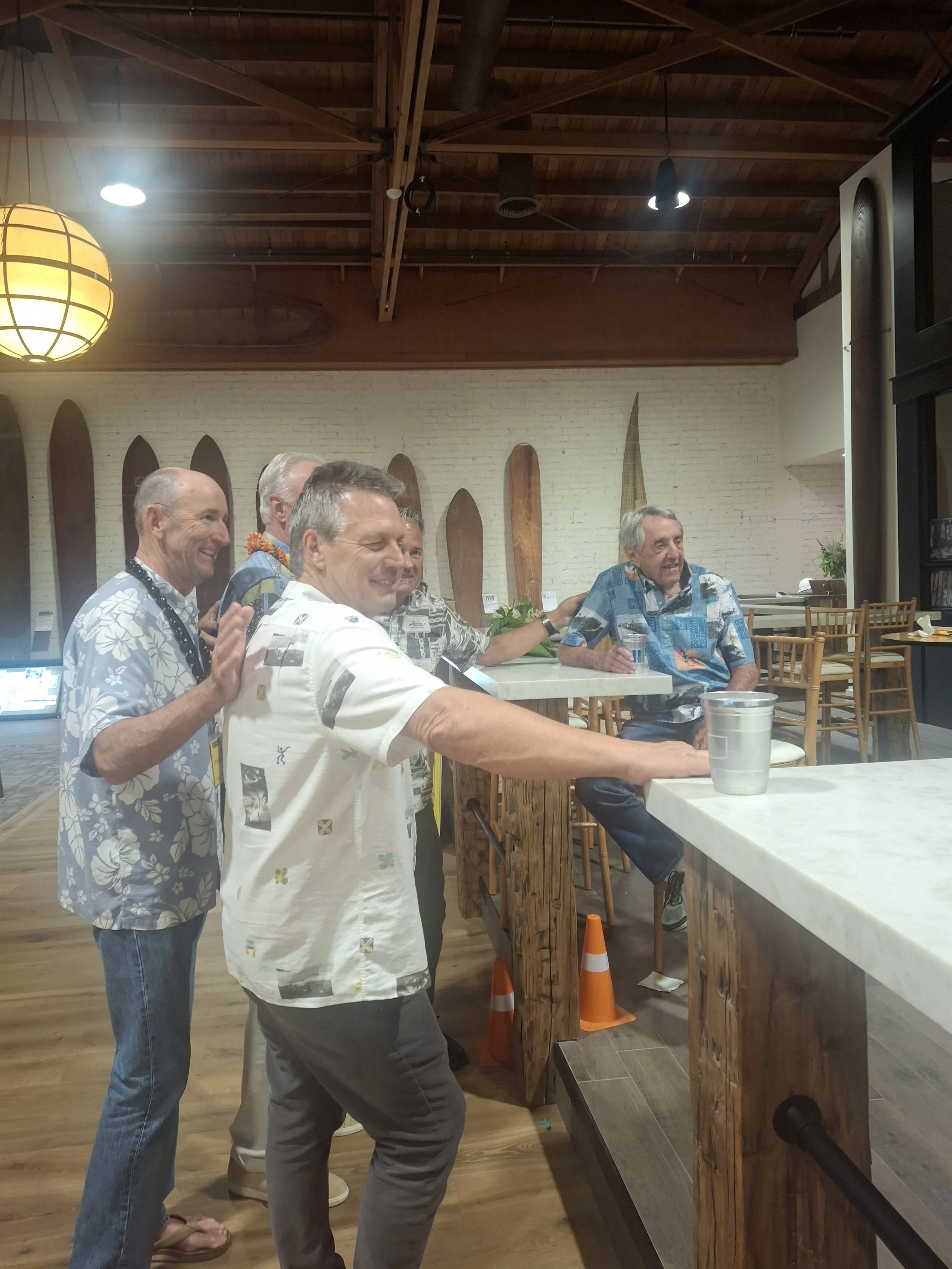
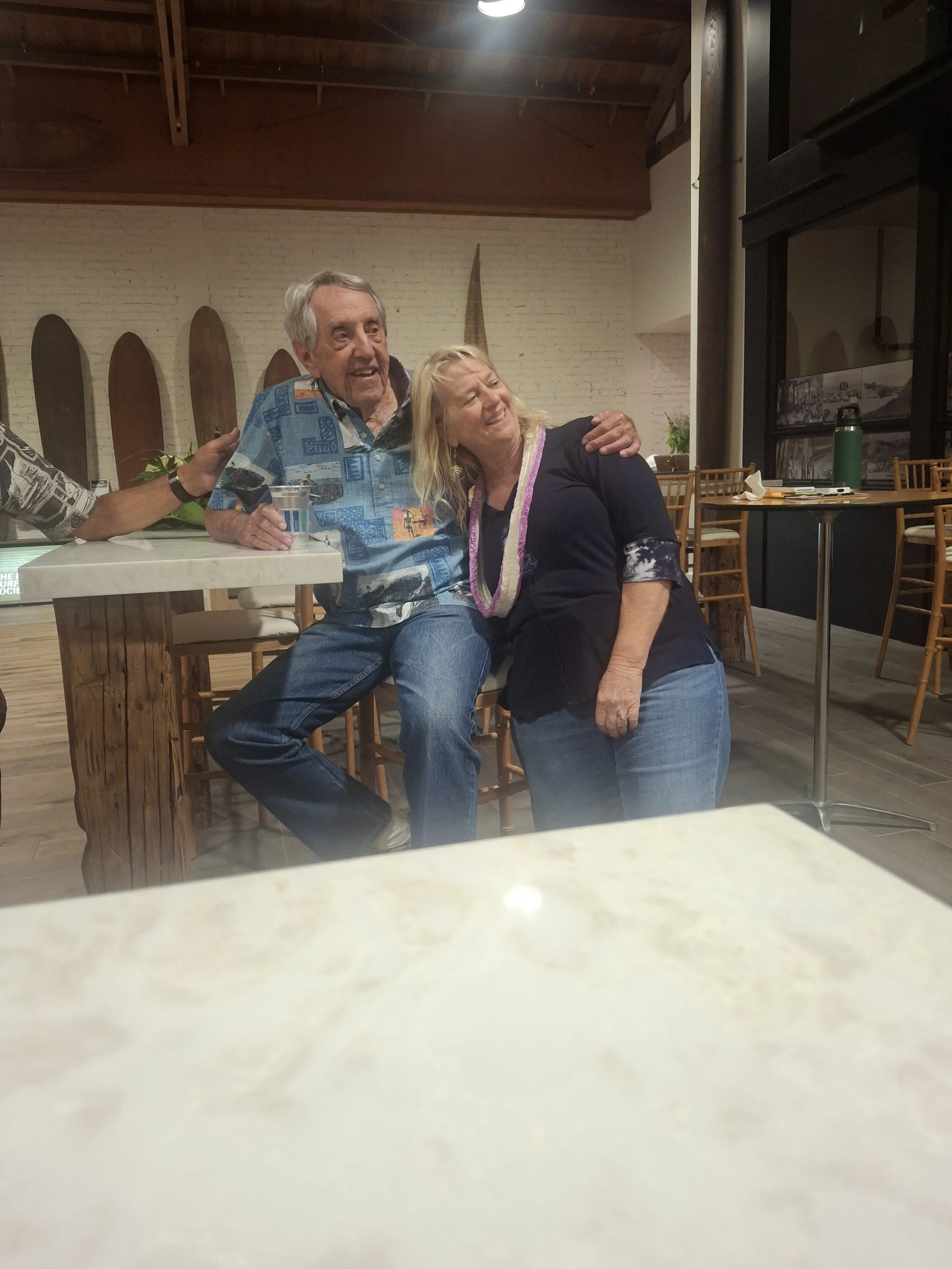
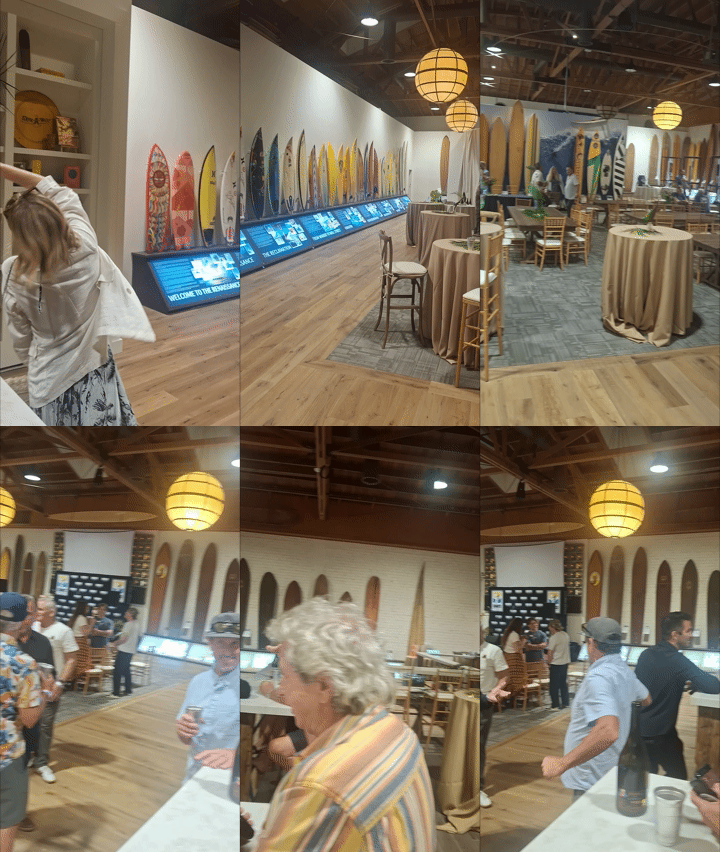
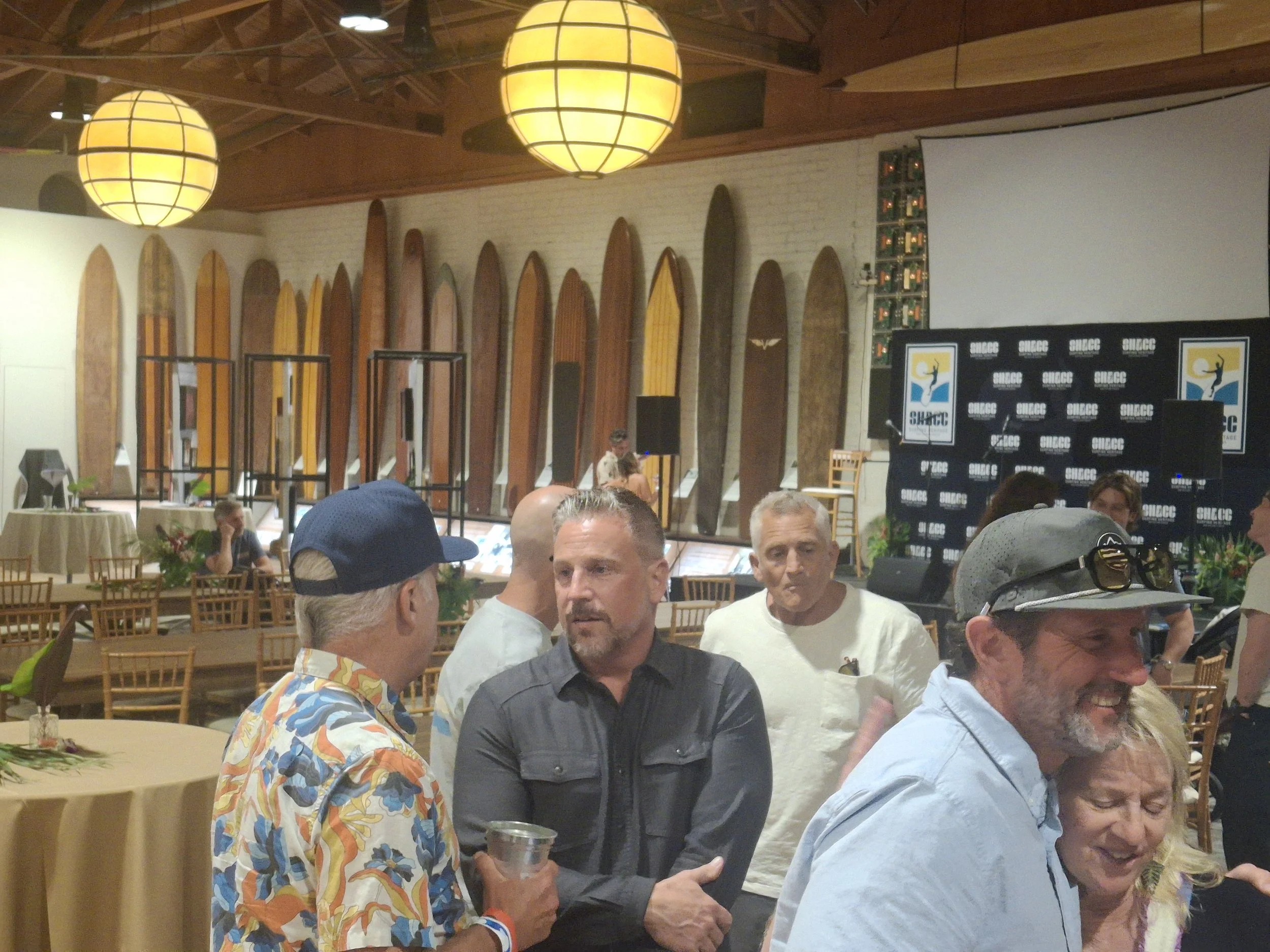
SCENES FROM THE HARD HAT/SOFT OPENING OF THE SHACC JUNE 20, 2026
Here are some glimpses of that hard hat/soft opening of the Surfing Heritage and Culture Center - the Alexandrian library/Cooperstown/British Museum of surfing.
Museum and archive and library, all of it under one 20-foot-tall roof, close to the sea where it otter be.