
Some movies are meant to be seen in theaters, on the big screen. I wish I had seen Sinners on a big screen. Autumn Durald Arkapaw won an Academy Award for Cinematography because she went BIG with lavish shots of the Mississippi delta. I was in Malibu when Sinners came out, and the only way I was gonna see it big was to break/talk my way into someone's mansion and plug the screener into their home theater. I watched Sinners three times on a big screen TV, but it wasn’t big enough.
The last movie I saw in a theater was Barbie, but that required actually leaving Malibu to go to Calabasas or Agoura or somewhere Over There to see it on a big screen in comfy chairs - and the stress of actually leaving Malibu and losing sight of the sea was too much.
But I was in Santa Cruz when "The Odyssey" swept into theaters on July 17, so I got to see a movie shot entirely, expensively, extravagantly in IMAX 70 mm.
Claude's Notes
So what's all this then? This Homer deal? I went to Artificial Intelligence for a "Claude's Notes" description of the source material - When, Why, How, Where, Who, in 100 words or less.
Claude did it in 175 words. "Homer's 'Odyssey' is the loose sequel to 'The Iliad,' picking up after the fall of Troy to follow Odysseus's ten-year struggle to sail home to Ithaca — a journey spanning the mythic eastern and central Mediterranean, from the Cyclops's island to the Underworld to Circe's and Calypso's islands. Composed around the 8th century BCE by the poet (or poetic tradition) known as Homer, about whom almost nothing is verifiably known, the epic runs 12,110 lines of Greek verse — roughly 100,000+ words in most modern English translations. Where 'The Iliad' glorifies rage and martial glory, 'The Odyssey' is about cunning over brute force, the sacred duty of hospitality, and above all nostos — homecoming, and what it costs a man to reclaim his identity, his household, and his family. It's one of the earliest frame narratives in Western literature, with Odysseus narrating his own adventures in flashback — a structural trick that makes Nolan's time-scrambled adaptation feel less like a gimmick and more like a return to the story's own DNA."
"Ten years?" I thought. "How far is it from Troy to Ithaca? About 315 miles as the Goddess Athena flies, or 500-600 nautical miles. Ten years? What did they do, take the 405?"
Troy to Ithaca in 10 Years (!?)
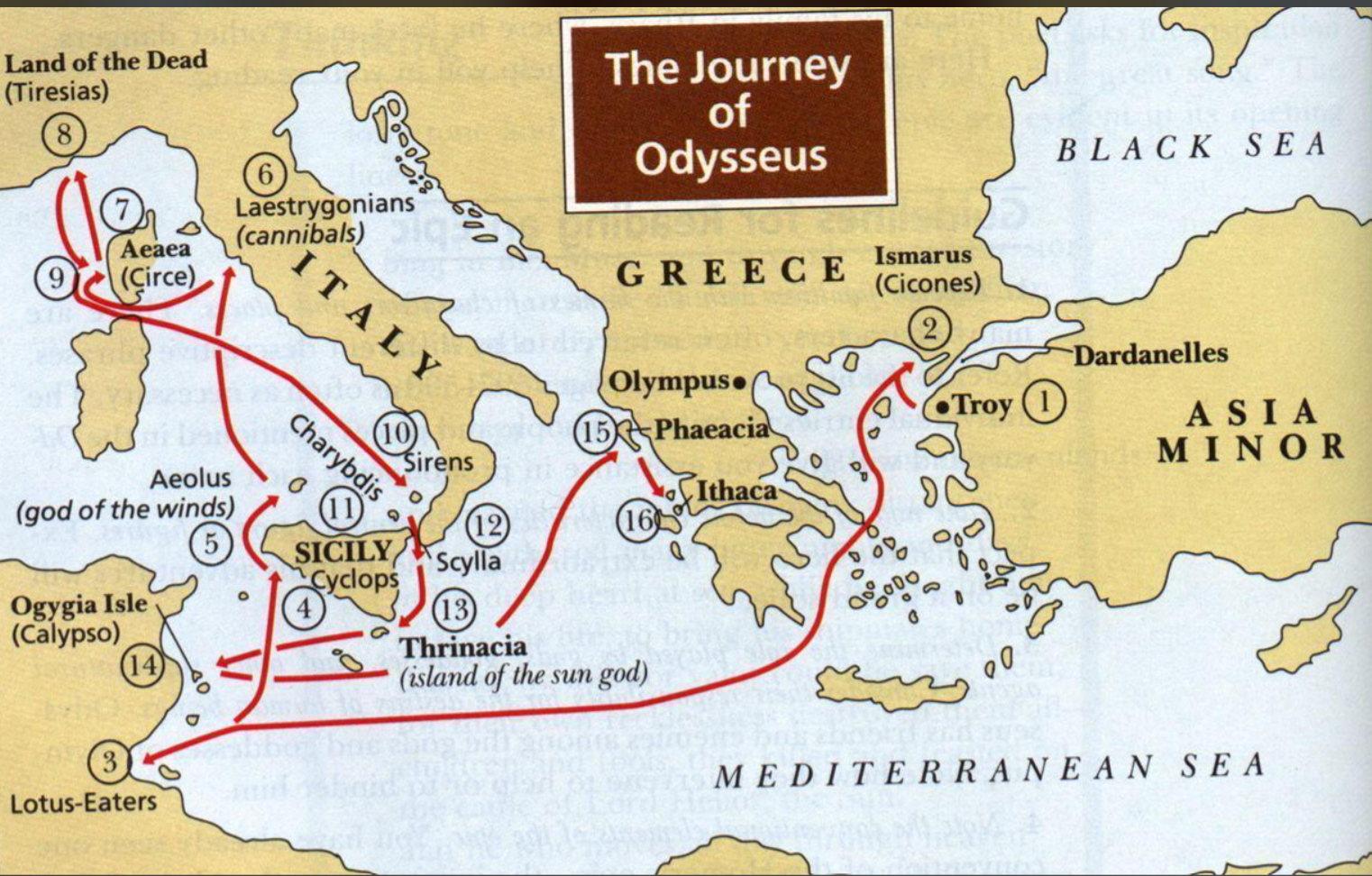
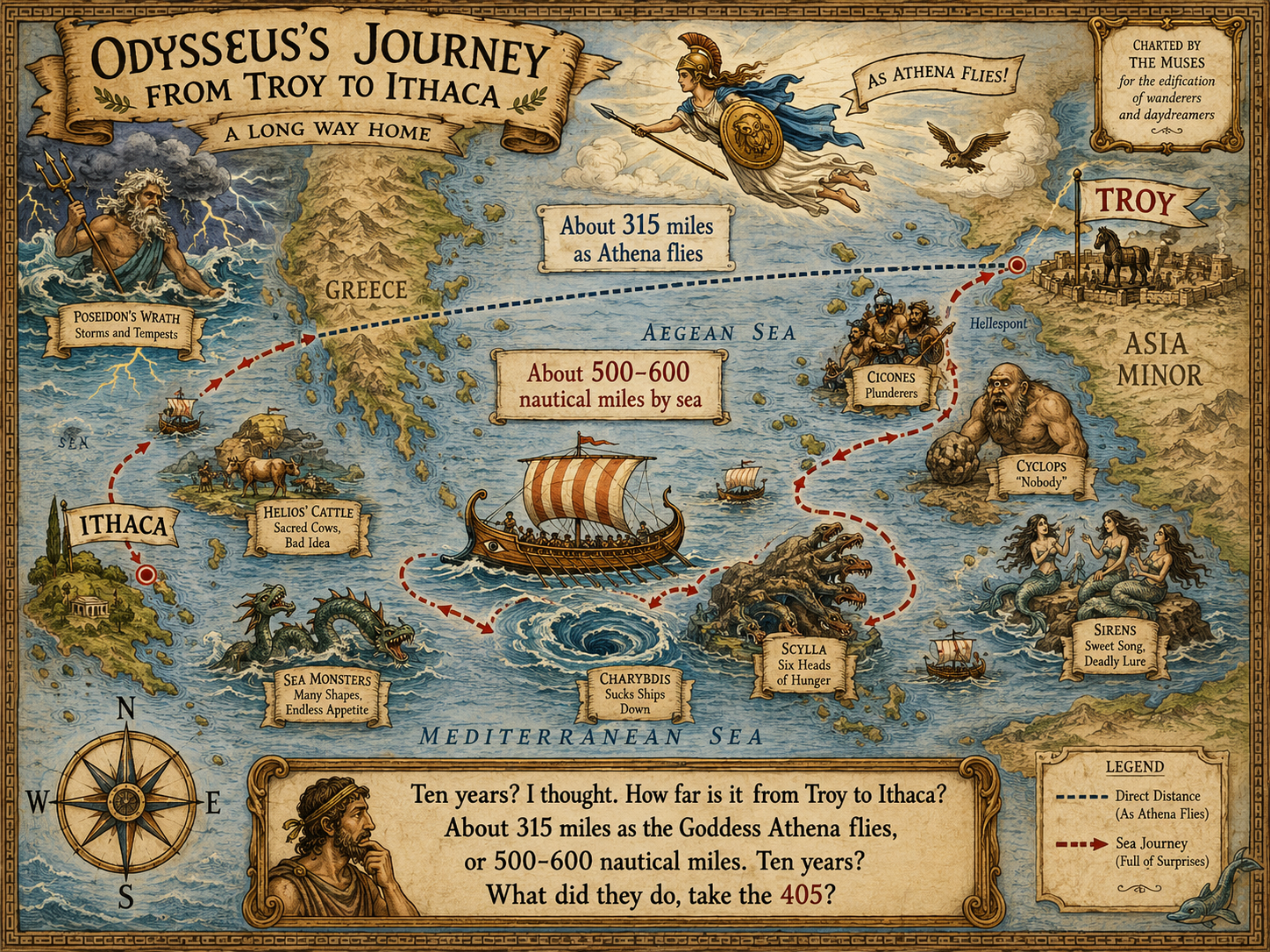
Troy sits in modern-day Turkey, near Hisarlık in Çanakkale Province by the Dardanelles; Ithaca — Odysseus's home — is in modern-day Greece, a small island in the Ionian Sea whose main town is Vathy, with Patras as the nearest mainland city. As the crow flies, that's roughly 600 miles across the Aegean, which gives you a real sense of just how far off course the Odyssey's ten-year voyage actually took him.
Gods and Monsters
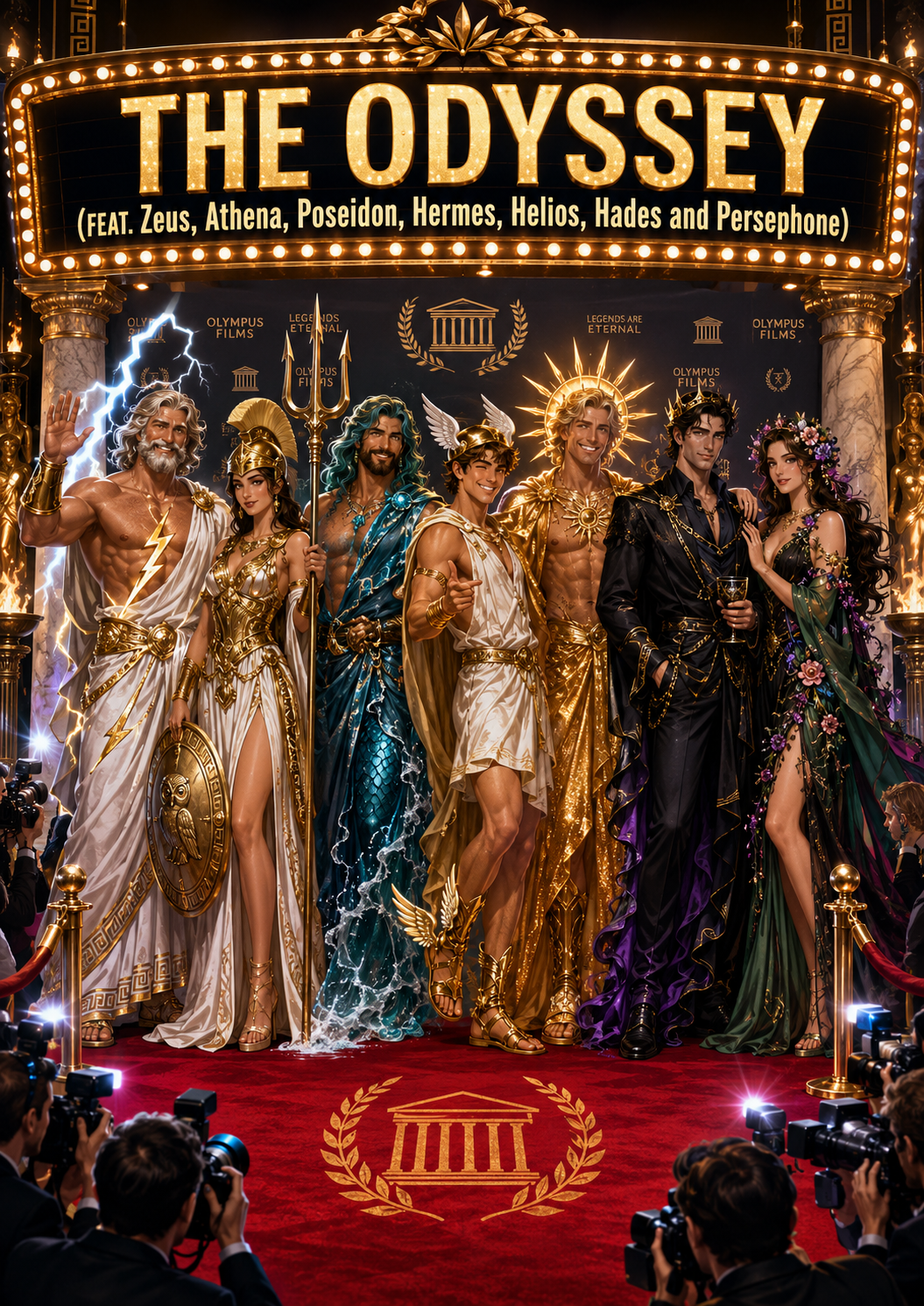
This isn't the first attempt to cram 100,000 words, ten years, five or so monsters — Polyphemus the Cyclops, the cannibal Laestrygonians, ship-wrecking Scylla, whirlpool-monster Charybdis, and the Sirens — plus the GOAT witch Circe and the temptress Calypso - and a divine cast led by Zeus, Athena, Poseidon, Hermes, Helios, Hades and Persephone, into one picture.
Homer's Odyssey has been adapted dozens of times since the silent era - a 1905 French short, the 1954 Italian Ulysses with Kirk Douglas, a 1997 Emmy-winning NBC miniseries with Armand Assante. Its themes echo elsewhere too - "O Brother, Where Art Thou?" most notably, and even "Gravity," where Sandra Bullock's astronaut overcomes peril after peril just longing to make it back to earth, and home.
Two Hundred and Fifty Million Dollar Cast
This picture had a price tag of $250,000,000, and you have to wonder how much went to the cast: A-listers Matt Damon, Anne Hathaway, Tom Holland, Zendaya, Charlize Theron, Robert Pattinson, and Lupita Nyong'o (dual role as Helen and Clytemnestra), supported by Benny Safdie as Agamemnon, Jon Bernthal as Menelaus, John Leguizamo as the swineherd Eumaeus, Himesh Patel, Mia Goth, Elliot Page, Bill Irwin, Corey Hawkins, and a couple dozen others.
I've always said "Lawrence of Arabia" is the greatest and most romantic movie ever made, and the only women in it get slaughtered by the Turks. "The Odyssey" is the opposite - a macho, manly-men epic of blood and monsters in which the women almost steal the show from under all that armor.
Hathaway's Penelope is the film's quiet powerhouse. Slate's critic called her work "nothing short of miraculous," a role that on paper could have been passive and static instead carrying entire stretches of the movie back on Ithaca - even while largely "trading dialogue with a totally lost and out-of-his-depth Tom Holland."
Calypso and Circe
Theron's Calypso is beautifully spooky as the nymph who traps Odysseus by feeding him lotus flowers - played less as seductress-villain than as a woman whose loneliness curdles into captivity - quieter and sadder than Samantha Morton's Circe, a calmly evil sorceress not unlike Amy Madigan's banally evil Aunt Gladys in "Weapons."
Someone on Vulture.com wrote high praise on how well written and acted Circe is. The story is password protected so I didn’t read it, but got the gist and agree.
https://www.vulture.com/article/circe-is-the-best-female-character-nolan-has-ever-written.html
There could be an Oscar nomination for Morton’s 10 minutes of screen time, which would be neither unprecedented nor a record.
Claude said: “Beatrice Straight holds the record with just 5 minutes, 40 seconds as the jilted wife in Network (1976); Judi Dench needed only 8 minutes as Queen Elizabeth I to win for Shakespeare in Love (1998); Anthony Quinn matched that with 8 minutes as Paul Gauguin in Lust for Life (1956); Gloria Grahame won for roughly 9 minutes, 32 seconds as Rosemary in The Bad and the Beautiful (1952); Jane Alexander earned her nod-turned-nomination in about 5 minutes, 9 seconds in All the President's Men (1976); Anthony Hopkins famously carried a lead-actor win, The Silence of the Lambs (1991), with only 16 to 20 minutes of screen time; and Hermione Baddeley, though she never won, was nominated for Room at the Top (1959) on barely 2 minutes of footage — still the shortest nominated performance in Oscar history.”
Without spoiling it: Circe invites a mob of starving sailors, just escaped being beaten and eaten, into her shack and watches them make pigs of themselves. You'll have to see the movie for the rest.
The monsters they'd just escaped are far less calm than Circe. The giant, armor-clad Laestrygonians are cannibal giants who ambush and wipe out eleven of Odysseus's twelve ships in one stroke.
The Laestrygonians as Homer Described Them, The Odyssey Interpreted Them and the Sentinels from X Games: Days of Future Passed

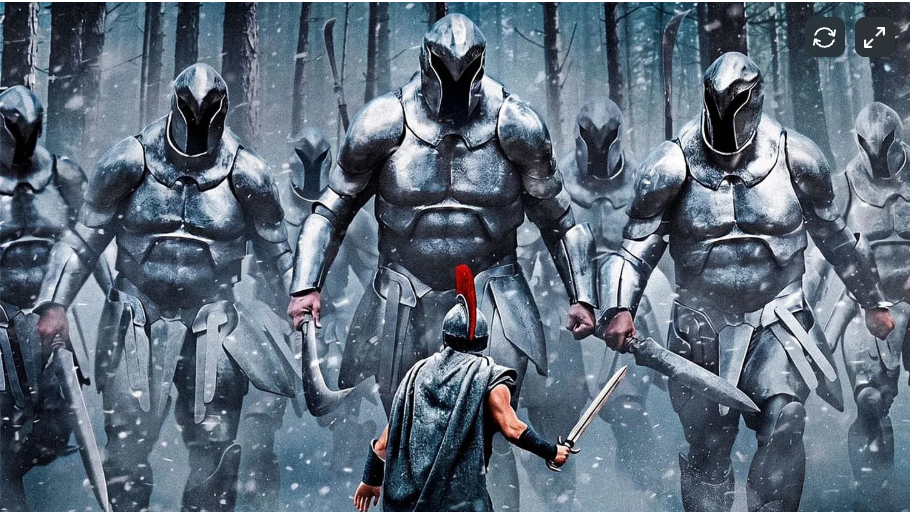

(Jon Marcus said the armored Laestrygonians looked a lot like the robots from 'X-Men: Days of Future Past.')
In Homer, the giants just hurl rocks from cliffs, destroy the boats and spear the drowning sailors like bluefin tuna - they’re good eatin’.
So this armored-robot fight and flee in a forest might be a nod to modern drone warfare. Maybe yes, maybe no.
(Fleeing the Laestrygonians and Cyclops and other monsters large and small, I was ready for Ulysses to riff on Monty Python and holler "Run away! Run away!" as his crew hotfoots it from one peril to the next.)
That's a Viking Ship! It's Not Greek At All!

A Greek penteconter (8th to 5th Century BC) nose to nose with its stand in for this picture, the replica of the Viking (793–1066 AD) Draken Harald Harfage . Illustration by Chat GPT.
The other odd casting choice wasn't human - it was the ship Ulysses and his crew boarded to leave Troy. Big, sturdy, wood, and the whole time I'm thinking: "That's not Greek, that's Viking!"
And I was right. The curled prow gave it away.
The Greeks actually used "penteconters" - narrow, curved-hull galleys around 30 meters long, powered by a square sail and oarsmen, carrying about 50 men apiece. But the ship in "The Odyssey" was “Draken Harald Hårfagre,” a modern (2012) reconstruction of a Viking-era (793–1066 AD) longship, measuring about 35 meters long, 8 meters wide, with a roughly 25-meter mast, and displacing around 80 tonnes.
Built Ford tough - watching it plow through heavy seas and dodge monsters, it's easy to see how Vikings sailed from Norway to Greenland to Iceland to North America and all over the British Isles and Europe in those ships.
Round round, get around the Vikings got around: Dublin was a Norse ship base, York (Jórvík) was a Viking stronghold — the same Vikings Macbeth's Scots are fighting off at the play's opening — and "Rus" gave Russia its name, from the Swedish Varangians who founded Kievan Rus.
In France, Viking chieftain Rollo got Normandy in 911; his descendant William the Conqueror, a Frenchified Viking, took England in 1066. Norman Vikings even carved out Sicily. And 500 years before Columbus, Leif Erikson reached Newfoundland — confirmed by the L'Anse aux Meadows site.
African American Helen?

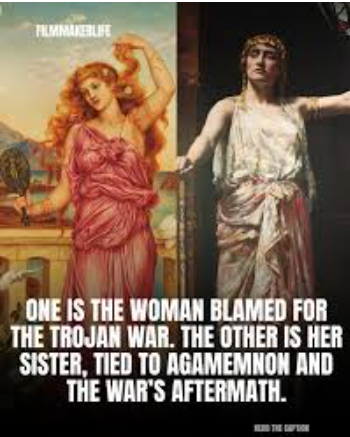
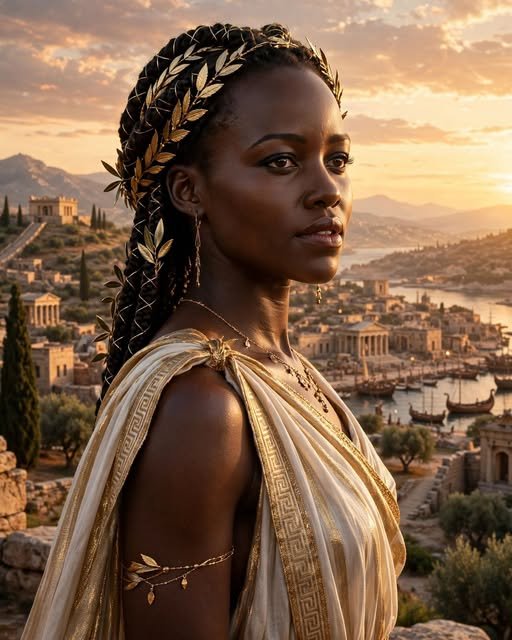
Lupita Nyong'o playing both Helen of Troy and her half-sister Clytemnestra has drawn some of the loudest casting criticism of the film, her Kenyan-Mexican background clashing with the traditional "golden-haired" image of Helen.
Truth is, neither “The Iliad” nor “The Odyssey” physically describe Helen at all — no hair color, no face — they only convey her beauty indirectly, through the reactions of the men who look at the face that launched a thousand ships and agree: “Yep.”
The darkness of the casting might double as a reflection of character: Clytemnestra vows revenge against Agamemnon for sacrificing her daughter and - spoiler alert - gets it, killing her husband when he returns from his bloody victory at Troy.
“The Warriors” Was Also a Riff on Greek Myth
Looking through the cast list - wait, James Remar is in this picture? Cool dude. He used to surf Malibu, and made a similarly Greek-flavored picture playing Ajax in Walter Hill's 1979 cult classic "The Warriors." That film isn't actually based on "The Odyssey," though it shares its DNA - it's drawn from Xenophon's "Anabasis," the true account of Greek mercenaries fighting home through hostile territory after their leader is killed. Swap Persia for the five boroughs and you've got the plot: a small band running a gauntlet just to get home in one piece - same shape as Odysseus's journey. Half a century later, Remar's back in actual Homer territory. Still not sure which character he plays.
Ben Shapiro is a Putz and a Grifter
Ben Shapiro is just another right-wing grifter preying on the fears, insecurities and ignorance of the %50. Burbank - and California - are better off since he moved to Tennessee.
No one should give a flying, flaming arrow what that dude thinks of anything, but he called "The Odyssey" a "masterpiece," with his only objection being the casting of transgender actor Elliot Page ("Juno") as Sinon, the Greek soldier who cons the Trojans into wheeling the giant wooden horse through their own front gate - and pays the ultimate price.
Thus kvetched Shapiro: "I know there are a lot of conservatives who are getting pre-whipped up about the film. Because it's stupid to cast Elliot Page as a dude. It's just stupid," he kvetched. "Elliot Page was a woman with mental issues who believes that she is a man and has had surgeries to make her appear more man-like, but still she is about five foot two inches and 105 pounds, soaking wet, and has the voice of a woman. It doesn't work. It's an unforced error."
He continued: "Now I'm not going to speculate as to why Nolan did this," and then speculated: "Maybe he's personally friendly with Elliot Page... maybe it's some sort of Oscar bait attempt... People are willing to entertain even bad flaws in the teeth, if the smile is nice."
Putz. You are hereby sentenced to live in Tennessee and listen to modern country music.
There's a Led Zeppelin Song for Every Human Emotion
I've often said there's a Led Zeppelin song for every human emotion - and some human emotions that haven't been invented yet. Any time I see any movie Viking-adjacent, even a Viking ship playing a Greek ship, I think the soundtrack should be Zeppelin.
"The Immigrant Song" was perfect for the fight scenes in "Thor: Ragnarok," and "Ten Years Gone" would have fit this picture just as well - Robert Plant wrote it about an old flame he'd chosen music over a decade earlier, and the ache of it - a decade gone, still holding on - maps eerily well onto Odysseus pining for Penelope after ten years apart - and vice versa.
Vixen in my dreams, with great surprise to me
Never thought I'd see your face
The way it used to be
Oh darlin', oh darlin'
I'm never gonna leave you
I never gonna leave
Holdin' on, ten years gone
Ten years gone, holdin' on, ten years gone
And what about "In My Time of Dying," "The Battle of Evermore," "Kashmir," "Achilles Last Stand," "The Rain Song" - no shortage of emotional Zeppelin that would've played nicely nicely under the danger and drama and sound and fury of "The Odyssey."
But alas, no Zeppelin, or any modern music at all, made the soundtrack. Well, one song, over the end credits.
The Music Was All Greek
Nolan banned a traditional orchestra entirely, telling composer Ludwig Göransson (his third collaboration, after "Tenet" and "Oppenheimer") that he didn't want the film to sound like the sword-and-sandals epics of the past. Göransson leaned in: "It's not like the orchestra existed back then," he said. "It was a challenge and also an opening to try to make something unique."
Instead the score is built from actual ancient Greek instruments: the lyre, plucked at Nolan's request to underscore the moment Odysseus draws his bow; the aulos, a double-reed pipe Göransson calls "the most popular rock star instrument for a thousand years"; and 35 bronze gongs, layered with recordings of scrap metal and air conditioning units, plus vocals and synthesizers. Think "Full Metal Jacket" - creaking metal and that. The one modern concession: a closing song, "When I'm Home," co-written by James Blake, Travis Scott, Göransson, and Nolan. So no Zeppelin.
This Picture Goes to 11
The music is LOUD in this movie, as loud as a stadium booing Trump when he walked out on the pitch at the World Cup: wind and soldiers shrieking, terrified and transformed war pigs squealing, monsters bellowing, gongs banging, Polyphemus roaring as the burning stake drives into his eye, boulders splintering ship hulls, Zeus's thunder cracking the sky open, the Sirens wailing over Odysseus's own screams to be freed from the mast, bronze clashing in the final slaughter of the suitors, and surf roaring through every shipwreck.
Another reason to see it in a theater unless you have one of those epic, knee-trembling home sound systems installed by John Ortiz of www.jcotechnologies.com
Caught Between the Scylla and Charybdis
Speaking of music - this movie lifted the veil on a lyric from a Police song. In "Wrapped Around Your Finger," Sting name-checks being "caught between the Scylla and Charybdis." I was never quite sure what that line referred to, but now that I've seen "The Odyssey," I get it - two of the many perils Odysseus faces, one natural, one supernatural.
Both of them gnar.
Who Dares, Wins: Reviews and Box Office

So enough of my yakking - did all that sound and fury earn a dollar?
Christopher Nolan - sorry, Sir Christopher Nolan (OBE 2024) - was born in 1970 to an English father and an American mother. He has dual citizenship, but is probably British enough to know the SAS motto: Who Dares, Wins.
Sir Christopher dared plenty: a Viking ship standing in for a Greek one, an African American woman cast as Clytemnestra/Helen, a traditional orchestra banned in favor of ancient instruments and bronze gongs, and the entire film shot on IMAX 70mm - a first for any movie ever made.
Those IMAX cameras are heavy and LOUD, and Nolan struck a deal with the manufacturer to make them lighter and quieter - though 70mm still made a hard shoot no easier. A 1,000-foot magazine holds about three minutes of footage before a reload, and each reload eats another 2.5 to 3 minutes on set - money clock spinning like a dervish. Raw stock runs about $1.50 a foot, and "The Odyssey" burned through more than 2 million feet - roughly $3 million in film alone before processing even began. A single finished IMAX platter print costs about $36,000 to produce. Shooting the whole thing in 70mm IMAX wasn't just an aesthetic choice - it was one more dare on a picture already full of them.

I prefer Anthony Lane's “New Yorker” reviews to Richard Brody's, who tends toward negative and snarky. Brody thought it daring/disappointing that Nolan stripped out all the Gods except Athena, making it "a purely human drama" - a bold departure from a text where divine intervention drives nearly every event. Nolan also secured an R rating, cast a rapper with only a couple of acting credits (Travis Scott) in a major studio epic, and committed to a nearly three-hour runtime for source material most people only remember in fragments from high school English. Nolan dared many things, but it would appear he has won.
Homer Translator Didn’t Dig It At All
According to Rolling Stone and many other outlets, Emily Wilson is a Classics professor at the University of Pennsylvania who translater Homer into English. And she was not at all digging Nolan’s jive: “In probably the funniest possible twist to the idiotic culture war sideshow that’s followed Christopher Nolan’s adaptation of The Odyssey, Emily Wilson — the classics professor whose 2017 translation at once inspired the filmmaker and earned her the ceaseless ire of right-wing posters — thinks the blockbuster film is an absolute stinker.
In a scorching pan for the London Review of Books, Wilson poo-poo’d pretty much every aspect of Nolan’s film. She writes that the film contains Nolan’s “usual combination of grandiosity and superficiality,” but “lacks many of the elements that make the poem great.”
“It has nothing convincing to say about time, memory, history, war, or about the relationship between one warrior’s glorious return and the lives of his family, adversaries, comrades, friends and neighbors,” Wilson writes in one of the review’s most scathing paragraphs. “It lacks psychological, emotional, political and ethical depth. Its narrative structure is gimmicky. The writing is abysmal. None of the characters has convincing motivation for their actions or words. There are no sex scenes, and all the food looks horrible.”
Boffo BO
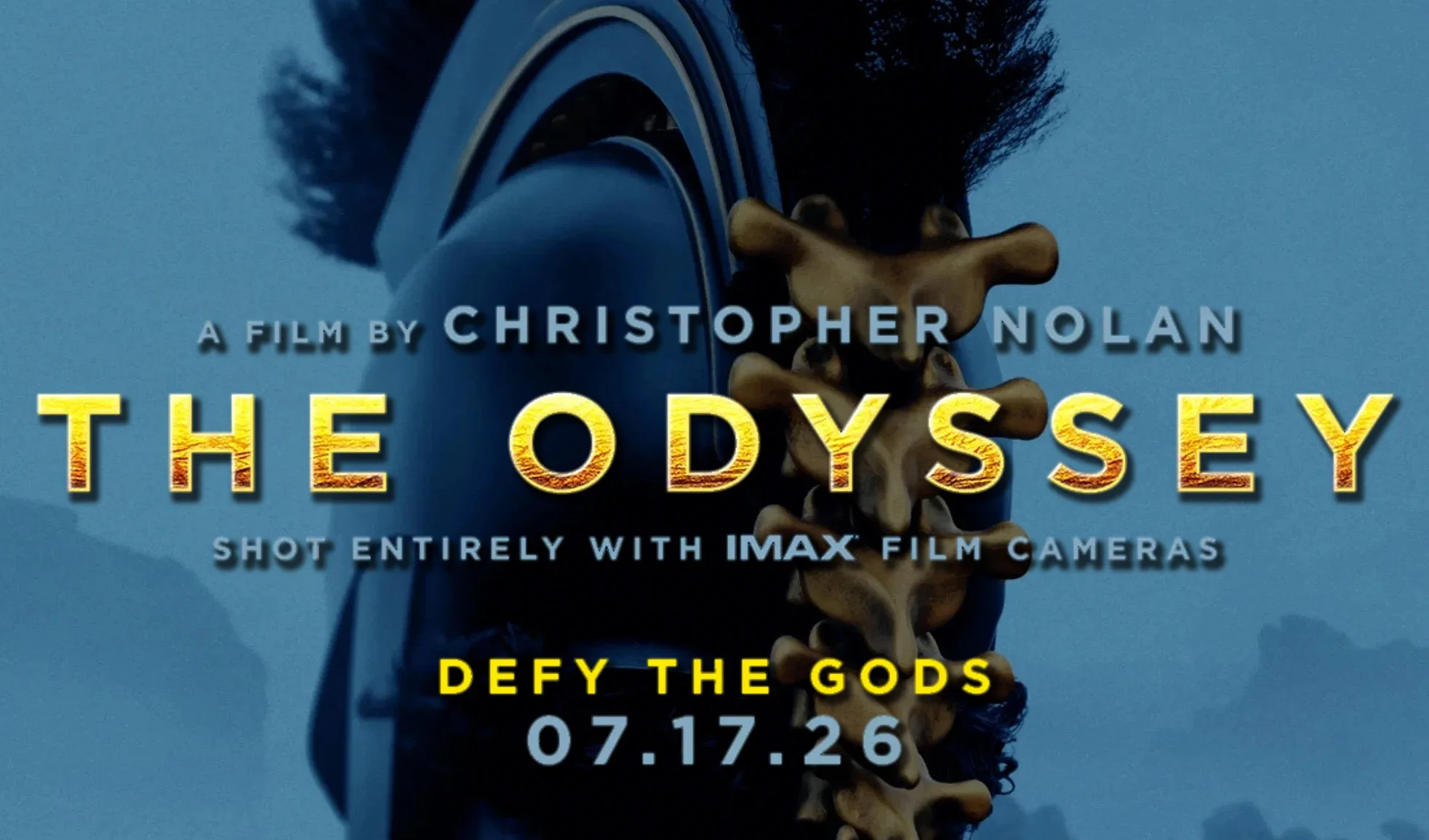
The Odyssey opened July 17, 2026, debuting to $124.5 million domestically and $264.1 million worldwide - the biggest live-action opening of 2026, the year's top R-rated debut, Universal's biggest R-rated launch ever, and Nolan's largest global opening, surpassing The Dark Knight Rises.
Critically it's sitting at 95-96% "Certified Fresh" on Rotten Tomatoes from more than 275 reviews - the highest critics' score of Nolan's career - with audiences even more enthusiastic at 97% "Verified Hot," plus an "A" CinemaScore. "Oppenheimer" closed its North American run around $330 million; "The Odyssey" is outpacing that trajectory, on track to be Nolan's biggest non-superhero hit yet, critically and commercially.
The film has held remarkably well since, posting a soft second-weekend drop of just 18% worldwide and adding another $215.3 million to push its global total to roughly $640 million. Through its first four days it had already pulled in $141 million domestically - 48% ahead of "Oppenheimer's" pace over the same stretch - and posted the best Monday of any 2026 release, trailing only “The Dark Knight” and “The Dark Knight Rises” among Nolan's own films. Some speculation is already turning to whether it can cross $1 billion worldwide by fall.
There is Oscar buzz.
I personally would like to see Samantha Morton get nominated for her Circe. Something about the way she played it was spooky as hell.
A Movie So Nice, Gotta See It Twice
A Viking ship doubling for a Greek one. An African American woman as Helen of Troy. A transgender actor as the lure for the Trojan Horse. Some reviewers weren't keen on Tom Holland as son of, and others knocked the modern vernacular - like Telemachus calling Odysseus "Dad."
But Sir Christopher and Universal know what Elon Musk and Trump know - the 21st century version of "no such thing as bad publicity." As long as people are arguing about your project - good or bad - that's the goal.
"The Odyssey" is dense in a way that's the opposite of the actual story - where Odysseus took ten years to cover a couple hundred miles between Troy and home, and Homer needed 100,000+ words to detail it, this version covers the same journey in just under three hours, and both experiences are somewhat arduous. One could call it "dense"; others "cluttered." Once it hits streaming, it'll be worth studying frame by frame to sort out which one is Clytemnestra and which is Helen.
And where is James Remar in all this?
"The Odyssey" is worth seeing in a theater - but is it worth driving up the Scylla and Charybdis of Malibu Canyon Road and facing the perils of Agoura?
Malibu people will just have to decide that for themselves.